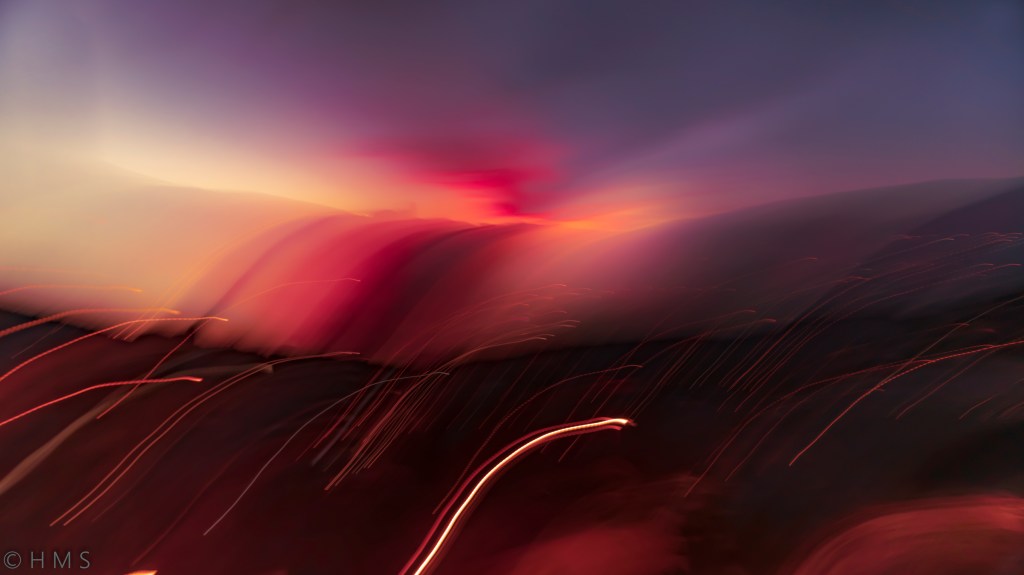
Introduction — Abstraction as Allegory
The Abstraction Collection represents the most radical exploration of my practice: a movement away from direct reference into a territory where color, rhythm and gesture become the subject themselves. These works do not document, they transform. Through intentional camera movement, I use light as pigment and motion as brushstroke, constructing images that resonate more with painting than with traditional photography.
Yet within this series, two distinct voices coexist: pure abstractions, where form is liberated from any natural origin, and mixed abstractions, where trees and organic shapes become the seeds of transformation. Together, they chart the evolution of a visual language that turns both the intangible and the natural into allegory.
Pure Abstractions — Color and Energy
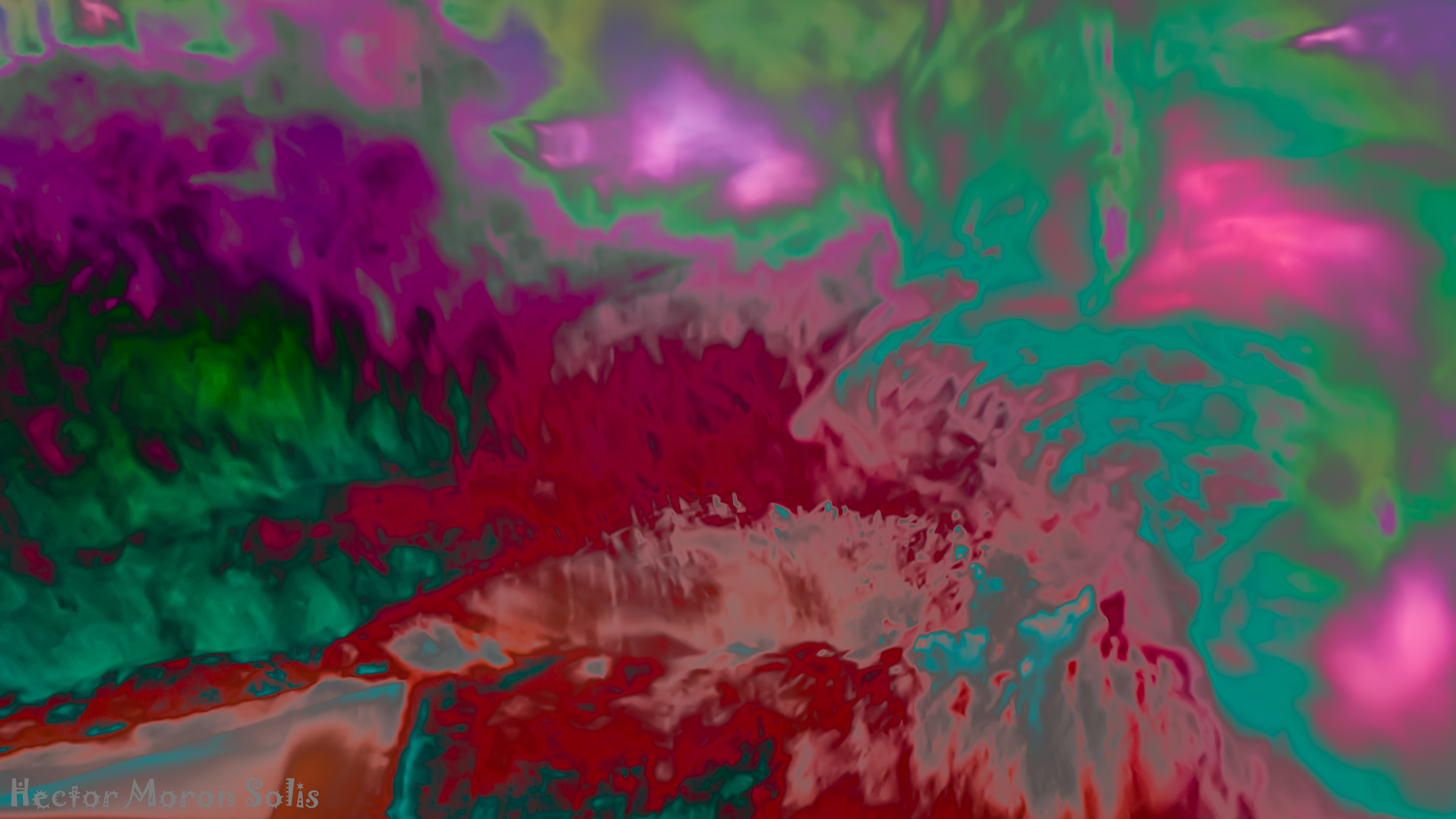
Some images in this series are autonomous explosions of color and rhythm, where the world dissolves entirely into abstraction.
- Chromatic Eruption
Here, color surges upward like a volcanic force, radiant and uncontrolled. Allegorically, it is not the landscape of an eruption, but the idea of eruption itself: an inner convulsion that becomes visible through light. - Wave of Light
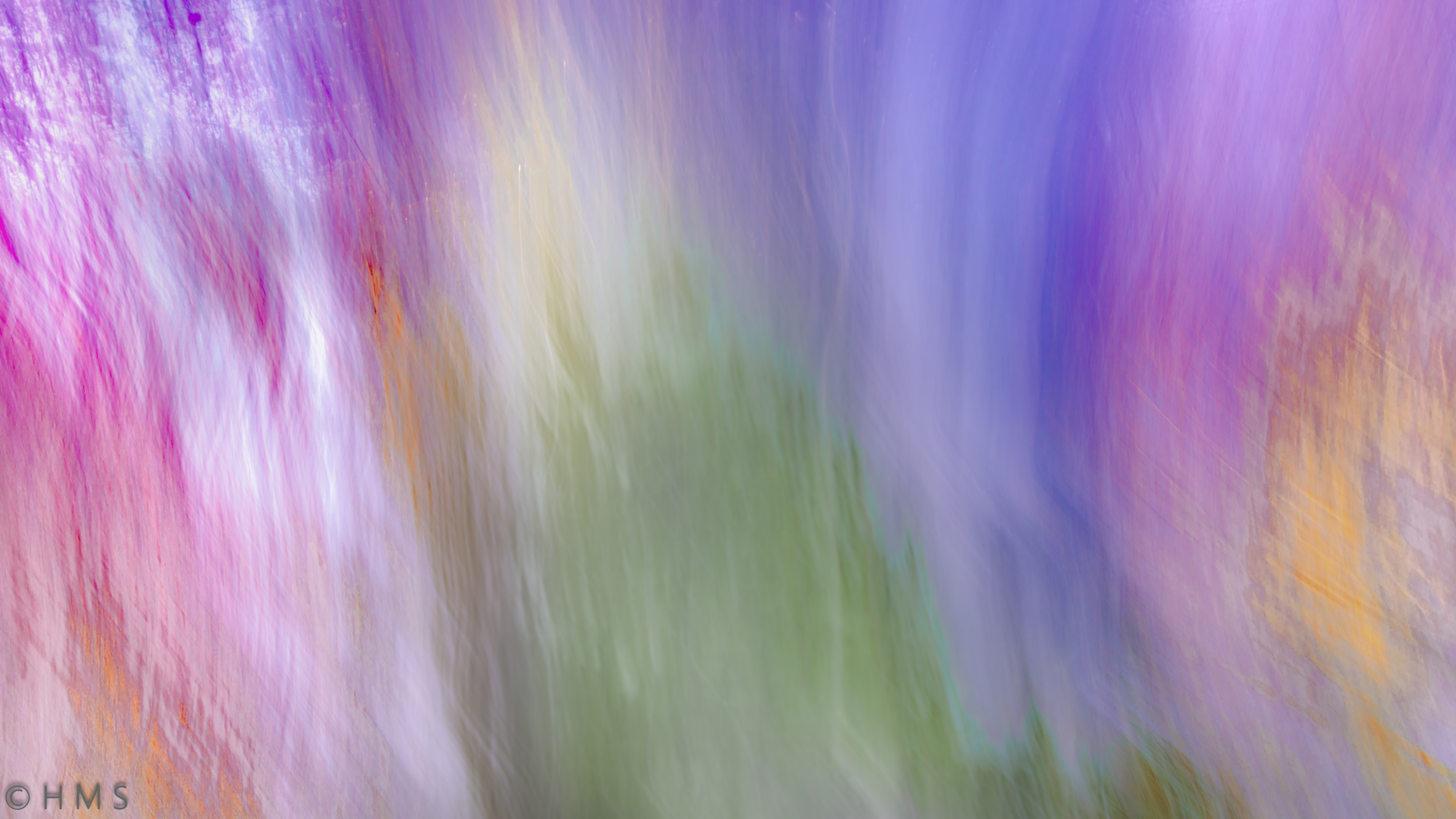
With softer tones, this image shifts into pure rhythm. The viewer does not read nature but a vibration, the echo of water and air merging into a single pulse. It is a meditation on flow — how light itself behaves like a tide. - Abstract Watercolor, Electric Cipher, Golden Sparks
These works extend the same spirit: movements that imitate the spontaneity of brushstrokes, where color fields interact as if on canvas. They dissolve reality until only intensity remains, inviting the eye to dwell in allegory rather than in reference.

Mixed Abstractions — Nature Transformed
Other works in the Abstraction Series retain a root in the natural world. Trees, flowers and foliage serve as starting points, but through movement they dissolve into symbols.
- Magic Lemon Tree
A lemon tree becomes something far beyond botany. Its branches swirl into luminous traces, an allegory of fertility and resilience. The tree is not depicted, it is transfigured into an icon of growth. - 4 Stages of Natural Life
Stages of Natural Life unfolds diagonally from left to right, guiding the eye through four vital realms. At the bottom left, the subterranean world reveals the inner earth, rich and hidden - Branches and Leaves
A canopy turns into a tapestry of lines, where the familiar patterns of foliage give way to calligraphy. The tree becomes writing, an inscription of life’s movement. - Daisy I, Abstraction II
Even a simple flower, when moved into abstraction, becomes allegory. What was delicate and small now resonates with universality, suggesting cycles of fragility and renewal.
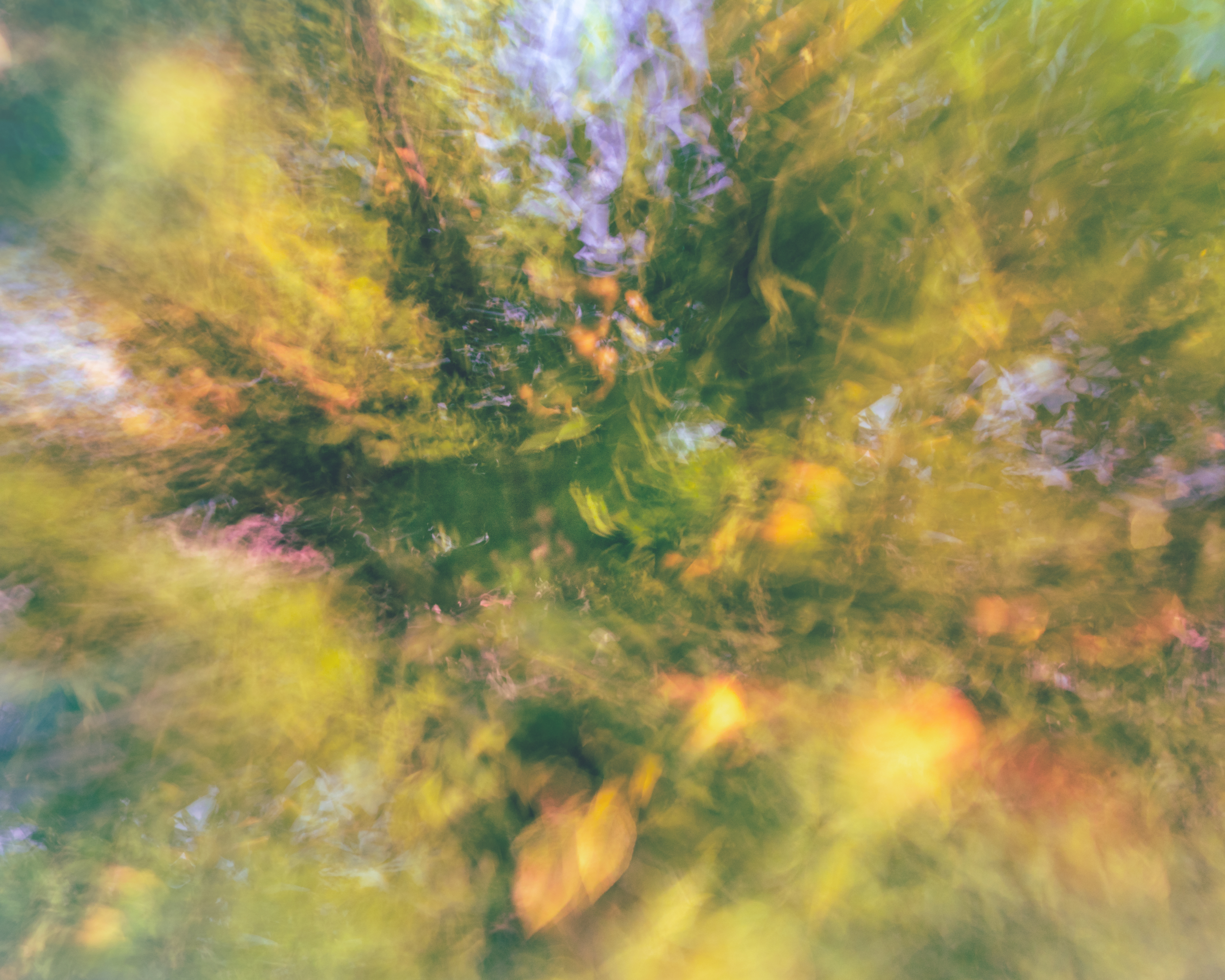
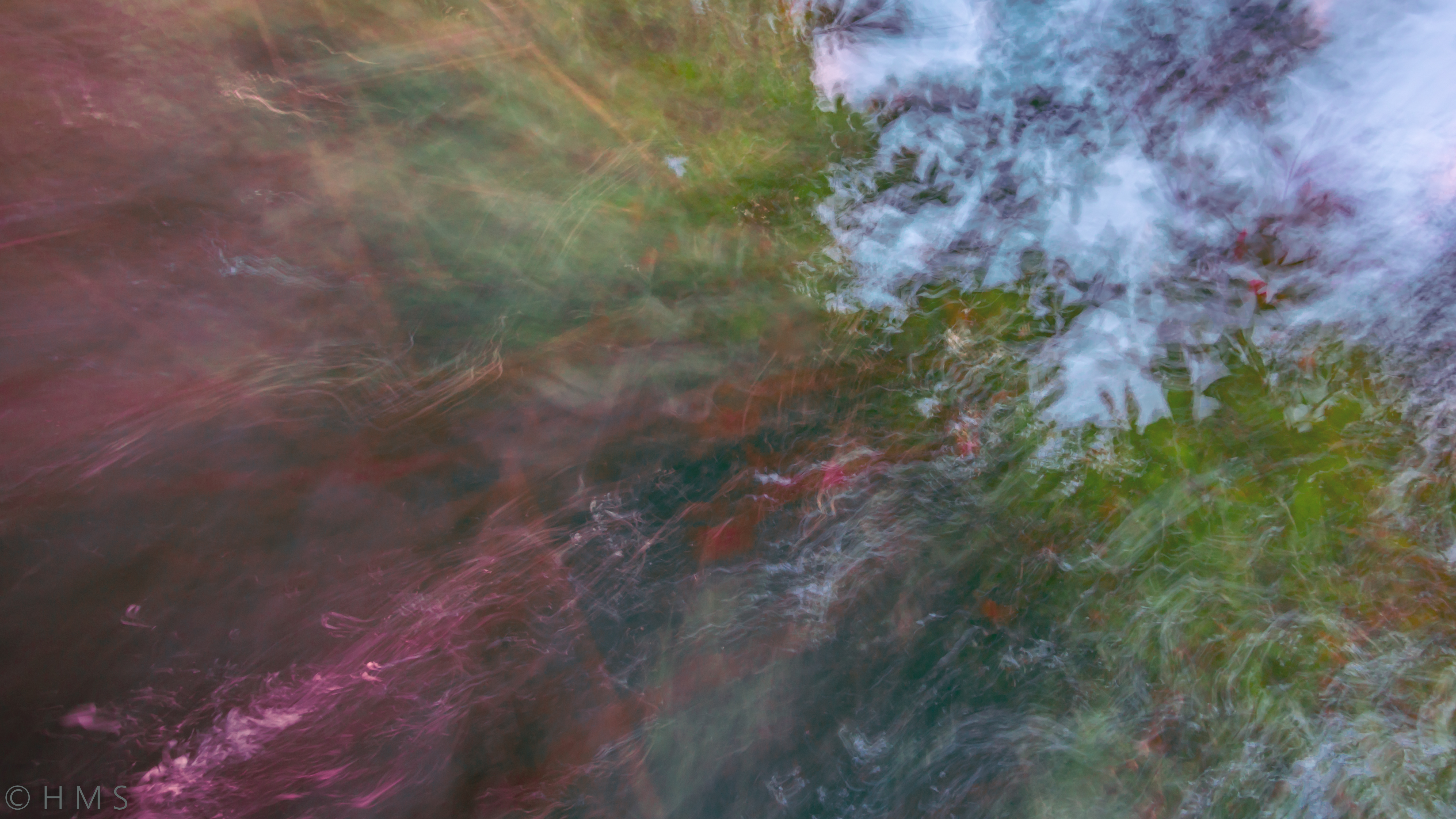
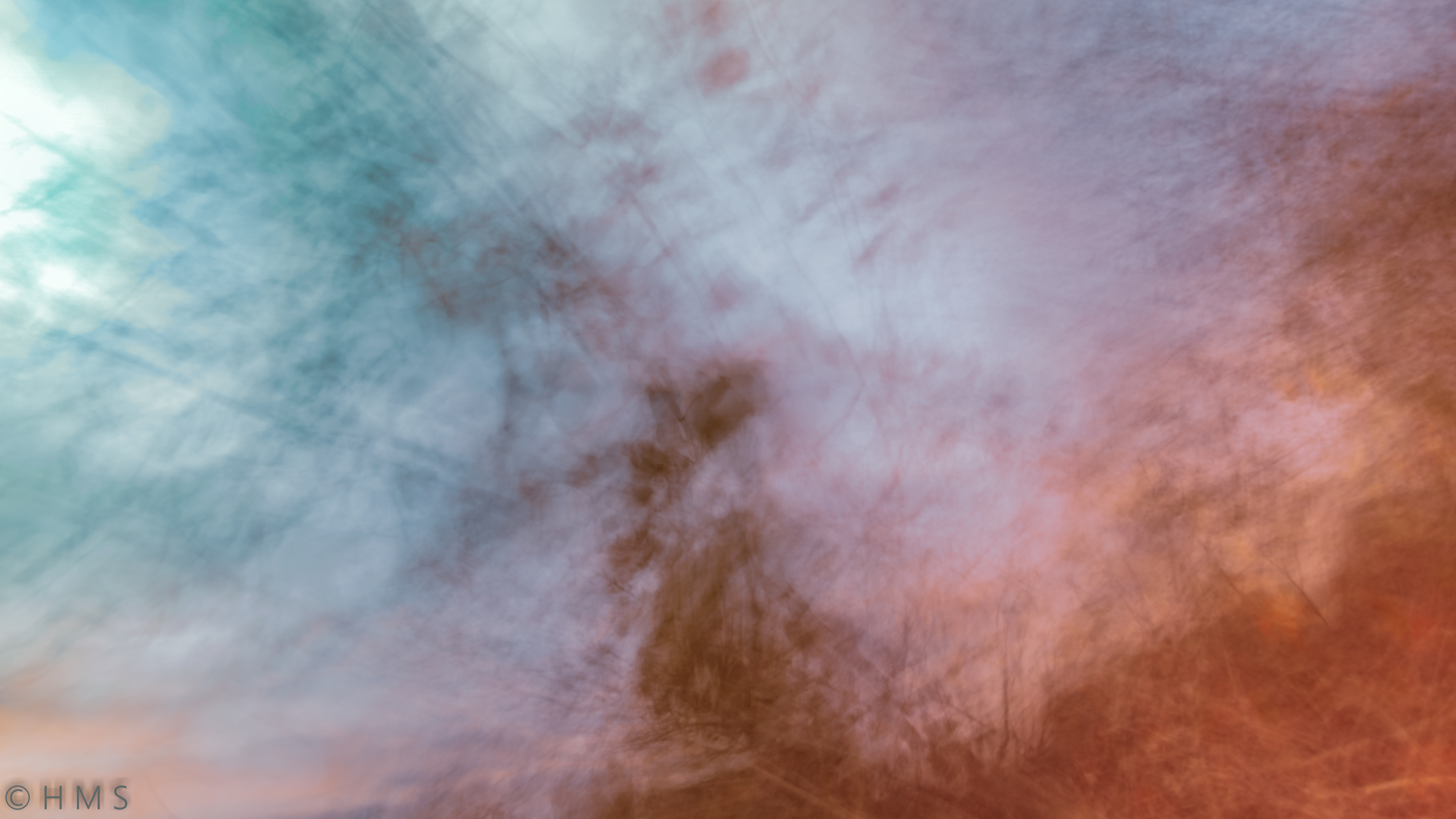

These mixed abstractions remind us that allegory does not always emerge from the void: sometimes it requires the seed of the visible. A tree, a leaf, a flower — each is transformed by movement into a symbol of something larger, something that speaks of resilience, growth, or impermanence.
Toward a Unified Vision
Though the series unfolds in two directions, both converge on the same path. The pure abstractions show the independence of color and rhythm as allegory; the mixed abstractions show the metamorphosis of nature into symbol. Together, they affirm the essence of my practice: ICM not as technique, but as a language of transformation.
The Abstraction Series does not aim to resolve the tension between these approaches. Instead, it embraces it. The coexistence of fire and foliage, of eruption and blossom, of color fields and branches, mirrors the dual nature of abstraction itself: it can arise from the world or apart from it, yet in both cases it speaks in allegory.
What binds these images is not their subject but their intention: to suggest that the visible world is always more than it seems. Whether in a cascade of red light or in the tremor of leaves, abstraction here becomes the poetic act of revealing that hidden surplus.

Leave a comment