Urban Light Collection explores the city as a stage where light collides with geometry and human presence.
Through intentional movement, streets and structures dissolve into abstract impressions, revealing rhythm beneath chaos.
Each image transforms the urban landscape into allegory — a mirror of both collective energy and fragile solitude.

A blazing sun breaks through desaturated human walls, lifeless blues that attempt to contain the inevitable. Cosmic fire spills downward in incandescent streaks, devouring the street. This work confronts the living against the inert, the eternal against the constructed, turning the street into an allegorical stage where nature reclaims its power.
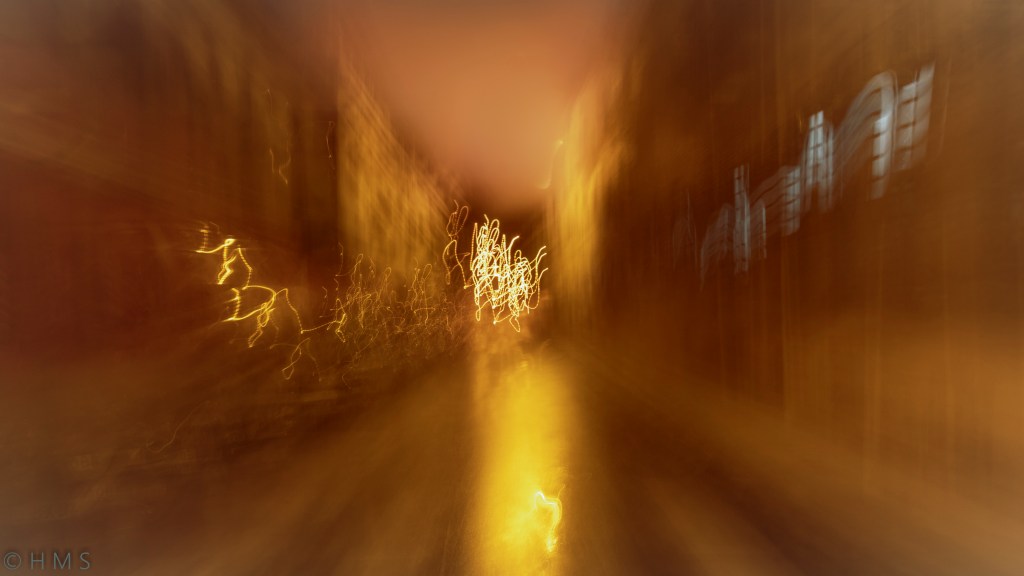
Decadent Golden City glows with seductive radiance, yet the brilliance conceals decline. The golden tones shimmer like fading luxury, where beauty masks fragility and urban life reveals its fragile core.
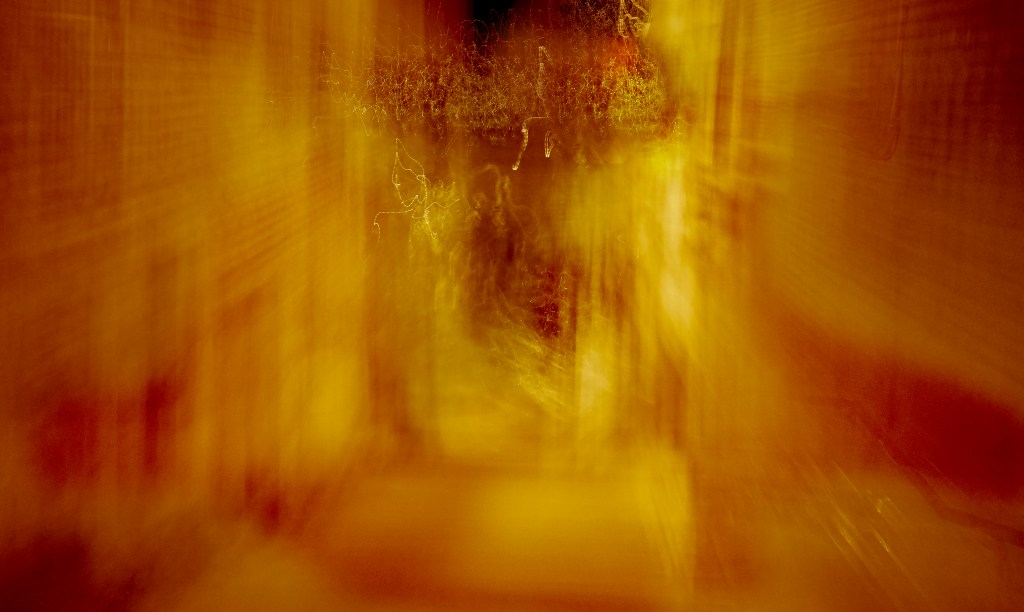
The Sun’s Reckoning shows the metropolis consumed by its own glow. The golden light turns harsh, scorched, as if the city were burning from within — a vision of splendor transformed into ruin
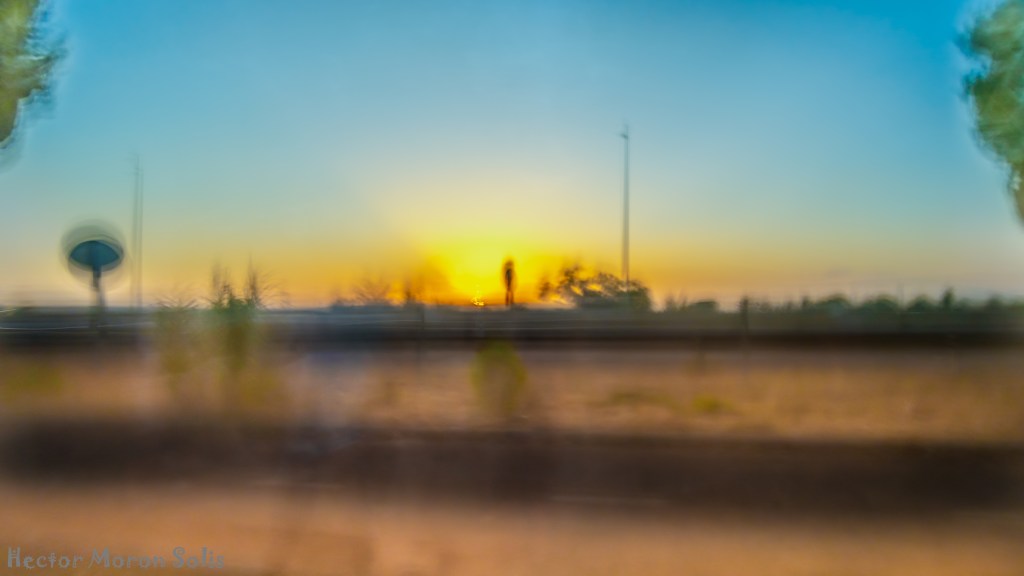
Where the human figure faces the vast geometry of the urban world. Between concrete and light, a silent tension emerges: nature tries to reach, yet the highway divides. The image captures that fragile moment when the last sunlight becomes a promise of redemption, transforming the city into an allegory of resistance and solitude.

Impressionist City translates the pulse of the modern city into an impressionist abstraction, achieved through intentional camera movement (ICM). The photograph dissolves architecture and streets into luminous strokes of gold and shadow, evoking both the grandeur and fragility of urban life. Part of Héctor Morón’s Urban Series, this work blends fine art abstraction with expressionist allegory, transforming the city into a poetic vision beyond its physical form.
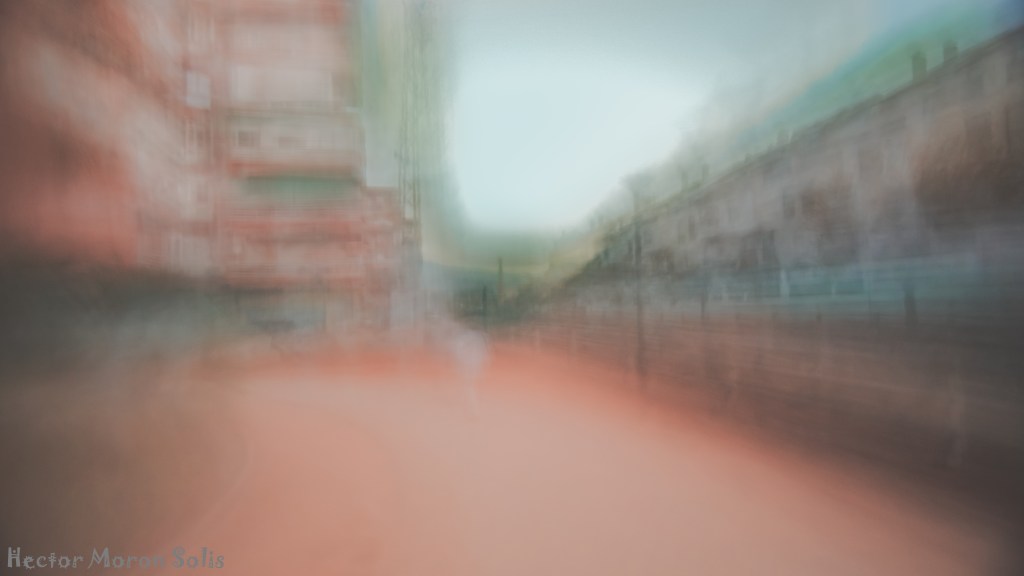
Through layers of motion and light, the urban landscape dissolves into a soft abstraction where architecture becomes emotion. The image reflects the human condition inside modern cities — presence erased by movement, form replaced by remembrance.
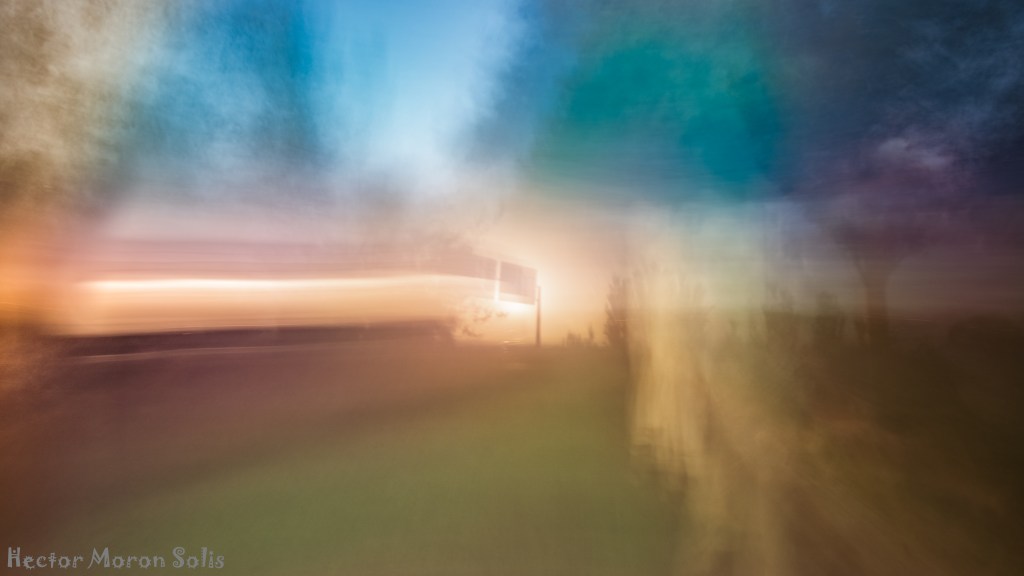
The boundary between natural and artificial light becomes a metaphor for modern faith. The luminous pole stands as a vertical axis of energy —a human sun born from the road— while the landscape dissolves into color and silence. The image explores how technology inherits divinity, turning the highway into a contemporary altar of light.
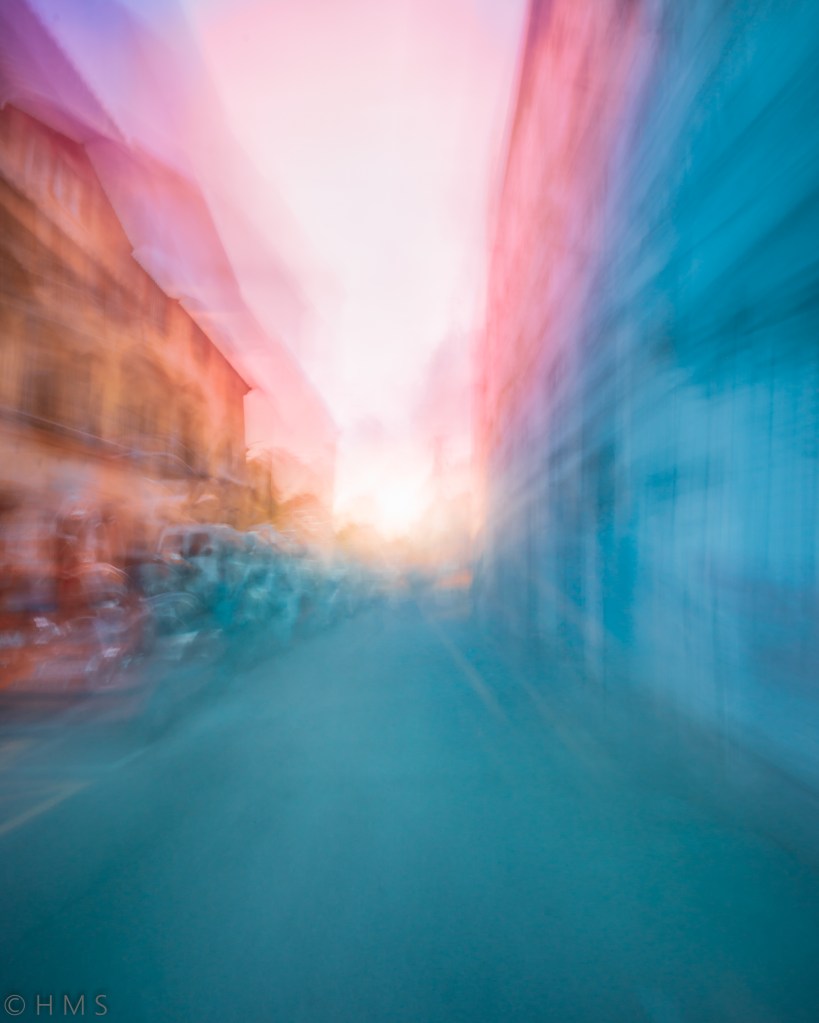
Just Cars I reduces the city to its vehicles, where metal and motion dominate the frame. The presence of people fades, leaving only cars as monuments of modern dependence
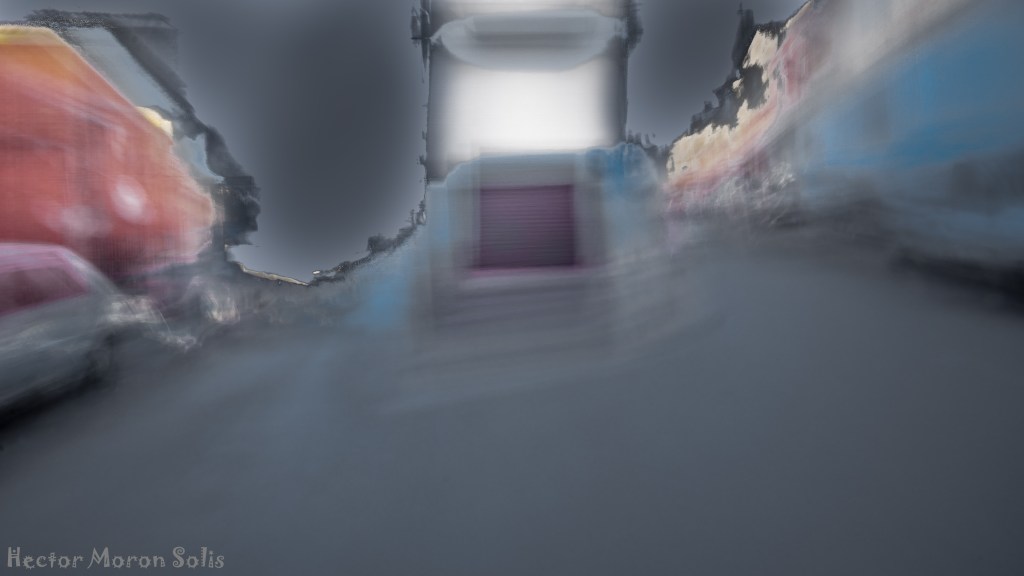
Just Cars II continues the vision of the automobile as urban protagonist. Here the alignment of vehicles becomes rhythm and repetition, a pattern of dependency where individuality disappears into uniform motion.

Hospital City presents the urban landscape through sterile lines and clinical atmosphere. Architecture becomes functional yet impersonal, a reflection of how the city turns into a space of control, order, and quiet unease.
