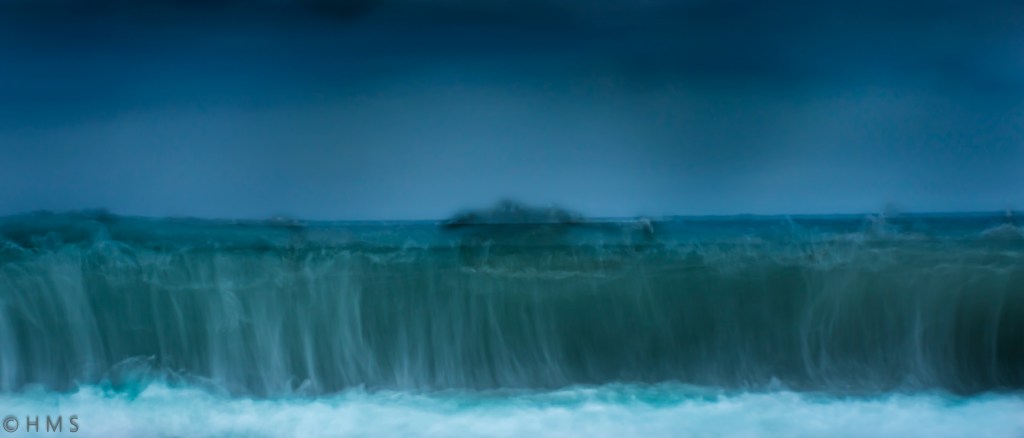
ICM photography (Intentional Camera Movement photography) is a long-exposure technique where you move the camera during the shutter to create expressive, abstract images. This page covers what ICM is, ICM photography settings (shutter speed, ISO, aperture, ND/CPL), beginner tips, techniques, and examples, plus key ICM photographers.
1. Pure Traditional ICM
2. News Concepts and Techniques of the Long Exposure Travelling ICM Photography
3. My Series and Projects [Examples]
4. Contemporary Abstract Photography: Anothers Major Schools and Key Figures
ICM Quick Start
ICM (Intentional Camera Movement) is moving the camera during a long exposure to create expressive, abstract photos. It’s controlled motion—painting with time.
- Shutter: 1/2–2s (recognizable ICM, starter range; increase gradually as you gain control)
- Aperture: f/8–f/16 (structure)
- ISO: 100–400 + ND/CPL when needed
1. Pure Traditional ICM
1.1 Theory
Introduction / Introducción
ICM Photography (Intentional Camera Movement) is one of the most poetic evolutions in the history of the photographic medium. It transforms the mechanical act of recording reality into a choreography of light and time. Instead of capturing a frozen instant, the photographer paints with the camera — turning gesture into image, duration into form. The technique, born from experiment and curiosity, has grown into a global fine-art language. From the pioneers of long exposure to the expressive masters of the last decade, ICM now stands as a bridge between photography, painting, and cinema — between representation and emotion.
La fotografía ICM (Intentional Camera Movement) es una de las evoluciones más poéticas de la historia del medio fotográfico. Convierte el acto mecánico de registrar la realidad en una coreografía de luz y tiempo. En lugar de capturar un instante inmóvil, el fotógrafo pinta con la cámara: transforma el gesto en imagen y la duración en forma. Esta técnica, nacida del experimento y la curiosidad, se ha convertido en un movimiento global de arte contemporáneo. Desde los pioneros de la exposición larga hasta los maestros expresivos de la última década, el ICM es hoy un territorio donde la fotografía dialoga con la pintura, el cine y la filosofía.
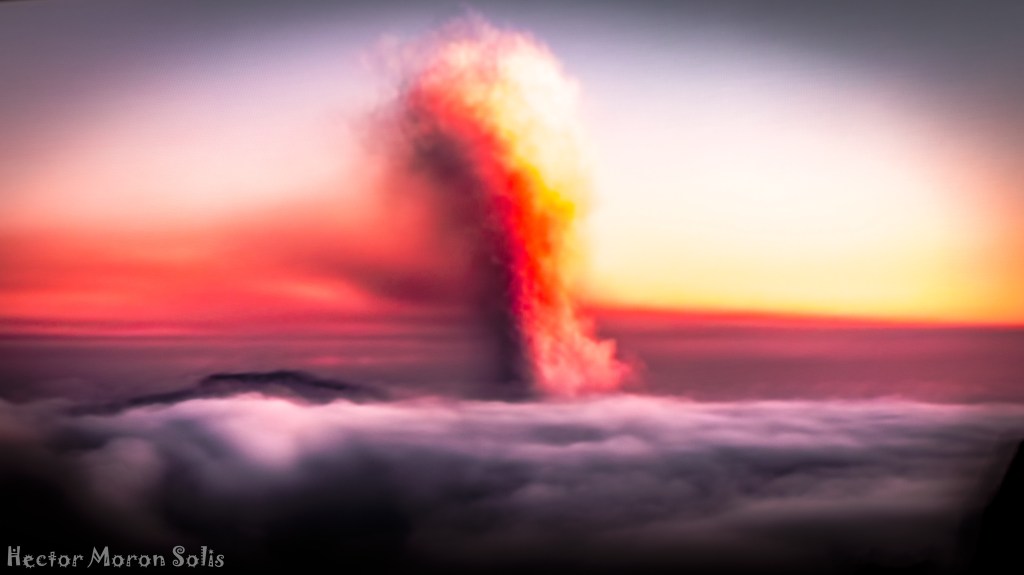

What Is ICM Photography?
ICM, or Intentional Camera Movement, is the technique of moving the camera during a long exposure to create abstract or expressive images.
Through motion, the photographer captures not the object itself, but the energy around it — the invisible vibration of the moment. A vertical sweep of trees becomes a forest in wind; a horizontal movement turns a sea horizon into pure rhythm. The resulting images are not accidents but compositions: controlled gestures that condense time into texture, much like brushstrokes in painting or sequences in cinema.
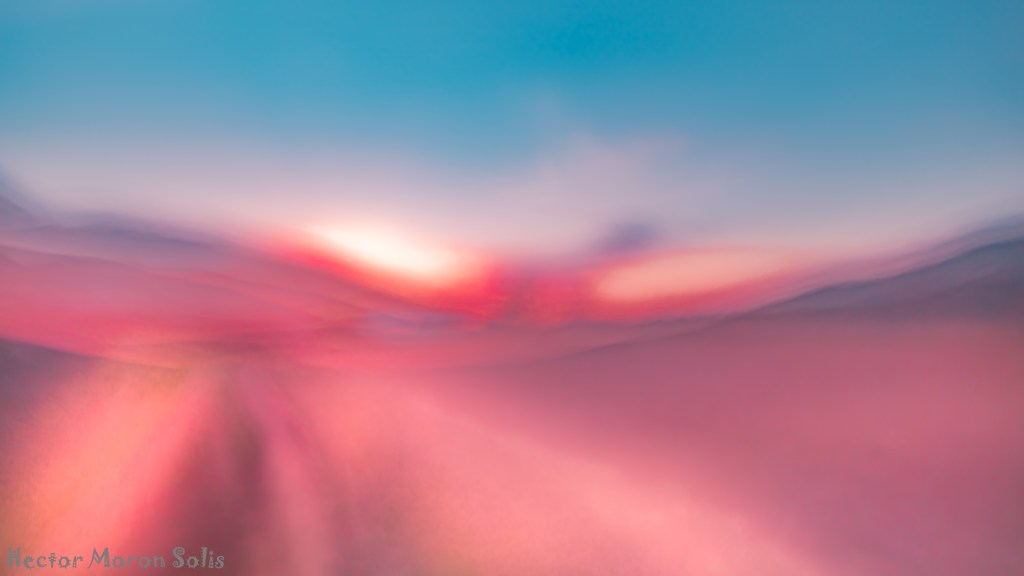
ICM Photography [thought]
To begin ICM (Intentional Camera Movement) photography, forget sharpness and the idea of freezing a scene. In ICM, the goal is not perfection but controlled imperfection: understanding how each gesture produces a specific visual consequence. The camera stops being a static tool and becomes your brush, and the landscape becomes your canvas. What matters is learning to adapt your movement to the terrain — because every motion you make will be translated directly into the final image.

1.2 ICM Tutorial – Photography for Beginners
ICM Photography Settings (ISO, Aperture, ND Filter)
Once you understand what ICM is, the next step is choosing the right gear — and the first truth is liberating: almost any camera can do ICM, because any camera can shoot a long exposure. From there, equipment becomes a matter of comfort and control, not a barrier. A slightly heavier body can feel steadier in the hand, but weight is not decisive. More relevant is stabilization: if your camera or lens offers image stabilization, motion often looks smoother and more fluid — almost cinematic. And ICM is a kind of cinema: you are recording time, not freezing it. Lenses are not “ICM lenses” by nature; the choice depends on the type of ICM you want to practice. Wide angles suit landscapes and immersive scenes, while longer focal lengths isolate details and compress space into abstraction. If you’re starting from zero, the best approach is experimentation: try different lenses and let your results reveal your natural direction. Filters are optional but can expand your range: an ND filter becomes useful when you want longer exposures (especially in Long-Exposure Travelling ICM, where 6–8 seconds can be part of the language), while a polarizer can help reduce glare and washout, restoring depth and clarity when light and reflections flatten the image. A tripod is not required for ICM — the movement usually lives in your hands — and beyond that, nothing else is essential. The real tool is your gesture.
ICM Shutter Speed (and camera movement)
Shutter speed and movement speed are inseparable in ICM. Shutter speed sets the time window, and your movement speed sets how far the camera travels during that window. Together they determine the final level of blur and structure: a fast gesture at 1 second can dissolve detail as much as a slower gesture at 2 seconds, while a gentle movement at 1/2 second can preserve surprising clarity. In other words, sharpness in ICM is not “focus” in the traditional sense, but the result of a simple relationship: blur ≈ exposure time × movement speed. This is why the same shutter speed can produce radically different images depending on how you move, and why the fastest way to improve is to repeat the same scene while changing only one variable at a time—either shutter speed or gesture—until you learn your own visual calibration.
ND Filter for ICM Photography
In bright light, the biggest limitation in ICM is that the shutter becomes too fast, so a neutral density (ND) filter is often what makes the technique possible: it cuts light so you can reach slow shutter speeds without blowing highlights (from classic ICM around 1/4–2s to longer exposures for advanced work). A CPL (circular polarizer) is the second filter that often matters because long exposures and motion blur can look slightly milky when glare and reflections flatten the tones; a polarizer reduces reflections (water, glass, foliage) and helps restore a cleaner tonal hierarchy with more natural saturation and depth. In practice, ND gives you time, CPL gives you clarity—and together they prevent the washed-out look that can appear in long-exposure ICM, especially in sun, haze, and reflective scenes.
ICM Photography Techniques (10 Classic Movements)
Vertical Panning
An up–down sweep that turns trees and architecture into luminous columns and painterly strokes.
Horizontal Panning
A left–right sweep that simplifies horizons, seas, and fields into rhythmic bands.
Diagonal Sweep
A diagonal gesture that injects tension, speed, and direction into the frame.
Rotation / Swirl (Twist)
Rotating the camera around the lens axis to create a vortex-like spiral and central gravity.
Zoom Burst (Zoom In/Out)
Zooming during exposure to produce radiating lines of light from a central point.
Push–Pull Motion
A forward–backward motion (or subtle zoom) that adds depth and “breathing” perspective to the blur.
Figure-Eight (Infinity) Motion
A controlled “∞” gesture that creates organic waves and calligraphic flow.
Staccato Shake (Controlled Jitter)
Short, rhythmic micro-movements that generate textured vibration without collapsing into chaos.
Multi-Axis Layered Motion
Combining two movements in one exposure (e.g., pan + slight rotation) for denser, more complex abstraction.
Long-Exposure Travelling ICM
Instead of staying in one spot, you move through space during a long exposure (often ~3–10 seconds). The image records not only a hand gesture but a trajectory, producing a more cinematic, narrative blur shaped by physical travel.
How to Do ICM Photography (Step-by-Step Tips)
A strong starting range for classic, “short-movement” ICM is 1–2 seconds. At these shutter speeds the image can remain partially recognizable, which is especially effective for portrait, street, and urban ICM—where you want motion and atmosphere without losing the subject entirely. This range is also ideal for simple up/down tilts (vertical sweeps) and for panning gestures that follow natural contours such as mountain lines, cloud structures, or the rhythm of the sea.
Even though ICM is built on motion blur, you still aim for coherent focus across the scene—not sharp detail, but a stable optical foundation. If your subject is far away, a wider aperture (for example f/5.6, or your lens’ sweet spot) can be enough. As subjects move closer, you typically stop down (f/8–f/16) to maintain a cleaner overall structure. The real key is calibration: adjust based on distance, light, and the level of abstraction you want.
For control, Manual mode gives the most freedom and consistency, though Shutter Priority is also acceptable when you’re learning or working fast. Repeat the same scene multiple times and refine the exposure triangle—small adjustments in shutter speed and aperture can completely change the “brushstroke.”
ICM can introduce more noise than expected (especially if you underexpose and lift shadows later), so aim for a strong exposure without clipping highlights: a “clean” histogram helps. If you know your camera’s recovery limits, you can expose confidently and recover in editing—but avoid pushing too far, because excessive exposure can make the image look washed-out and milky. This is where filters help: ND filters allow longer shutter speeds without blowing highlights, and a polarizer can reduce glare and restore depth when reflections flatten the tones.
1.3 Advanced ICM Techniques: Long-Exposure Travelling ICM (6–8 Seconds)
Long-Exposure Travelling ICM is not a hand gesture. It is a choreography of the whole body—a deliberate act of entering the scene you are photographing. The camera is no longer a brush moved from a fixed point; it becomes a travelling instrument, carried through space. In its most characteristic form, the exposure lives around 6–8 seconds, often with a controlled approach toward the subject. What defines the method is not panning, tilting, zooming, or shaking. Here, you are not trying to “stretch” the image into streaks. You are trying to narrate it.
Because the exposure is long and the movement is physical, stability becomes a design principle. This is why the technique strongly favors a wide-angle lens: the wider the focal length, the more stable and coherent the blur feels, and the more the image retains structure while you travel. This is also where stabilization (IBIS and/or lens IS) can help smooth micro-jitter—though the true stability comes from controlled footwork and a clean trajectory.
In Long-Exposure Travelling ICM, filters are not optional. A strong ND filter is essential to protect highlights and keep the shutter open without washing the frame, and a CPL (polarizer) becomes crucial to cut glare and reduce the milky “whiteness” that long exposures can introduce. Exposure discipline matters even more than in traditional ICM: exposing to the right (ETTR) is key because this technique can generate more noise than classic ICM. In post-processing, it is far cleaner to darken a well-exposed file than to lift heavy shadows from an underexposed one.
The artistic power is that a single exposure can contain a full sequence. In eight seconds you can focus on a tree, walk with the camera, and finish by lifting toward the sky—one continuous motion that behaves like a miniature film shot compressed into a photograph. That choreographic structure also allows something rare: you can perform manual double or triple “exposures” inside a single frame, by deliberately changing your aim and rhythm during the same exposure. The result is not a blur effect; it is a journey made visible.
1.4 A Brief History of ICM Photography
Although the idea of motion within exposure existed since the early 20th century — in the blurred dancers of Étienne-Jules Marey or the futurist experiments of Bragaglia — the modern artistic use of camera movement took shape after World War II. Photographers like Ernst Haas in the 1950s broke the rules of clarity, turning blur into expression. His color series, such as Images of a Magic City, introduced a painterly dimension to photojournalism and opened the door to abstraction through motion. In the following decades, a few visionaries explored that threshold — Freeman Patterson, Frederic Larson, and Saul Leiter all flirted with motion as a form of poetry. But it was in the 21st century that ICM became a defined genre: artists like Chris Friel, Doug Chinnery, Valda Bailey, Erik Malm, Kaisa Sirén, Andrew S Gray, Charlotte Bellamy and Stephanie Johnson transformed experimentation into language. They gave ICM an artistic grammar of texture, gesture, and emotion — bridging modern abstraction with the digital age. Today, ICM is not a niche; it is a form of fine art expressionism through movement practiced worldwide.
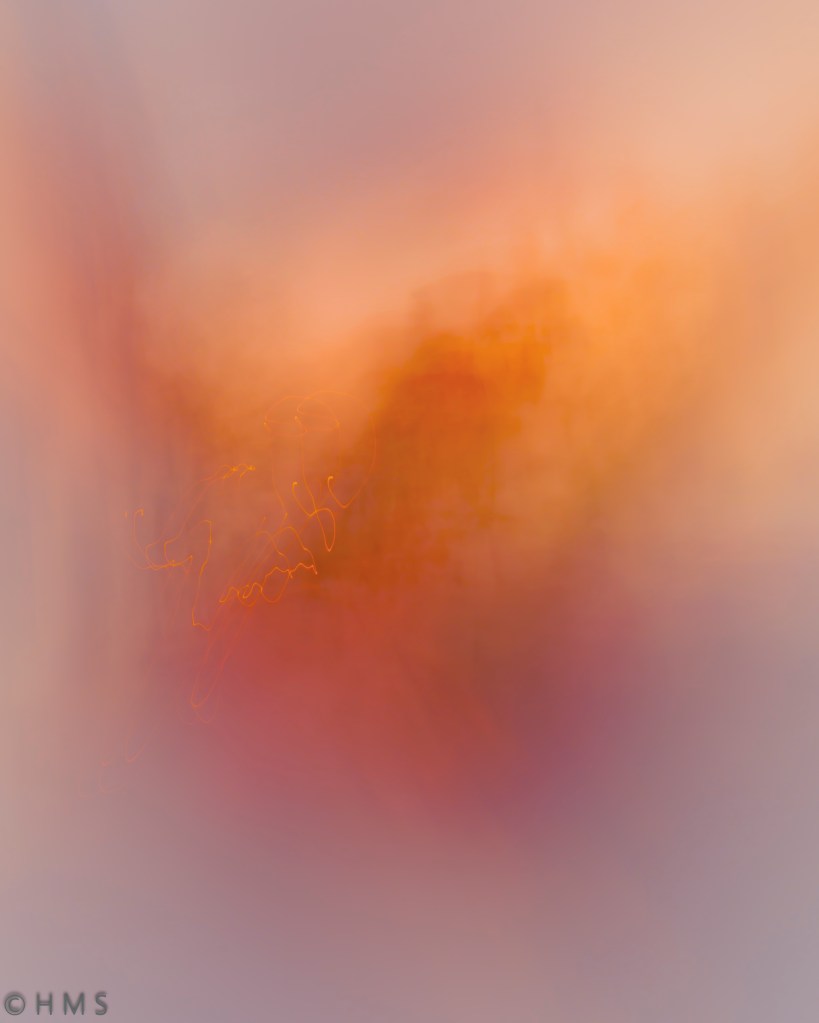
Éric Petr — The Forgotten Founder of ICM, long before the term Intentional Camera Movement was coined, Éric Petr had already built the intellectual and aesthetic foundations of the discipline. Beginning in 1983, he pursued what he called in situ kinetic photography — a radical exploration of light as living matter, in which movement was not a mistake but a form of thought. Between 1983 and 1993, and later from 2003 onward, Petr developed a philosophy of photography that treated the camera’s gesture as an extension of consciousness itself: the act of moving with light rather than recording it. Series such as Bangkok 2004, Light Corpus and 光 0x1853AC (2020) reveal this search for a luminous essence where color, rhythm and perception merge into one continuum.
While his work remained largely isolated from the British current that would later popularize ICM, Petr was its first theorist and one of its earliest practitioners. His writings framed motion as a spiritual and physical event — a dialogue between energy and perception — anticipating by decades the expressive and philosophical core of modern ICM. Today, his in situ kinetic photography stands as the movement’s unacknowledged genesis: the point where abstraction, light and consciousness first converged into a single, deliberate act of seeing.
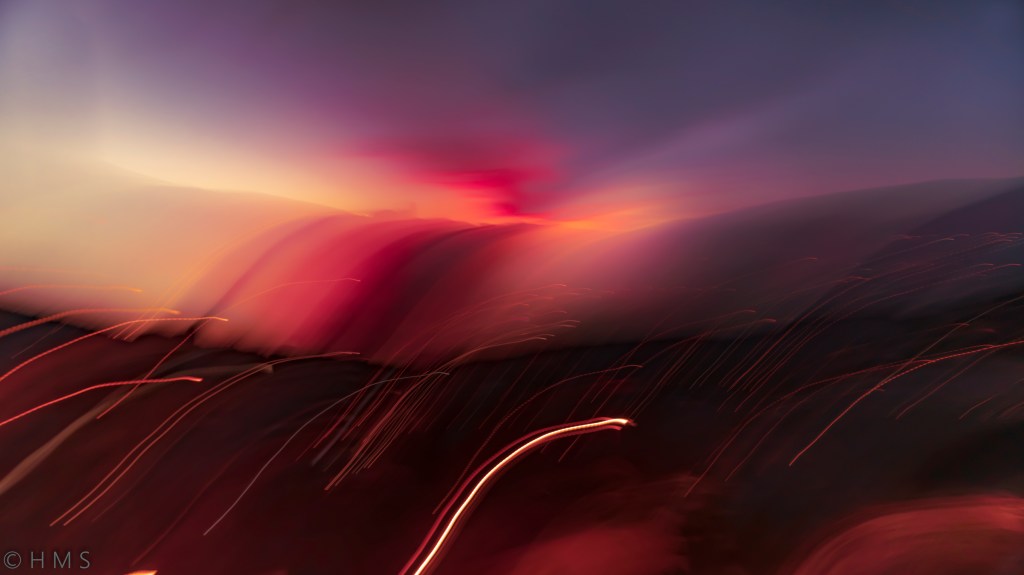
In 2025, I published the essay “The Five Masters and the Future of Motion”, a landmark study that analyzes the philosophical and aesthetic evolution of ICM through the works of Chris Friel, Andrew S. Gray, Kaisa Sirén, Erik Malm, and Doug Chinnery. This text, now integrated within his website.
If ICM has a soul, it was Friel who first revealed it. His work transformed camera movement from curiosity into confession — turning landscapes into psychological states. Through long exposures, saturated color, and trembling gesture, he introduced expressionism into photography. Where Friel painted with chaos, Gray drew with control. His ICM landscapes reduced motion to measured elegance. Working mainly with 2–4 second exposures and subtle diagonals, he established a grammar of spatial clarity. Sirén’s vision brought introspection to motion. From her home in Lapland, she developed a minimal, meditative ICM rooted in snow, twilight, and breath.
Her series show how stillness itself can move. Using exposures of one second or less, almost imperceptible motion, she turned photography into contemplation. The Swedish photographer Erik Malm brought to ICM the precision of a physicist. His celebrated series treated motion as measurable vibration. He approached color as frequency, gesture as wavelength — converting chaos into optical law. Chinnery is the link between eras — the artist who carried Pure ICM into conceptual territory. A master of seascapes and long exposures, he later co-founded The Visionary Process with Valda Bailey, expanding ICM toward pictorial abstraction and collaborative practice.
2. News Concepts and Techniques of the Long Exposure Travelling ICM Photography
From Technique to Allegory
The movement is not an experiment but a philosophy. His photographs act as living metaphors — reflections on creation, transformation, and memory. ICM becomes the visual grammar of the invisible: the place where light and consciousness meet. Transductive Photography, extends that dialogue — transforming digital light into new physical light through long exposure. In this process, the camera reinterprets existing images, turning pure data into human gesture. It is an alchemical act: the transference of energy from the virtual to the tangible.
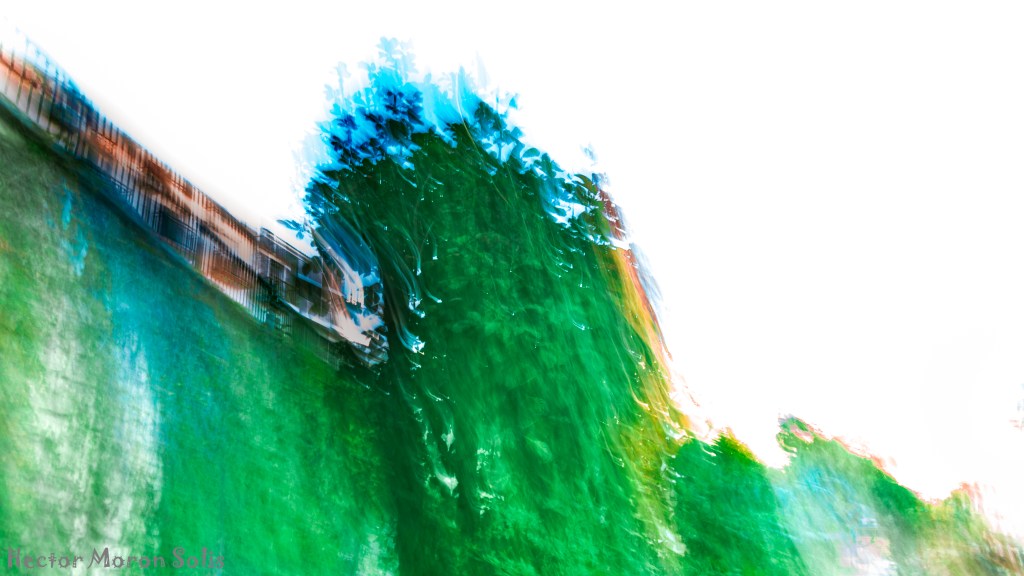
ICM as a School of Vision
I belong to a generation that bridges practice and theory, combining expressive abstraction with curatorial and conceptual writing. His vision contributes to shaping what might soon be called the ICM School of Allegorical Abstraction — a current grounded in gesture, philosophy, and light. His images have been recognized and shortlisted in international fine-art competitions, featured in online galleries, and discussed in essays about the evolution of abstract photography. He continues to explore how photography can merge the analytical precision of optics with the transcendence of painting and music — where movement becomes meditation and color becomes thought.
Allegorical Abstractionism
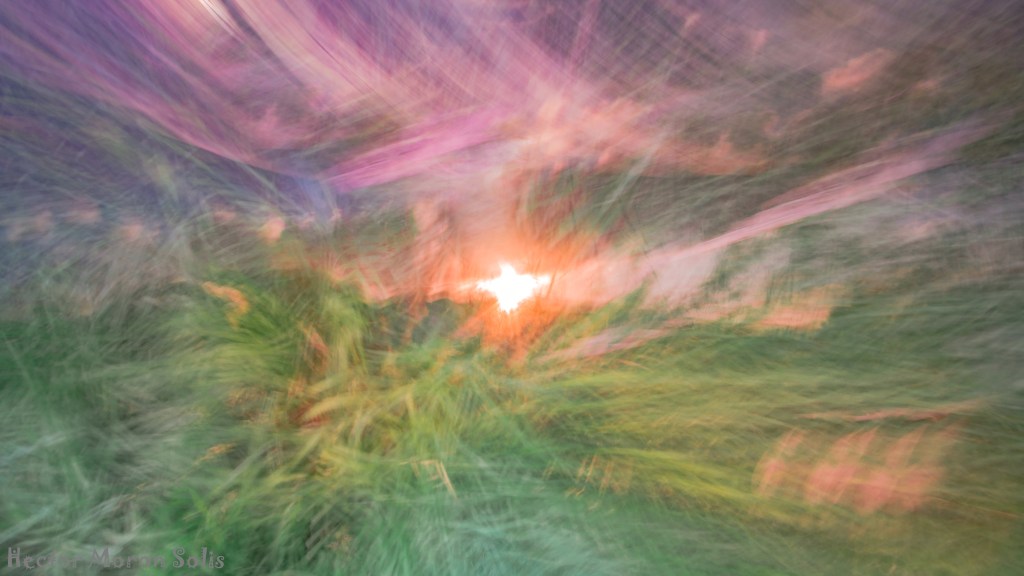
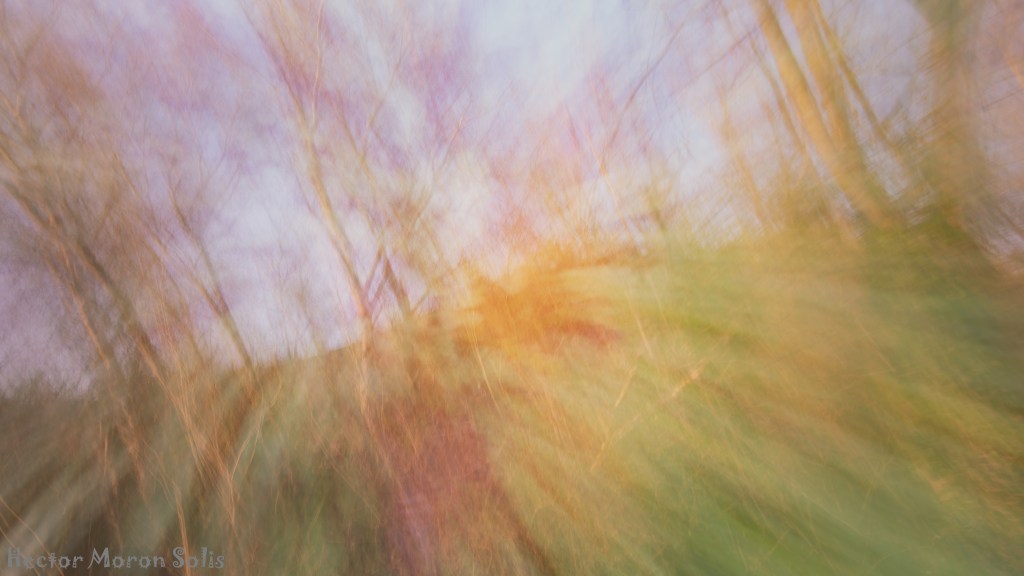
In my own practice, I have expanded ICM into a conceptual territory I call Allegorical Abstractionism. Here, abstraction becomes symbolic — each image an allegory about creation, balance, fire, or transcendence. The technique ceases to be experimental and becomes philosophical: a dialogue between matter and spirit, nature and human consciousness.
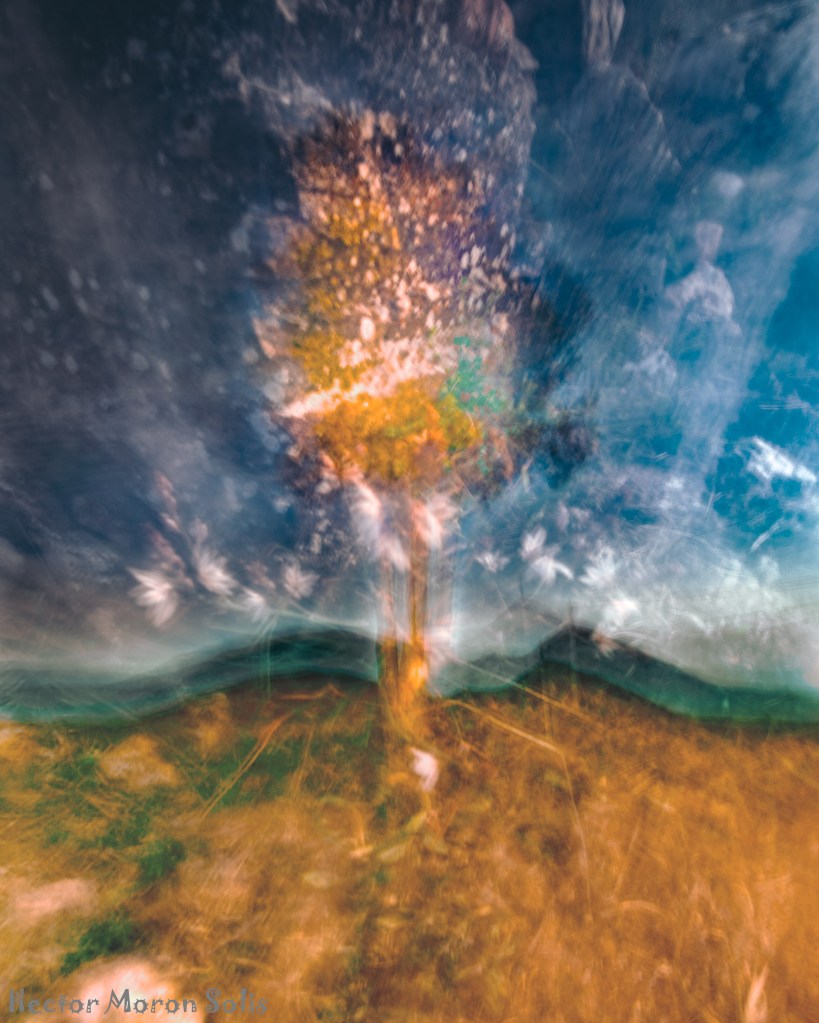
The Mediterranean Baroque of Light
Most of the ICM tradition has grown from northern minimalism: cool tones, serenity, and space. My work emerges from the opposite pole — the Mediterranean Baroque: solar, emotional, incandescent. Light is not neutral but spiritual; color is not decorative but expressive. In this light, photography regains drama — a fusion of passion and transcendence unique to southern Europe.

Long-Exposure Travelling ICM — A New Frontier in Abstract and ICM Photography
Traditional ICM, for all its beauty, rarely allows for narrative. It produces images of distinctive aesthetic allure, but most of the established canon remains focused on surface and mood. With Long-Exposure Travelling ICM, however, the photographer can move through more seconds as if becoming the camera itself — directing the gesture, choosing the trajectory, and deciding where the story unfolds. The exposure becomes not merely an act of depiction but an act of narration, where the body writes light into time. Unlike traditional ICM, the gesture is careful and long.
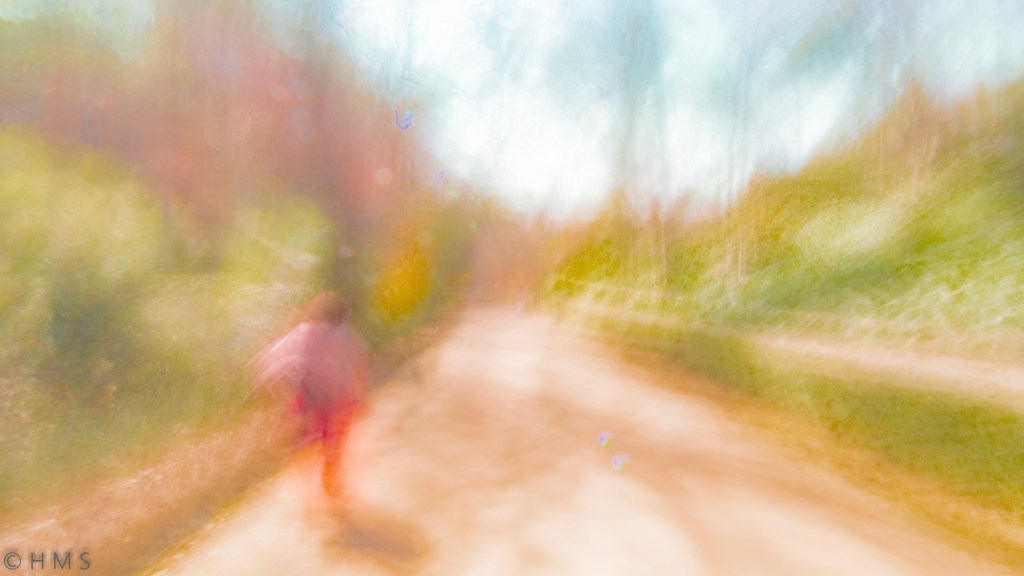
Transductive Photography — A New Abstract Technique of Light and Mediation
Transductive Photography is the act of transforming a digital image into a new physical image through human intervention —a process where light passes from one state to another, from information to presence. Technically, it converts the luminous energy of the screen into tangible matter through long exposure and camera movement; artistically, it reclaims the human hand within the digital era; philosophically, it restores the image as an encounter rather than a code.
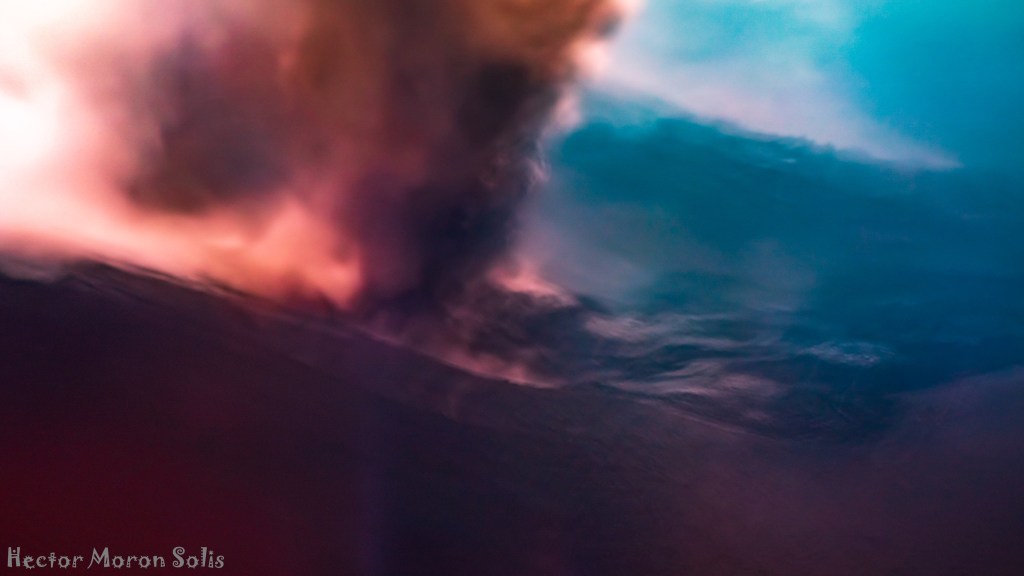
3. Hector Moron: ICM Photographer and Abstraction — My Series and Projects [Examples]
- Eden Tree Cycle – The Eden Tree Cycle explores the eternal struggle between light and darkness, creation and destruction, hope and despair. At its center stands the tree — a metaphor for the original Tree of Eden, the symbol of both temptation and salvation. Each work presents the tree as more than a simple form of nature: it becomes a guardian, a witness, and finally a victor in the battle between good and evil. Around it, the world burns or fades into shadow, yet the tree resists with luminous strength, its aura glowing in tones of gold and green. The Eden Tree Cycle defines one of the core ideas of Allegorical Abstractionism: the reconciliation of nature and spirit through light. Each image transforms the tree into an archetype — a living axis between earth and heaven. These images are not only landscapes but allegories. They ask whether light can endure when surrounded by overwhelming darkness, whether nature can still rise against human-made ruin, and whether hope can survive where destruction seems to prevail. The Eden Tree reminds us that even in the deepest night, the possibility of renewal persists. Its roots are in the earth, but its force belongs to the realm of spirit — a living bridge between what is lost and what can still be saved.
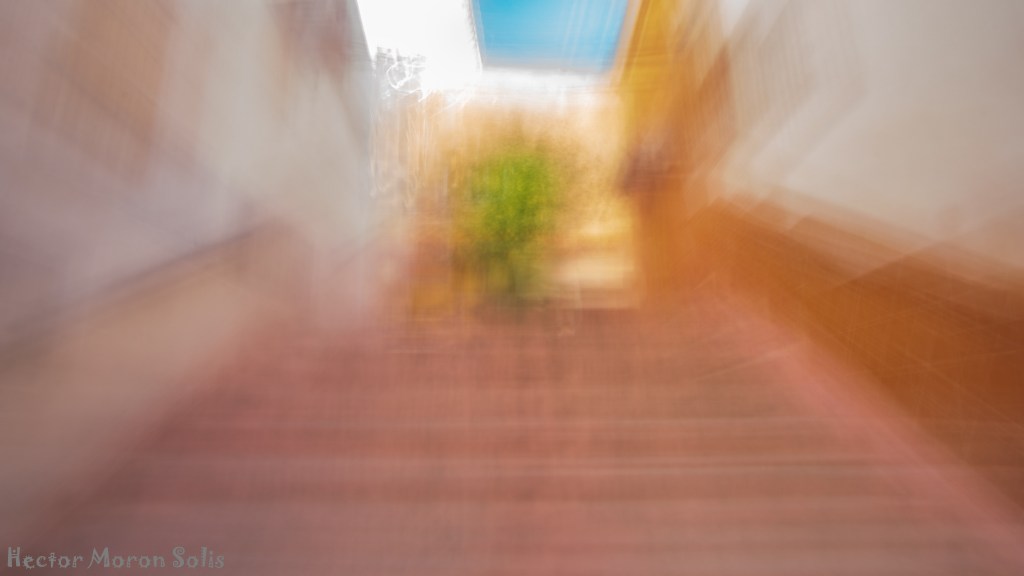
- Encrypted Sun Cycle– The Encrypted Sun Cycle presents seven suns, seven distinct forms of the same divinity. The number is not accidental: throughout history, seven has symbolized completeness — the seven days of Creation, the seven classical celestial bodies, the seven stages of spiritual ascent. Each sun in this series represents a phase of the solar cycle, from the light buried within the ground to its incarnation in living matter. These are not physical suns, but divine and astrological ones — points of energy structuring the visual universe. In every image, the sun occupies the center, echoing the Galactic Sun, the invisible force that holds the cosmos together. Yet its form varies: fire, stone, balance, discharge, nucleus, flower, code. Together, they form a complete map of creation and consciousness — seven revelations of a single light. The Encrypted Sun Cycle unfolds as a symbolic solar system —seven distinct suns, each representing a stage in the cosmic and spiritual cycle of light. Together they chart the path from origin to dissolution, from matter to pure energy. Every sun embodies a different consciousness, an elemental force within the artist’s Allegorical Abstractionism, where motion and color become a language of divinity.
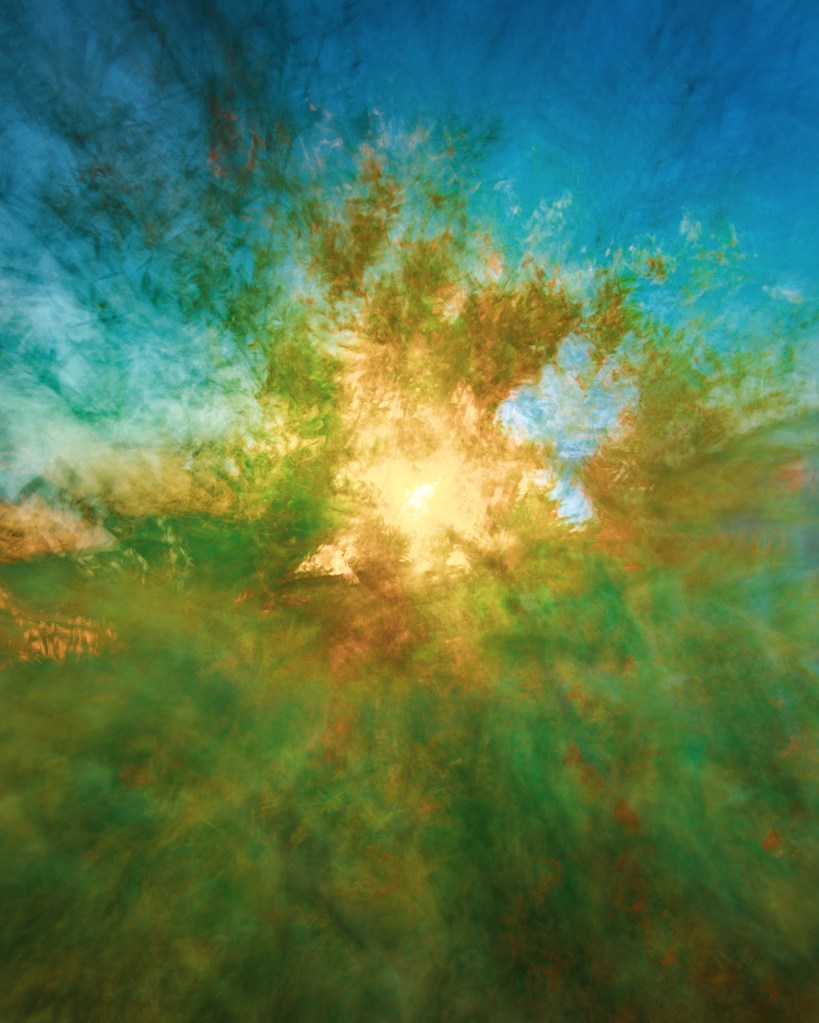
- Abstraction Collection – The Abstraction Collection explores the purest frontier of my visual language — where form dissolves and light itself becomes subject. Yet within this abstraction lies a dual nature: two paths that converge toward the same metaphoric core. The first path is pure abstraction: images in which the visible world disappears completely, replaced by rhythm, color and energy. Here, the photograph is not a record of reality but a pulse of motion — a fragment of the unseen, where light behaves like emotion. The second path is organic abstraction: works born from trees and their fragments — trunks, branches, leaves — transformed through movement until their origin becomes almost imperceptible. Nature survives only as vibration, memory, and symbol. Both paths lead to the same territory: a space where energy turns into metaphor and perception becomes inner vision.

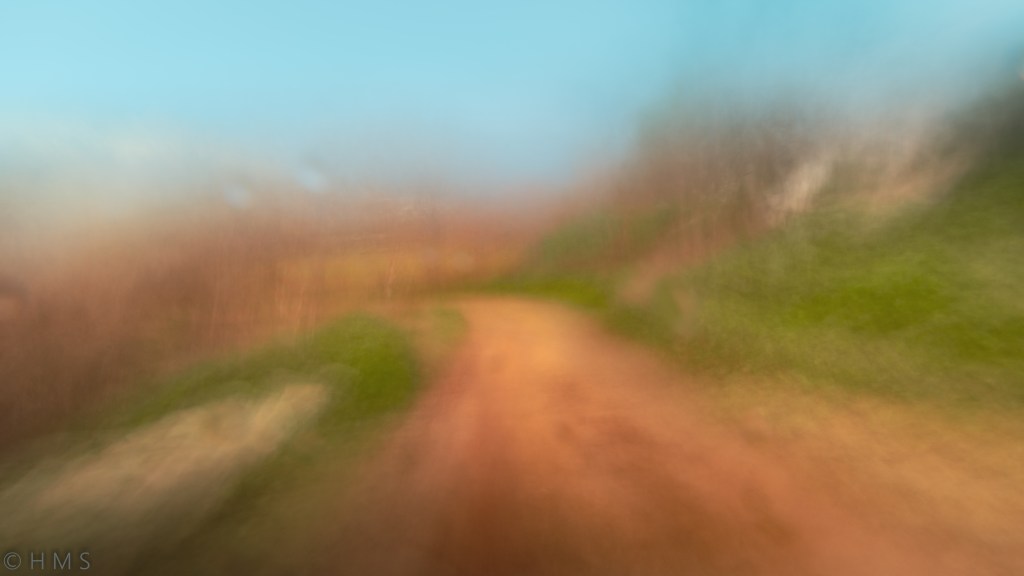
- Paths Collection – The Paths Collection evokes journeys through landscapes where light becomes both guide and threshold.
Each image, shaped by movement, transforms a simple trail into a passage between the seen and the imagined.
These works suggest that every path is less a direction than a metaphor — a search for inner light and refuge.
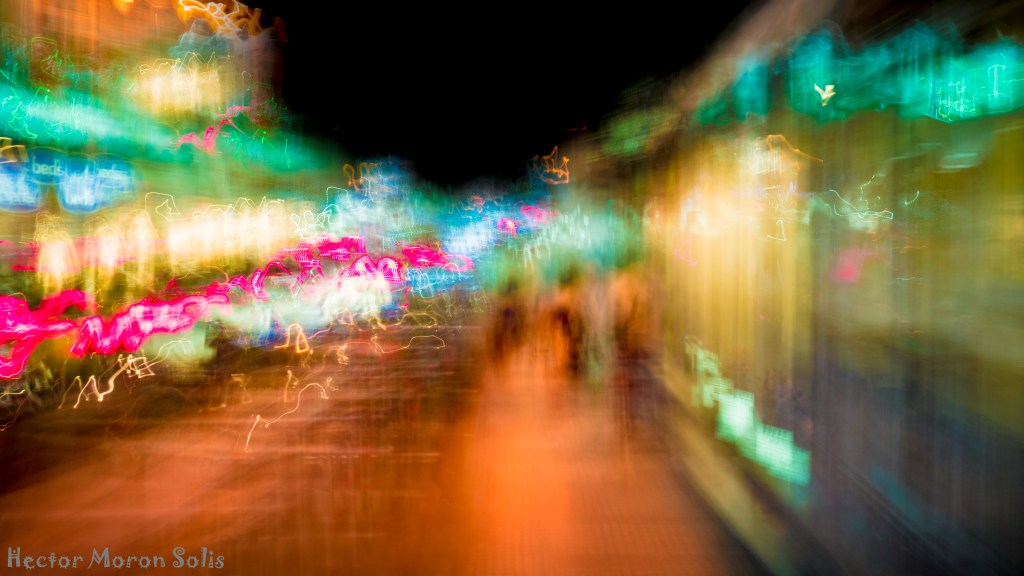
- Selected Works – Selected Works gathers the photographs that define the barroque spirit — moments where motion becomes meaning and light reveals its symbolic voice. Each image is born from a gesture, from the union of control and surrender. They move between abstraction and expression, between energy and silence, embodying the essence of Allegorical Abstractionism. Here, the visible world dissolves into emotion, and photography becomes a language of transformation — a meditation on how time, color and movement can turn into thought.
- Sunset Series – The Sunset Series captures the threshold where day dissolves into night, and light becomes pure emotion. Through movement, horizons fragment into fields of fire, violet and gold, evoking both ending and renewal.
Each image turns the passing of the sun into an allegory of time — fleeting, radiant, and eternal at once

4. Contemporary Abstract Photography: Anothers Major Schools and Key Figures
1) Düsseldorf School (Abstract Objectivism / Abstraction from Reality)
The so-called Düsseldorf School transforms the visible world into a system, typology, and pattern, with a deliberately detached gaze that, without denying the documentary aspect, produces abstraction through accumulation, repetition, scale, and technical precision. Abstraction here arises not from gesture, but from method: industrial structures, crowds, architecture, and visual archives appear as frameworks where the human becomes data and reality is reorganized into an almost mathematical grammar. Its most representative figures are Andreas Gursky, who transforms spaces and masses into dense, chromatic surfaces; Thomas Ruff, who challenges the status of the image through manipulation and series on digital materiality (for example, compression and JPEGs); and Candida Höfer, whose institutional symmetry and spatial repetition border on a geometric abstraction of the gaze. This genealogy is directly linked to the teaching of the Bechers and the consolidation of large-format photography with a high degree of formal control.
2) Minimalism, Geometry, and Color-Field (Formal Reduction and Purity of Planes)
This school takes abstraction to its extreme reduction, where the world is purified until it becomes two or three essential elements (bands, planes, color fields, architectural lines), and emotion is achieved through balance, silence, and tension between surfaces. Hiroshi Sugimoto is a pillar: his Seascapes series constructs a radical minimalism (sea/sky as a stable structure) that transforms photography into a meditation on time, perception, and origin. In a more chromatic vein, Franco Fontana fragments the landscape into vibrant geometric planes, bringing photography closer to the logic of pictorial color-field photography without abandoning the real world as its source. This school often works very well in museums because it produces object-images: self-sufficient, powerful, and formally “closed.”
3) Lyrical and Organic Abstraction (Camera-less and Processes with Nature)
Here, abstraction is oriented towards the organic, fluid, and poetic, with an emphasis on emotion and nature as a generator of form. This is a crucial school because it legitimizes photographic abstraction as a physical, not merely optical, phenomenon: the image does not “represent” nature, but rather is produced with it. Wolfgang Tillmans (Freischwimmer series) develops abstractions through photochemical processes in a darkroom, without a camera or negative, where light and paper construct non-referential structures; it is a laboratory abstraction with high aesthetic density. Susan Derges is a major reference for her photograms linked to water and natural processes (river, shore, biology), where nature acts as both instrument and trace. And Adam Fuss represents the contemporary power of the photogram as “presence”: objects and phenomena (water, smoke, organic forms) leave a direct trace on the support, reinforcing the idea of photography as contact, not as a gaze.
4) Photography of Materiality and Expanded Darkroom (Support Intervention)
This school shifts the focus of the work toward the photographic material: paper, emulsion, aging, burning, scraping, direct exposure, controlled accident. It is the most “ontological” abstraction: the photograph speaks of itself as object and as time. Alison Rossiter works with expired photographic papers, bringing forth latent abstractions where the temporality of the material becomes image (the work is literally “chemical history”). Marco Breuer represents the physical gesture on photosensitive paper—exposure and material manipulation—to produce abstract surfaces without a camera, with a tactile energy that engages with printmaking and painting but remains photographic by process and support. This school is highly respected in curatorial contexts because the work stands as a unique object, with a strong material presence.
5) Abstract Conceptualism (visual metaphor, idea as structure)
Here, abstraction functions as a mental language: it doesn’t depend on dissolving forms, but on constructing an idea through formal synthesis, paradox, or metaphor. It is abstract photography by conceptual operation, not necessarily by non-referentiality. Chema Madoz is a major figure: his assemblages and still lifes generate highly clear visual metaphors in a refined black and white where the object becomes an idea (visual poetry) without the need for spectacular manipulation; his institutional weight is well documented (exhibitions and presence in collections). This school is especially useful in your article because it allows you to explain to readers and researchers that “abstraction” is not only aesthetic: it is also structured thought.
6) Process-Based Abstraction (ICM, Long Exposure, and Camera as Brush)
This school—essential for this article—understands abstraction as the result of a photographic action: intentional camera movement, long exposure, tracking shots, and temporal gestures that transform the capture into an act of writing. It is here that ICM is positioned not as a “trick,” but as a complete grammar with variations (pure, hybrid, urban, landscape, tracking shots). Authors who have consolidated the ICM language as a serious practice fit into this category: Valda Bailey, who works with erasure and abstract form from a place of movement and painterly sensibility; Doug Chinnery, closely associated with teaching and disseminating ICM and exhibiting extensively as a creative path; Chris Friel, a key figure in taking ICM toward a highly personal and painterly abstraction; and Erik Malm, who explicitly works with “camera painting” using ICM as his central technique. This school is the perfect hinge to link with your essay on Five Masters of Pure ICM and, subsequently, with your own approach (Travelling ICM and Allegorical Abstractionism) as a conceptual branch within process abstraction.
FAQ: ICM Photography (Quick Answers)
Q: What is ICM in photography?
ICM (Intentional Camera Movement) is a long-exposure technique where you deliberately move the camera during the exposure to create expressive blur or abstraction. Instead of freezing a scene, ICM records time as gesture—turning light, color, and form into a painterly image.
Q: What is the best shutter speed for ICM?
A practical starting range is 1/2 to 2 seconds for classic ICM (panning/tilts) because it keeps some structure while introducing motion. For more abstract results, try 2–5 seconds. For advanced “Travelling ICM” and narrative movement, exposures around 6–8 seconds can work—often with ND filters.
Q: What is the best lens for ICM photography?
There is no single “best” lens, but wide-angle lenses (e.g., 14–35mm) are excellent for landscapes and for keeping coherence during longer movements, especially in travelling ICM. Short telephotos can isolate details and compress scenes into pure abstraction. Choose based on the look you want and how stable your movement is.
Q: How to make ICM photos?
Use a slow shutter (start around 1 second), select a scene with strong light or shapes, and move the camera deliberately (vertical, horizontal, diagonal, rotation). Shoot multiple frames, refining shutter speed and gesture. Aim for a clean exposure (avoid underexposure noise); ND and CPL filters help control highlights and glare.
Learn More / Héctor Morón Website
→ Allegorical Abstractionism (New Abstraction School)
→ About

Leave a comment