
1. Introduction
2. The ICM as the True Abstract Photography
3. The Five Masters of Pure ICM Photography (2010–2025)
3.1 Chris Friel — Psychological Expressionism
3.2 Andrew S. Gray — The Architect of Motion
3.3 Kaisa Sirén — Silence and Boreal Light
1. Introduction
In the first decades of the twenty-first century, abstract photography has multiplied into a thousand directions. The medium, born to record reality, now seeks to dissolve it. Yet within that expansion, a paradox has emerged: the more photography speaks about abstraction, the less it remains photography. Galleries celebrate camera-less experiments and digital renderings, but what was once the art of light and time often turns into the art of data or chemistry. Against this dispersion, the Intentional Camera Movement (ICM) has remained the most human form of photographic abstraction — the last gesture where body, light, and world still coexist in the same act.
1.1 What ICM Is — and What It Is Not
ICM photography consists of deliberately moving the camera during a long exposure so that motion itself becomes the generator of form. It is not the accidental blur of failure but a choreography of gesture, where time stretches across the frame as light reacts to movement. Each exposure becomes an encounter between control and surrender. What defines ICM is not only technique but ontology: the photograph remains tied to the real world — to the light that was truly there — even as it transforms that world into abstraction.
By contrast, traditional long exposure, as practiced by artists like Alexey Titarenko, deals with stillness rather than movement. It keeps the camera fixed and allows time to flow across the stationary frame. The result is poetic, cinematic, even metaphysical, but it does not involve the act of physical motion. ICM begins where long exposure ends — when the hand intervenes and turns time into gesture. In this sense, ICM is not about waiting for the world to move; it is about moving through the world.
1.2 A Brief Genealogy
The gesture of moving the camera can be traced back to early experiments in pictorialism, to the restless dream of merging photography with painting. From the 1960s onward, several photographers — often unknowingly — began to explore motion within the frame: Ernst Haas with his impressionistic streets, Freeman Patterson with his color fields, and later Stephen Gill, who blurred urban life into fluid rhythm. Yet the ICM movement as an autonomous language truly emerged in the early 2000s, when digital cameras allowed continuous experimentation and immediate feedback. This was the decade when artists like Chris Friel, Andrew S. Gray, Erik Malm, Kaisa Sirén, and Doug Chinnery began to transform experiment into art.
Éric Petr, Long before the term Intentional Camera Movement was coined, He had already built the intellectual and aesthetic foundations of the discipline. Beginning in 1983, he pursued what he called in situ kinetic photography — a radical exploration of light as living matter, in which movement was not a mistake but a form of thought. Between 1983 and 1993, and later from 2003 onward, Petr developed a philosophy of photography that treated the camera’s gesture as an extension of consciousness itself: the act of moving with light rather than recording it. Series such as Bangkok 2004, Light Corpus and 光 0x1853AC (2020) reveal this search for a luminous essence where color, rhythm and perception merge into one continuum.
1.3 Purpose of This Essay
This essay is both homage and classification. It seeks to map the formation of the ICM language over the last fifteen years and to acknowledge those who defined its expressive grammar. These five artists — Friel, Gray, Sirén, Malm, and Chinnery — form what could be called the First Generation of Pure ICM Photography. Each represents a distinct path within a common field: emotion, geometry, silence, science, and transition. Their collective work not only shaped the discipline but gave it credibility in the wider landscape of abstract art. To study them is to study the birth of a new visual syntax — one that turns movement into meaning.
1.4 The Gesture — The Heart of the Medium
At the core of ICM lies the gesture: the physical act of moving the camera in dialogue with the subject. It can be vertical, horizontal, circular, or diagonal; sharp and brief, or fluid and continuous. The camera becomes an extension of the body, translating instinct into form. Each movement carries its own emotion: vertical gestures evoke ascension, horizontals convey calm or continuity, spirals suggest energy or confusion. In ICM, the hand does not simply hold the camera — it draws with it. The exposure becomes a trace of consciousness in motion, as if the photographer were sketching directly with light.
1.5 Two Poles — Northern Minimalism and British Expressionism
Over the past two decades, the ICM landscape has been defined by two true poles of influence. The Nordic school, shaped by Scandinavian light, embodies silence, minimalism, and restraint — a devotion to tonal purity and the reduction of gesture to its essential form. The British current, born from the grey skies of the Atlantic, translates introspection and emotion into movement, producing psychological landscapes that oscillate between melancholy and revelation. Between these two poles — the contemplative North and the expressive West — the contemporary ICM movement has evolved: a dialogue between stillness and turbulence, between meditation and feeling. Their coexistence has sustained the richness of the medium, allowing ICM to expand without losing its inner coherence.
1.6 Technology and Maturity
The maturity of ICM coincides with a technological turning point. The advent of mirrorless systems, electronic shutters, and neutral density filters has liberated the act of photographing from technical limitations. Long exposure of many minutes — once impossible without heavy tripods — can now be executed by hand. Precision sensors and stabilized optics have turned gesture into precision, allowing the photographer to compose within movement itself. The result is a paradoxical combination of spontaneity and control. Technology has not replaced the gesture; it has refined it. The contemporary ICM artist stands at the intersection of discipline and intuition — using modern tools to recover the primal act of painting with light.
In that convergence of gesture, philosophy, and innovation lies the essence of this movement. ICM is no longer a technical curiosity but a full artistic language — a way of thinking and feeling through motion. It is the last form of abstraction that remains genuinely photographic.
2. ICM as True Abstract Photography
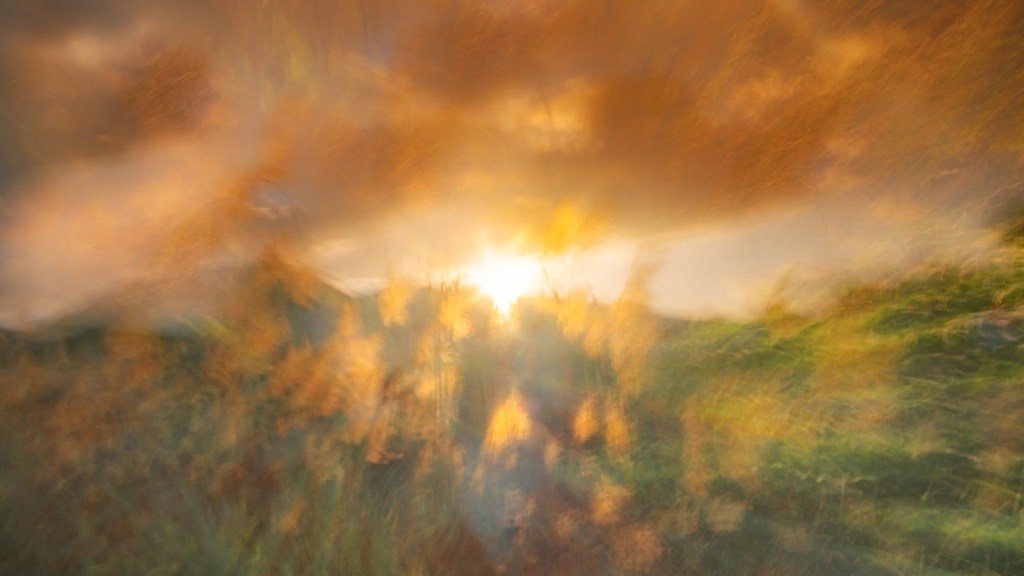
In the twenty-first century, abstract photography has expanded into multiple directions — chemical, digital, conceptual, algorithmic — yet the essence of the medium has gradually dissolved. The act of photographing, once defined by the encounter between human gesture and real light, is now often replaced by processes without cameras, sensors, or even the presence of a photographer. In that dispersion, the Intentional Camera Movement (ICM) has emerged as the only abstract practice that still preserves the fundamental triad of photography: camera, light, and world. Instead of erasing reality, it transforms it; instead of delegating vision to machines, it executes it with the body. ICM is not a denial of photography but its reawakening — the last frontier where abstraction and truth coexist.
2.1 The Four Contemporary Schools
Current photographic abstraction can be divided into four major lineages, each defined by its technical relationship to the real world.
1️⃣ The camera-less or pure school eliminates the camera altogether. It is the direct descendant of Man Ray and Moholy-Nagy, revived today by artists such as Wolfgang Tillmans, Ellen Carey, or Alison Rossiter. The image is born from physical reactions — light, heat, or chemistry — on the sensitive surface. The result is an ontology of light rather than a vision of the world. Its prestige is enormous — MoMA, Tate, Getty — yet its link to lived reality disappears: the image is not seen, it is generated.
2️⃣ The digital or algorithmic school transforms data into image. Thomas Ruff, Jessica Eaton, or Joan Fontcuberta operate at the border between information and representation. Their work is conceptually rigorous, often brilliant, but what appears as light is in fact computation. Time becomes code; the photographic act becomes programming.
3️⃣ The hybrid or pictorial-digital school merges photography, painting, and collage. Figures such as Valda Bailey, Adrian McGarry, or Doug Chinnery (in his later stage) use overlays, textures, and transparencies to create poetic compositions between media. The result is visually rich but ontologically unstable: photography dissolves into painting, the image into aesthetic object.
4️⃣ The ICM school, in contrast, keeps the camera and the encounter with the world. Its abstraction arises not from removing the real but from moving through it. The camera acts as a brush; time becomes matter; light becomes the raw material of transformation. Here, the gesture replaces the algorithm — motion as thought, duration as form.
2.2 The Institutional Elitism
The art system tends to value what moves away from photography more than what perfects it. Camera-less and digital artists usually come from academic backgrounds, fluent in the theoretical language that institutions expect — phenomenology, ontology of the image, materiality. Their discourse aligns naturally with the institutional vocabulary of curatorship — phenomenology, ontology, materiality — which has made their work easier to contextualize within museums and academic frameworks.. ICM photographers, on the other hand, have emerged from a self-taught lineage: individuals grounded in the act of seeing and feeling rather than theorizing. They speak through emotion, gesture, and light — elements that the institutional world still struggles to translate into academic legitimacy.
This linguistic gap has created an imbalance: what abandons photography is accepted as contemporary art, while what refines it remains labelled as decorative fine art. It is a paradox — the closer one stays to the medium’s essence, the further one is from recognition. Yet history shows that every artistic revolution began outside the canon. Impressionism, expressionism, surrealism — all were dismissed as minor, impulsive, or unrefined until time revealed their depth. ICM now stands at the same threshold. It is still underestimated by institutions precisely because it has not yet been theorized enough — because its truth is tactile, intuitive, and human. But that very resistance is its power: it reminds the contemporary image world that creation is not a concept but an act.
2.3 From Experiment to Language
For decades, camera movement was dismissed as error or curiosity — a by-product of technical failure. Early examples of ICM were playful, accidental, or purely aesthetic, producing blurs without discourse. At the beginning of the twenty-first century, however, a new generation turned that gesture into a language. Valda Bailey elevated the pictorial dimension of movement, creating harmony through colour and layering. Chris Friel transformed motion into emotional expression, inaugurating a new photographic expressionism. Erik Malm fused technical precision with chromatic lyricism; Doug Chinnery brought meditation and form; and Kaisa Sirén introduced the northern stillness — poetry through restraint.
With them, ICM evolved from experiment to discipline. What had been a random blur became a deliberate syntax of rhythm, composition, and emotion. The gesture acquired purpose: a way of thinking through light rather than depicting it. Today, the act of moving the camera is no longer an accident but a statement — a philosophical stance against photographic inertia. In the best works of this lineage, movement is not merely visual; it is conceptual. It embodies the passage of time, the persistence of perception, and the unity of emotion and matter. Through this transformation, ICM became a language capable of expression — a form of thinking through motion itself.
2.4 The ICM — The Last Frontier of the Human Act of Photographing
Unlike other schools that delegate creation to non-human processes — chemical or digital — ICM preserves the gesture. The photographer remains present, moving the camera, breathing with the light. Each trace is the mark of a body interpreting space: a physical and spiritual act. Camera-less art happens in the darkness of a lab; digital art within the silent logic of a server. In both, the creator disappears behind the process. ICM, by contrast, is corporeal: each image is the translation of a human movement. There is no automation; there is rhythm and pulse.
For this reason, ICM can be seen as the only abstract form of photography still connected to the human act of seeing. While artificial intelligence now generates endless simulations of vision, ICM reaffirms the value of the eye and the hand. Against automation, it stands as poetic resistance — proof that light still requires consciousness to find form. Every trace of motion becomes breath; every blur becomes memory. Its imperfection is its humanity. In this sense, ICM not only preserves the essence of photography but also its ethics: to look remains a human act. And in that affirmation — against the authorless image and the algorithmic perfection — lies its true greatness.
2.5 Bridge paragraph — Transition to Section 3
Through this convergence of body, light, and time, ICM has become not only a method but a philosophy — a way of recovering the human presence within the act of photographing. Yet no philosophy exists without its interpreters. Over the past fifteen years, a small group of artists has transformed this gesture into a language, each one shaping its own emotional, technical, and symbolic grammar. Together, they built what can be called the First Generation of Pure ICM Photography — the foundation upon which the movement now stands.
3. The Five Masters of Pure ICM Photography (2010–2025)
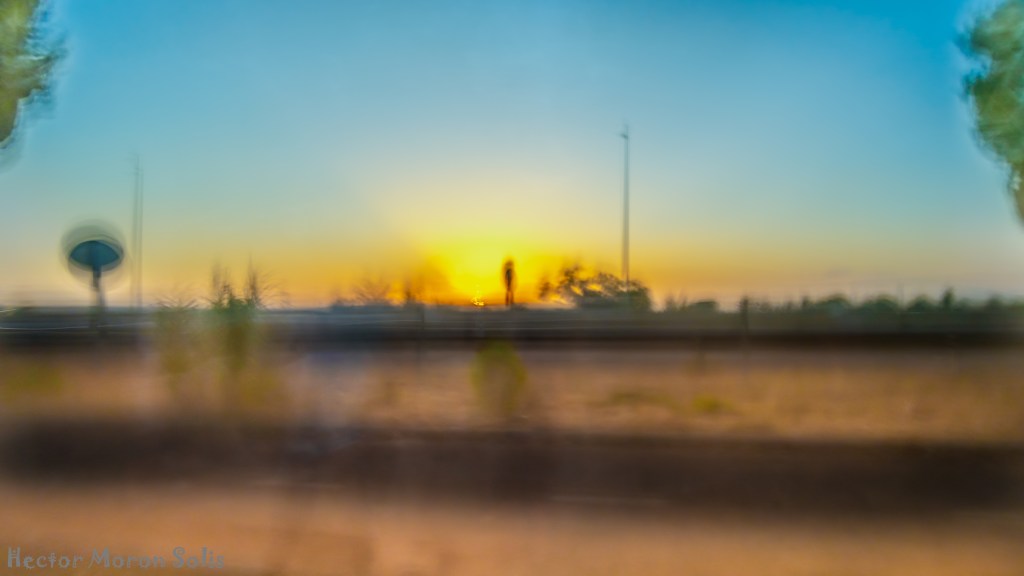
The contemporary language of ICM photography would not exist without a small group of pioneers who, each from their own vision, transformed an experimental technique into a complete artistic language. Between 2010 and 2025, these five photographers — Chris Friel, Andrew S. Gray, Kaisa Sirén, Erik Malm, and Doug Chinnery — established the grammar, emotion, and legitimacy of movement as a creative act. Together, they represent the founding generation of the ICM discipline: a bridge between the photographic past and the abstract future.
It is important to clarify that this essay does not include Valda Bailey among the five masters, despite her undeniable influence and visibility within the field of abstract photography. Bailey’s practice, though initially rooted in camera movement, gradually evolved into a hybrid language that combines multiple exposure, collage, and painterly construction. In this evolution, ICM became one element among others — a tool within a pictorial system rather than an autonomous gesture. The present essay focuses exclusively on those artists who defined ICM as a self-sufficient photographic language, grounded in gesture, light, and duration. Bailey’s contribution remains significant, but her later trajectory belongs to a different paradigm: the fusion of photography and painting rather than the pursuit of movement as pure form.
3.1 Chris Friel — Psychological Expressionism
Friel was a painter before he became a photographer, and that background remains evident in his visual language: he does not simply capture scenes, but interprets them, using the camera as a painterly instrument and movement as a brush to create images charged with expressionist melancholy. One of his distinctive ICM strategies involves a hybrid exposure: an initial moment of relative stillness that allows recognizable forms to register, followed by a final directional movement — often toward or away from the subject, or through brief jolts — that creates an ethereal, enveloping trail. His red-green colour blindness shaped his complex relationship with colour. After an early reliance on black and white, he gradually moved toward a freer chromatic palette from around 2009–2010 onward, one focused less on chromatic fidelity than on contrast, light, atmosphere, and emotional abstraction. Rather than relying primarily on heavy digital manipulation, Friel’s mature language often depends on direct photographic transformation: compositional simplicity, long exposure, camera movement, multiple exposure, and the selective focus of tilt-shift lenses. These tools allow fragile points of recognition to emerge within large fields of blur, turning the image into a record of instability, memory, and impermanence.
After
After — both a series and a photobook — is perhaps Friel’s most emotional and intimate body of work. It was created in 2016, shortly after his son Joe died by suicide. Many of the images, often in black and white, were taken on the Isle of Lewis, in the Outer Hebrides, a place Joe loved. The series explores grief, loss, memory, and the fragile persistence of presence after absence. Aesthetically, the photographs are deeply melancholic: vast landscapes, blurred horizons, and unstable forms use ICM not as visual decoration, but as a way of evoking the fragility of memory and the sensation of things fading away.
Hypergraphia
In Hypergraphia, Chris Friel moves away from the open landscape toward a confined, conceptual form of image-making: a claustrophobic visual diary made with a phone camera through a systematic process of 150,000 images. The work can be read less as a pursuit of beauty than as a visual processing of trauma, transforming a hospital-room window into a threshold for almost hallucinatory variations of light, weather, trees, and confinement. By invoking hypergraphia — a compulsive urge to write — the title asks whether relentless image-making should be understood as artistic creation, symptom, or survival mechanism. Through serial repetition, the project becomes an unsettling visual narrative of isolation, psychological pressure, and fragile endurance.
Pairs
Chris Friel’s Pairs can be read as an act of archival editing that moves beyond the single image to create a language of visual dialogue. By placing two photographs together, Friel establishes correspondences based on rhythm, tonal weight, texture, horizon lines, emptiness, or the direction of movement; the images do not merely sit side by side, but alter one another, becoming quiet emotional mirrors whose meaning emerges from relation rather than isolation. Within this structure, the “wedding” group is especially striking because it introduces human presence into Friel’s spectral visual language: through blur, movement, and tonal reduction, the figures lose their anecdotal specificity and become almost architectural columns of light, stripping the social event down to gesture, verticality, spacing, and atmosphere. Seen in relation to Friel’s red-green colour blindness, these pairings seem to rely less on chromatic fidelity than on structure, contrast, and visual weight. The result suggests a form of relational minimalism in which one image balances, echoes, or unsettles the other, inviting the viewer to search for the hidden continuity between two apparently separate moments.
Singles (Curated Highlights)
The Singles section, rather than a conventional series, can be approached as a curated constellation of Friel’s independent works, where each image condenses a different aspect of his visual philosophy. Atlas (2024), with its lunar orb suspended above a root-like terrain, turns landscape into a stark nocturnal emblem, reducing the world to the tension between void, matter, and memory. A 2019 portrait brings this language into the human face: the sitter remains recognizable, yet the layered movement, texture, and unstable colour transform identity into a fragile psychological surface, suspended between presence, erosion, and emotional disappearance. Shoreline #10, by contrast, shows Friel at his most restrained: land, sea, and sky are reduced to horizontal bands, creating a rectilinear, minimalist landscape where the horizon becomes a quiet psychological threshold. Together, these works reveal the breadth of Friel’s ICM language — not only blur or movement, but symbolic reduction, tonal pressure, selective instability, and the transformation of visible reality into memory. Conceptually, Singles may be the clearest demonstration of Friel’s core identity: a photographer who paints with disappearance.
3.2 Andrew S. Gray — The Architect of Motion
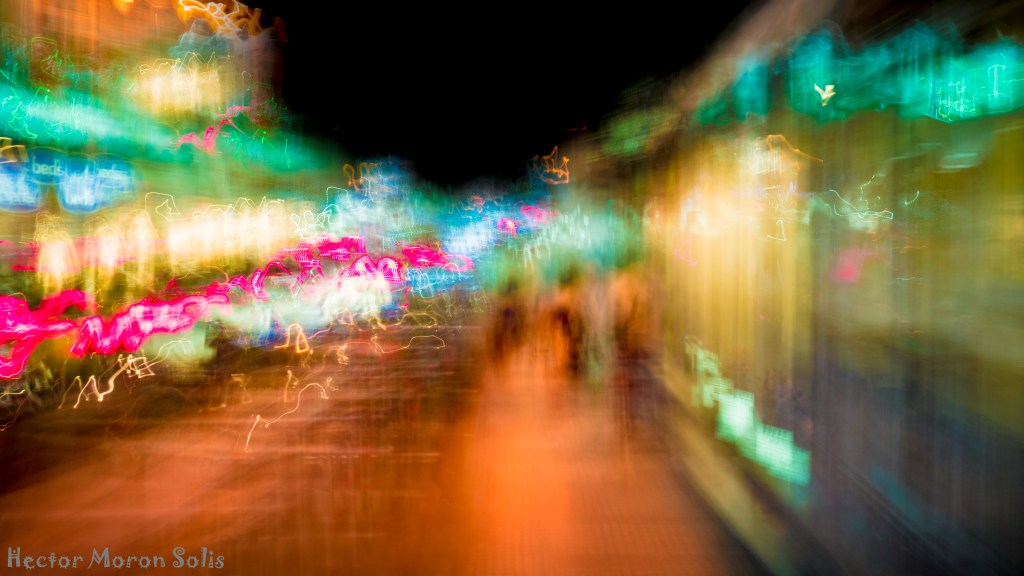
Andrew S. Gray is a British ICM photographer and abstract landscape fine art photographer known for controlled camera movement, coastal ruins, architectural rhythm and Pure ICM photography. His work transforms castles, abbeys, lighthouses, historic ruins and horizon lines into chromatic structures of motion, placing him among the most formalist and architectural voices in contemporary Intentional Camera Movement. Gray’s originality does not lie in inventing new ICM gestures, but in the way he structures them. Through controlled sweeps, multiple exposure, editing and careful composition, he turns classic ICM movements into architectural constructions of rhythm, colour and space. Moving away from Friel’s melancholic expressionism, Gray works with a more graphic, rhythmic and design-oriented abstraction. Where Friel often dissolves reality through stillness, blur and sudden disturbance, Gray acts more like an architect of motion: he stratifies the landscape through controlled movement, transforming coastlines, historic ruins, castles, abbeys, lighthouses and horizon lines into vibrating icons.
His mastery lies not in allowing chance to dominate, but in imposing a disciplined geometry of movement that turns recognisable landmarks into chromatic structures, somewhere between landscape photography, contemporary design and abstract painting. In Gray’s work, architectural heritage is not merely documented; it is reconfigured into rhythm, silhouette and colour, so that ruins and coastal forms become visual emblems rather than descriptive records. His palette often intensifies this sense of emblematic transformation, moving from pale lunar yellows and muted ochres to burnt oranges and saturated, decadent reds, giving his coastal and architectural subjects an atmosphere that feels at once historical, graphic and dreamlike.
At the same time, his language should not be reduced to pure in-camera movement: his public teaching, his On Landscape feature, and his own emphasis on ICM editing techniques point to a practice where capture, movement, multiple exposure, processing and sequencing work together. The result is an aesthetic of visual harmony in which line, colour and historical form crystallize into images less burdened by Friel’s existential melancholy and more focused on the pure vibration of light, texture, architecture and motion.
Abstract Landscapes — Part I
In Ruins of St. Mary’s Abbey, York, Gray fuses architectural memory with motion, turning the medieval arches into trembling silhouettes that dissolve into dusk light and showing how historical form can be transformed into a fragile, vibrating presence. Arrival and the Land of the Cyclopes pushes this further into mythic abstraction: the shoreline is dominated by a sweeping diagonal, while ochres and steel blues compress the scene into a field of tension, suggesting both the violence and the poetry of approaching land. In Loss Series: Faltering Under the Fury (2015), one of the most emotionally forceful works in the group, Gray uses dense lateral movement to fracture the horizon, creating a landscape that feels both wounded and luminous; here, blur functions less as atmosphere than as a metaphor for rupture within the field of light. Finally, Bamburgh Castle on an August Evening anchors the group in coastal drama: the fortress is reduced to a ghostly glow above a molten horizon, while the long exposure transforms the waves into a ribbon of soft fire. Together, these works articulate the foundations of Abstract Landscapes I: motion as architecture, colour as atmosphere, and landscape as a historical and emotional form trembling into abstraction.
Abstract Landscapes — Part II
In Landscapes II, Andrew S. Gray moves toward a more liquid and painterly mode, where movement and intensive post-processing transform the initial capture into images that recall 19th-century landscape painting. Dryburgh Abbey Study is the clearest Turnerian example: the abbey emerges through red, ochre, and golden vapour like a historical apparition, its architectural form half-preserved and half-consumed by atmospheric light. Psychedelic Harbottle pushes this painterly transformation into a more radical chromatic register, using acidic yellows, turquoise, ochres, and saturated reds to destabilize the solidity of stone until the ruin becomes less a monument than a field of altered perception. Lindisfarne, by contrast, is more restrained and crepuscular: land, sea, and sky dissolve through an organic, rhythmic panning movement rather than a straight linear sweep, allowing the orange horizon light to spread across the image like weather, memory, and tide. Together, these works show Gray at his most painterly: motion and processing do not merely blur the scene, but liquefy historical and coastal forms into colour, atmosphere, and luminous residue.
Abstract Landscapes — Part III
In Abstract Landscapes III, Gray moves further away from the architectural icon and the descriptive shoreline toward a more elemental language of atmospheric motion. Here, the true subject is often not the landmark itself, but the movement of air, light, cloud, wind, and colour across the image. In Standing Stones, the ancient archaeological subject is reduced to a small dark presence within a vast amber-brown field, while the surrounding motion creates a cavernous, almost cosmic curve that turns stone into memory and landscape into psychological enclosure. Solstice expands this direction into pure luminance: warm whites, golds, pinks, and soft reds slide across the frame in a suspended burst of seasonal light, reducing geography almost entirely to radiant weather. With Quiraing, Gray confronts one of Scotland’s most dramatic terrains, but instead of preserving its geological sharpness, he transforms it into a red and violet field of atmospheric pressure beneath a pale, unstable sky, turning land into something wounded, visceral, and painterly. Finally, The Great Whale carries this poetic abstraction into a softer, biomorphic register: a vast pastel field of pinks, corals, creams, and muted violets surrounds a delicate central curvature, evoking a submerged or surfacing creature more than a conventional landscape. Together, these works define Abstract Landscapes III as one of Gray’s most introspective phases, where wind, sky, light, and colour become the true architecture of the image, and motion becomes a language of quiet revelation.
Abstract Landscapes — Part IV
Abstract Landscapes IV marks the moment where Gray moves from the atmospheric inwardness of Part III into a more luminous, emotionally open, and technically distilled phase. Colours become fuller yet softer, the tonal fields more expansive, and the ICM gesture slow enough to stretch light without completely fracturing form. The landscapes here are no longer dissolved memories, as in Part III, but sustained emotions — chromatic meditations where each movement seems to carry a distinct emotional temperature. New Dawn, Old Scene (2021) becomes the manifesto of this maturity: an almost weightless field of pale gold and diffused morning light, where movement transforms the familiar horizon into a warm breath of renewal. Home Evenings deepens this intimacy through amber mist, soft browns, and a central glow that turns the familiar landscape into something private and fragile, less a view than a remembered atmosphere. Pier Light introduces coastal structure in a highly dissolved form: land gathers as a dark mass on the left, the sea opens into radiant light on the right, and a small red-and-white lighthouse-like form anchors the centre, preventing the image from becoming pure atmosphere; around it, orange, violet, and white light spread across the frame, creating a quiet balance between maritime architecture, chromatic dissolution, and the threshold between land and sea. Ruins by Moonlight – Warkworth Castle demonstrates Gray’s disciplined nocturnal control: deep blue-green shadows, a suspended moon, and restrained movement envelop the ruins in a spectral halo without erasing their identity. Overall, Abstract Landscapes IV can be read as one of Gray’s most mature and complete phases: colour without exuberance, structure without rigidity, emotion without theatricality — a synthesis of the atmospheric, architectural, chromatic, and poetic dimensions developed throughout his career.
3.3 Kaisa Sirén — Silence and Boreal Light
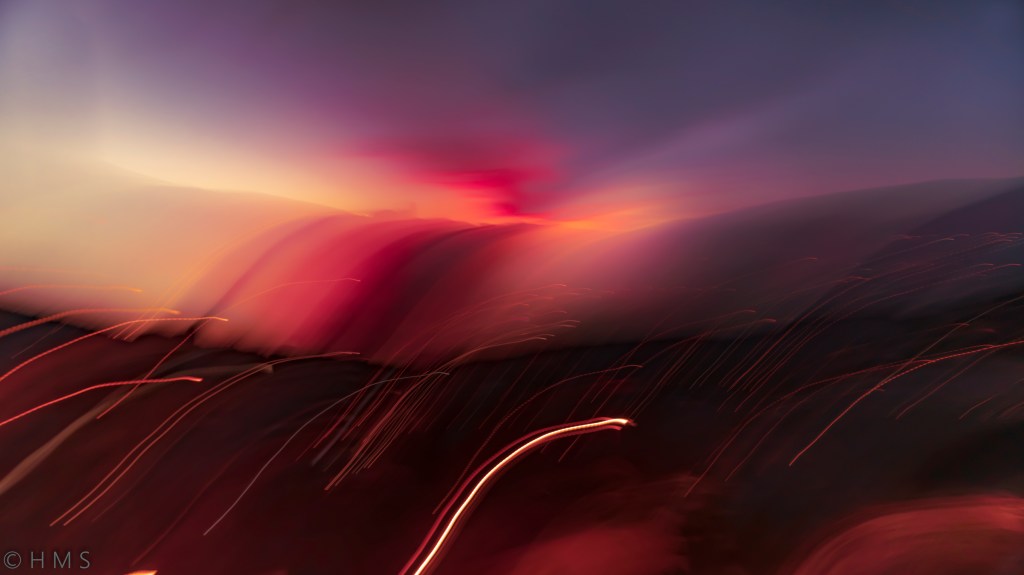
The discipline of Intentional Camera Movement can be understood through three distinct philosophical poles: the raw emotional dissolution of Chris Friel, the atmospheric architecture of Andrew S. Gray, and the meditative silence of Kaisa Sirén. While Friel uses the camera as a painterly instrument to interpret loss, memory, and disappearance through exposures that often balance stillness and disturbance, Gray constructs fields of visual rhythm through short, organic, non-linear gestures, reinforced by colour, light, weather, and post-processing until landscape becomes atmospheric structure. Standing in contrast to both is Kaisa Sirén, the poet of the North, whose work transforms motion into an act of listening. Based in Finnish Lapland, her photography exists at the threshold of the unseen, where gesture feels governed by breath, pause, snow, silence, and interior rhythm. At her most characteristic, Sirén uses restrained displacements, soft rotations, delicate transitions, and boreal light to create images that seem less performed than whispered into existence. Her palette often centres on whites, greys, pale tonalities, and profound Arctic blues, echoing the stillness of winter, the emotional depth of the polar night, and the fragile luminosity of northern nature. Yet her silence is not empty: in works involving human figures and dancers, she turns the body into a poetic extension of the landscape, allowing movement, fabric, hair, limbs, and surrounding nature to merge into a single lyrical presence. In this sense, Sirén’s abstraction does not lead to rupture, graphic intensity, or monumental structure, but to serenity, sensitivity, and embodied poetry — a way of making visible the invisible states that remain after movement has almost disappeared.
Dancinc my Nature
In Dancing in My Nature, Kaisa Sirén transforms the Finnish forest, the Arctic shore, and the luminous whiteness of Lapland into a space of embodied poetry, where the human figure does not simply perform within nature but seems to arise from it. Her dancers move through pale snow, mist, sea, and boreal blue as if their bodies were listening to the landscape, answering its silence through gesture rather than spectacle. Through motion, Sirén subtly reshapes the figures into tapering, lyrical silhouettes: the waist narrows, the upper body expands, and arms, fabric, hair, and movement open into rounded, wing-like forms that remain soft, harmonious, and internally balanced. The result is a delicate metamorphosis in which the body becomes at once more slender and more expansive, sharpened in structure yet softened by curves, like a petal, a flame, or a breath of blue northern light. Rather than using ICM to fracture reality, Sirén uses it to create communion: dancer, snow, tree, air, and season merge into a single sensitive field. The series suggests a quiet ritual of belonging, where movement becomes tenderness and abstraction reveals the hidden harmony between the body and the boreal world.
Morning Thoughts
In Morning Thoughts, Kaisa Sirén turns thought into atmosphere. Prompted by the minimalist music of Arvo Pärt, random dictionary words, journaling, and inner listening, the series translates a private mental process into images of light, movement, and fragile direction. Unlike a purely spontaneous ICM sequence, this body of work is built from preparation: Sirén writes, listens, sketches a small inner script, searches for reference images, and only then goes out with the camera to visualize the rhythm of thinking. Like a road leading to the unknown is one of the most powerful images in the series: a blue Arctic passage opens through the frame like a liquid path, guiding the eye toward a distant veil of warm golden light. It is not simply a road or landscape, but an image of the mind in motion — clear at its origin, uncertain in its destination, and quietly hopeful in its surrender to the unknown. Here, Sirén’s ICM becomes a meditative language for the act of thinking itself: silence becoming direction, doubt becoming movement, and thought becoming light.
Story of the Trees
In Story of the Trees, Kaisa Sirén turns the forest into a nervous, living text. Created for Finnish Camera Magazine as an example of portfolio construction, the series was designed to speak about the protection and wellbeing of forests, and about the alarming speed with which they are destroyed, including in Finland through logging for pulp and paper. The images are textural, dense, and rhythmically unstable: vertical sweeps stretch trunks into vibrating strands, circular movements create whirlpools of branches, and layered colour makes the forest feel both beautiful and threatened. Sirén’s usual boreal palette of blues, whites, greys, and violets is here interrupted by oranges and bruised reds that do not read as decorative warmth, but as signs of disturbance — heat, ash, alarm, or an ecological wound entering the forest. Trees are no longer passive subjects; they become voices, wounds, pulses, and signs of distress. Here, Sirén’s ICM is not simply lyrical or meditative, but ethical: a visual way of asking, quietly but insistently, what will happen to the forest.
Speechless Sea
Speechless Sea distills Sirén’s fascination with thresholds: horizons dissolve into gradients where sky and water become almost indistinguishable, and the sea appears less as a place than as a vast, unknowable presence. The movement is gentle but decisive, often horizontal, elongating blues, soft whites, pale pinks, ochres, and greys into dreamlike bands of light and water. Visually, the series is among her most meditative: the images evoke silence, distance, mist, and the feeling of standing alone before an infinite surface. Yet this serenity is not merely aesthetic. Sirén’s own text frames the sea as powerful, mysterious, unpredictable, and ultimately independent of human will: we need the sea, but it does not need us. In this sense, the loss of edges between sky, water, fog, birds, shores, and depth becomes also a philosophical and ecological question. Speechless Sea expresses a world becoming continuous, fluid, and fragile — a place of beauty and mystery that may still be saved, or may already be slipping beyond our grasp.
3.4 Erik Malm — The Conductor of Light and Color
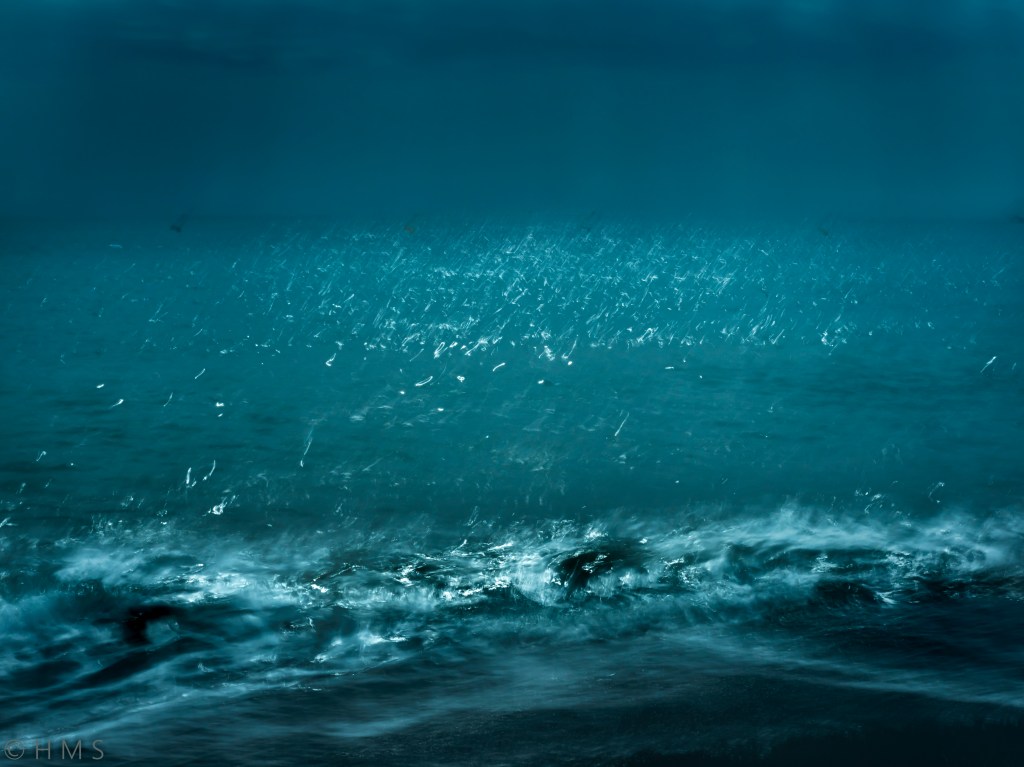
Among the masters of Pure ICM, Erik Malm stands as the musician-scientist of motion: a photographer who transforms exposure into a performed translation of time, perception, and musical structure. His images are single exposures made at the moment of capture, without compositing, digital assembly, or trick-effect filters, apart from ND fader filters when needed; the post-process is limited to adjustments of contrast and colour saturation. Malm describes his method as “camera painting”: he almost always works handheld, moving the camera in different ways during longer exposure times, from approximately 1/30 of a second to 30 seconds or more. What distinguishes many of his strongest images is not continuous blur, but a controlled alternation between registration and painting: the camera appears to stabilize briefly enough for a lighthouse, bird, tree, rock, or animal to retain its identity, before movement surrounds it with halos, currents, luminous threads, and chromatic turbulence. His background as a clarinetist, conductor, and researcher in ergonomics gives this process a rare sense of embodied precision: movement is not accidental distortion, but phrasing, tempo, rhythm, and controlled execution. Many of his images therefore seem to contain a form of visual staccato, as if moments of clarity and displacement were being articulated within the same exposure, allowing colour, line, and light to separate into crystalline fragments and rhythmic structures. Natural elements — birds, landscapes, atmospheric conditions, light, and colour — do not operate merely as subjects, but as materials within a larger visual composition, encountered and shaped during the irreversible act of exposure. In Malm’s hands, ICM becomes not a technique of disorder, but a disciplined orchestration of duration itself — a way of making time visible through light, colour, and movement.
Landscape Gallery
In his Landscape Gallery, Erik Malm reaches one of the clearest expressions of tridimensional abstraction, achieving what could be described as spatial stratification. Through a visual staccato of controlled handheld movement, Malm does not merely stretch colour; he seems to sculpt depth, differentiating foreground, middle plane, and distant background within the same single exposure. In one untitled landscape, dark trees remain physically present while blue, white, and golden vapours move around them like spectral weather, creating a layered field where vegetation, atmosphere, and light breathe at different distances. In another, black mountain silhouettes are surrounded by pale blue and white currents, producing an almost theatrical sense of space: the landscape keeps its physical architecture, while movement turns air into visible matter. This is Malm’s dynamic sfumato — an atmospheric perspective built not through classical linear recession, but through chromatic vibration, rhythmic displacement, and luminous turbulence. His images defy the flatness often associated with uncontrolled ICM, offering instead a profound sense of sculpted space, where each layer of the landscape seems to resonate independently.
Animal Collection
The Animal Collection is one of Erik Malm’s more experimental but also more uneven bodies of work. Here, his single-exposure camera painting is applied to living, moving subjects, transforming animals into fluctuating presences between recognition and abstraction. At its best — especially in images where stripes, silhouettes, or group movement create strong visual rhythm — the collection reveals how Malm’s method can turn biology into pattern, pulse, and atmospheric trace. Yet compared with his landscapes, these works often feel less structurally resolved: the spatial stratification, chromatic architecture, and luminous depth that define his strongest images are less consistently present. The palette tends toward earthy neutrals, greys, blacks, and muted blues, closer to natural environment than to the crystalline colour structures of his landscapes. Conceptually, the series explores fragility, movement, and animal presence, but it also exposes the limits of camera painting when the subject remains too literal or too dependent on wildlife recognition. For that reason, the Animal Collection is valuable as evidence of Malm’s range and technical ambition, but it is not among the most convincing or iconic areas of his work.
Lighthouse Gallery
In the Lighthouse Gallery, Erik Malm applies his camera-painting method to an environment of architectural rigidity, turbulent sea, and extreme directional light. The lighthouse functions as a vertical anchor: it remains surprisingly legible while the surrounding water, rocks, sky, and beam of light are transformed into moving fields of energy. This is one of the clearest examples of Malm’s stop-and-paint logic — a moment of stabilization allows the lighthouse to register, while controlled handheld movement paints halos, currents, and spectral turbulence around it. Rather than deconstructing the structure completely, Malm preserves its identity and uses it as a fixed point within a world in motion. The sea becomes metallic and turbulent, the rocks retain physical weight, and the light beam expands into a sculptural presence, almost as if illumination itself had become solid matter. The result is a dynamic tension between architecture and atmosphere: the lighthouse stands as an axis of clarity while the surrounding landscape dissolves into rhythm, vibration, and luminous weather.
Bird Collection
The Bird Gallery is Malm’s lyrical counterpart to his more spatially structured landscapes. Here, his camera painting follows the volatility of wings, turning flight into gesture and animal presence into temporal trace. Some works remain close to figurative silhouette, where the bird is still readable as a living form; others dissolve almost entirely into flickering marks, mist, dark smears, or pale movements across air and water. Technically, these images depend on an especially delicate balance between timing, handheld movement, and partial registration: the exposure must be long enough to absorb the rhythm of flight, but controlled enough to prevent the bird from disappearing into undifferentiated blur. The result is a gallery of fragile apparitions, where birds become signs of freedom, speed, impermanence, and passage. Although this body of work is generally less chromatically complex than Malm’s strongest landscapes, it reveals his sensitivity to temporal rhythm and his ability to transform movement into visual music. One of the strongest images is the penguin: its curved neck and compact body remain clearly articulated, almost sculptural, while the surrounding space dissolves into bluish veils, luminous halos, and soft painterly turbulence. The muted palette — blacks, greys, cold blues, whites, and a restrained yellow glow around the throat and chest — allows the animal to remain distinct without becoming isolated. In this image, Malm achieves the balance that defines his best work: the subject keeps its identity, but the world around it becomes rhythm, atmosphere, and painted light.
3.5 Doug Chinnery — The Abstract Expressionist
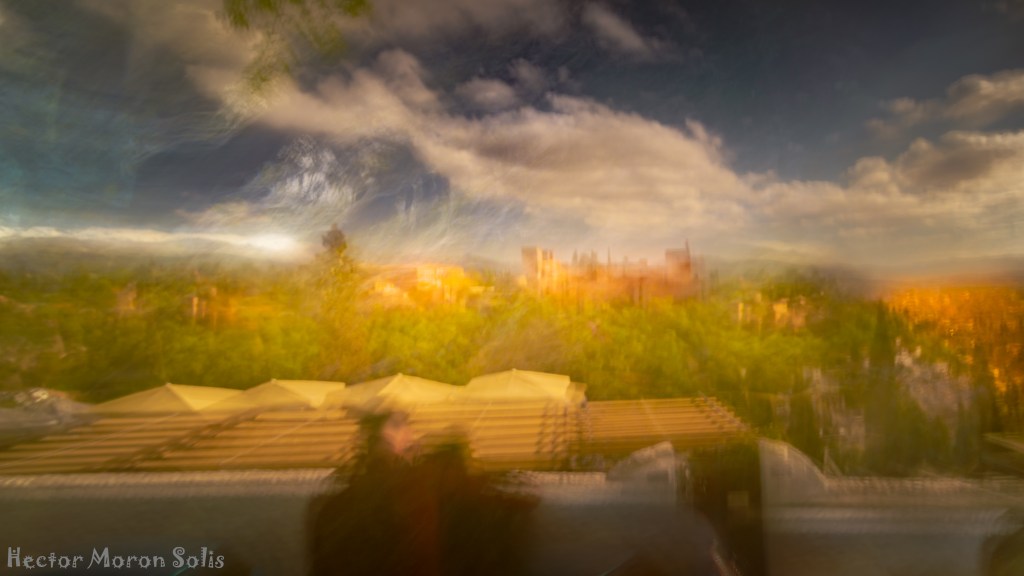
Within contemporary ICM and photographic expressionism, Doug Chinnery stands as one of its clearest abstract expressionist voices. His work shifts the focus from the external landscape to the internal landscape of feeling: colour becomes less a property of things than a vibrating emotional field, and the visible world is stripped back into atmosphere, surface, and resonance. Unlike single-exposure purists such as Erik Malm, Chinnery embraces a more layered photographic language, combining intentional movement, multiple exposure, texture, and post-processing to build images that approach painting, fresco, and abstract colour-field art. In this sense, his subject is not simply forest, sea, or horizon, but the emotional residue of place — the unseen pressure of light, memory, and mood. He is the alchemist of photographic abstraction, turning landscape into colour, texture, silence, and inner weather.
Dreams of Tuscany
In Dreams of Tuscany, one of Chinnery’s earlier abstract landscape bodies of work, the Italian landscape appears stripped of its tourist familiarity and transformed into a field of colour, atmosphere, and emotional resonance. Rather than treating Tuscany as a picturesque subject of hills, cypress trees, villages, or golden light, Chinnery seems to reduce it to chromatic memory: siennas, ochres, olive greens, pale skies, and softened earth tones merge into a dreamlike surface. The series can be read as a study in atmospheric dissolution, where landscape becomes less a place to be described than a canvas for light, silence, and internal sensation. In this sense, Dreams of Tuscany already points toward Chinnery’s abstract-expressionist identity: photography moving away from topography and toward colour-field emotion.
Dark Ocean
In Dark Ocean, Chinnery’s photographic language can be read in relation to Mark Rothko and to the physical surfaces of fresco, plaster, rust, and weathered paint. The series represents one of his clearest movements toward pure abstraction, where form, colour, light, and texture merge into a coarse, organic surface. Unlike single-exposure purists, Chinnery embraces a more layered photographic process, using intentional movement, multiple exposure, post-processing, and textural intervention as part of the work’s expressive structure. In Dark Ocean, the image is stripped of geographic identity and becomes a dark field of resonance: light seems to breathe through cracks, stains, and translucent layers, while the sea is no longer a place but a pressure, a weight, an emotional surface. The frequent use of square format reinforces this movement away from landscape description toward pictorial concentration. In Chinnery’s hands, abstraction becomes a process of visual alchemy, turning the solid world into a translucent, tactile presence — a place where landscape ends and the physical resonance of light begins.
Images of Elsewhere
Images of Elsewhere can be read as one of Chinnery’s most expressionist and colour-rich earlier bodies of work, using dynamic ICM gestures, layered surfaces, arcs, vibrations, and sweeping movements to dissolve recognisable landscapes into fields of emotional colour. Greens, reds, golds, and deep blues appear less as descriptive tones than as states of feeling, blending into fractured surfaces that recall abstract painting more than observational photography. Conceptually, the series explores displacement and dream-territories: an “elsewhere” not defined by geography, but constructed from movement, sensation, memory, and intuitive response. Within Chinnery’s wider practice, the series helps clarify his abstract-expressionist direction — the landscape no longer functioning as destination or view, but as a threshold into imagined colour, inner weather, and emotional elsewhere.
Iomall an t-Saoghail – The Edge of the World
In Iomall an t-Saoghail – The Edge of the World, Chinnery’s recent language becomes more territorial, material, and elemental. Inspired by the landscapes of his home in the Outer Hebrides, the project reduces land, sea, sky, and weather to essential signs: dark horizon-lines, rust-red suns, grey-blue atmospheres, blocks of oxidised earth, mineral textures, and surfaces that feel eroded by salt, wind, and time. Unlike his more fluid colour-field works, these images are flatter, rougher, and more tectonic, closer to fresco, weathered wall, map, or ancient mark than to conventional landscape. The landscape is not represented so much as excavated; what remains is its residue — isolation, edge, matter, silence, and Atlantic weather. In this series, Chinnery does not dissolve the world into pure colour, but compresses it into symbolic fragments, turning the Outer Hebrides into a tactile meditation on distance, erosion, and the end of the known world.
3.6 Synthesis — The Architecture of a Generation
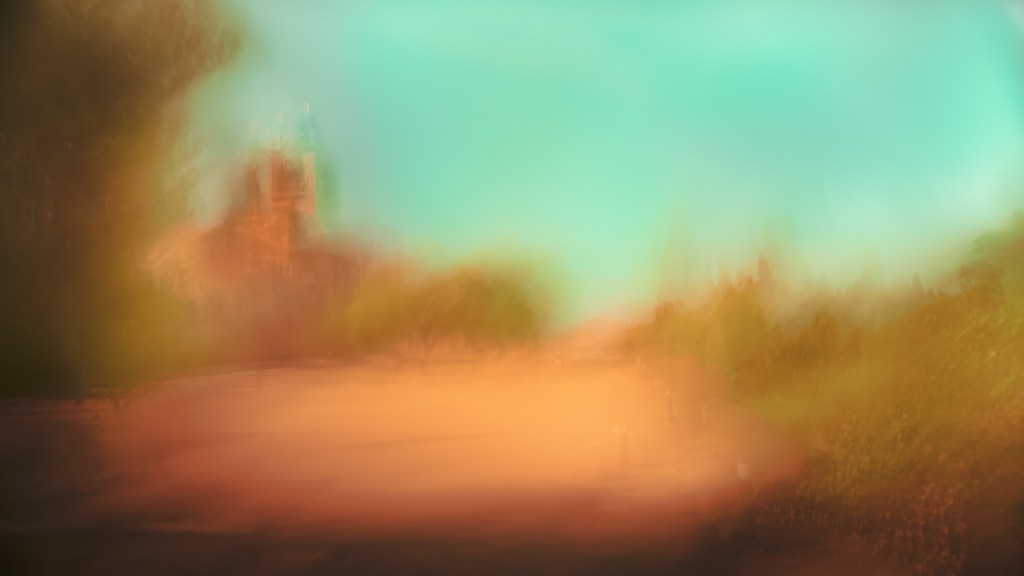
Together, these five artists built what can now be considered the first canon of ICM photography. Their approaches differ — expressionist, structural, meditative, scientific, pedagogical — yet all share the same principle: the photograph as gesture, the world as rhythm. They transformed the act of photographing into a choreography of perception. Between them, they encompass the full spectrum of movement: from the anarchic to the precise, from the ecstatic to the serene. Their legacy is not only aesthetic but philosophical — they redefined what it means to see through time.
From Friel’s fire to Sirén’s silence, from Gray’s geometry to Malm’s chromatic harmony, and from Chinnery’s bridge to the future, the ICM movement found its architecture. They proved that abstraction in photography can be as deep, emotional, and disciplined as any other art form. Theirs is not a style but a foundation — the root system from which new visions will grow. The light they set in motion continues to move through every photograph that dares to dance with time.
4. What the Five Masters Reveal About Pure ICM
After examining these five artists individually, it becomes clear that Pure ICM is not a single style, but a constellation of artistic philosophies built around movement. Chris Friel, Andrew S. Gray, Kaisa Sirén, Erik Malm, and Doug Chinnery all use camera movement as the foundation of the image, yet each transforms that movement into a radically different language: psychological dissolution, atmospheric architecture, boreal silence, musical time, and abstract expressionist surface. What unites them is not a formula, but a shared refusal to treat the camera as a neutral recording device. In their hands, the camera becomes brush, body, instrument, breath, and field of perception.
The first lesson offered by these five masters is that ICM is not truly about movement, but about transformation. The external subject remains present — a coastline, a tree, a dancer, a bird, a ruin, a horizon — but it no longer functions as ordinary description. It becomes a threshold. Friel turns landscape into grief, memory, and apparition; Gray turns place into atmospheric structure and elemental weather; Sirén turns nature into silence, tenderness, and embodied poetry; Malm turns exposure into musical duration; and Chinnery turns landscape into colour, texture, and emotional surface. This is what separates mature ICM from decorative blur: the movement does not merely change how the world looks, but what the world means.
Their differences are especially clear in their use of colour. Friel’s colour is psychological and unstable, often shaped by contrast, darkness, and emotional residue rather than natural fidelity. Gray’s palette moves through lunar yellows, ochres, burnt oranges, greys, and saturated reds, turning landscape into weathered history, atmospheric fire, or pictorial matter. Sirén’s chromatic world is quieter and more boreal: whites, greys, lavenders, pale tonalities, and profound Arctic blues that seem to hold silence rather than drama. Malm’s colour is crystalline and musical, separated into luminous threads, fragments, vibrations, and rhythmic structures. Chinnery, by contrast, treats colour as surface and weight — closer to Rothko, fresco, rust, plaster, or weathered wall than to descriptive landscape photography.
The role of the body is equally decisive. In conventional photography, the body of the photographer is often expected to disappear behind the camera; in ICM, it becomes part of the image itself. Friel’s body interrupts the scene through emotional disturbance, creating images that feel wounded, haunted, or unstable. Gray’s body structures the atmosphere through controlled, organic, non-linear displacements, allowing land, sky, colour, and weather to crystallize into visual fields. Sirén’s body often works through restraint, breath, softness, and lyrical transition, as if movement were something whispered rather than performed. Malm’s body operates like that of a musician: timing, phrasing, rhythm, precision, and the irreversible execution of a single exposure become the substance of the work. Chinnery’s body, meanwhile, enters through gesture, layering, texture, and painterly intervention, turning photography into a surface that feels touched, weathered, and worked by hand.
The five also reveal that landscape in Pure ICM is rarely just landscape. It becomes inner weather. A forest can become anxiety, a sea can become silence, a ruin can become memory, a bird can become rhythm, and a horizon can become spiritual distance. This is why the best ICM does not simply abstract the world; it allegorizes it. It converts visible matter into states of consciousness. Friel’s world is one of disappearance and psychological echo. Gray’s is one of atmosphere, structure, and elemental motion. Sirén’s is one of northern sensitivity, human tenderness, and invisible presence. Malm’s is one of time, music, and performed perception. Chinnery’s is one of colour, surface, and tactile emotion.
Taken together, these five masters show that Pure ICM is not a minor experimental branch of photography, nor merely a technique for producing blur. It is a mature artistic language capable of carrying grief, silence, rhythm, place, memory, ecological unease, musical structure, and abstract emotion. The subject remains rooted in the real world, but movement releases it from literal representation. What remains is not documentary evidence, but authorship: the unmistakable trace of a body, a vision, and an inner necessity moving through time.
5. The Future of Motion
The story of Intentional Camera Movement is still being written. What began as an act of curiosity has matured into a language — a way of thinking through light, time, and emotion. The five pioneers of the movement established its grammar, but not its limits. Their legacy is not a closed circle, but an open horizon.
ICM stands today at a decisive threshold. It has proven that abstraction can remain photographic, that motion can preserve truth, and that gesture can embody both science and spirit. The next chapter will depend on those who continue to explore its possibilities — artists capable of merging intuition with reflection, sensitivity with theory.
In a world increasingly dominated by automation and artificial vision, ICM reminds us that photography is still a human act: a dialogue between body and light, between chaos and form. Each movement of the camera becomes a heartbeat against the mechanical, a refusal to let perception be programmed.
The future of ICM will not be defined by style, but by depth of vision — by those who understand that abstraction is not escape, but revelation.
The camera will continue to move, not to blur the world, but to rediscover it — again and again — as vibration, memory, and light.
6. Epilogue — The Second Wave of Pure ICM (2020–2030)
As the pioneers defined the language of movement, a second wave began to rise — artists shaped not by tradition, but by the convergence of intuition, digital light, and post-photographic thought. Patryk Kuleta (Trynidada, Poland) brought architectural geometry into the realm of emotion, merging ICM motion with digital fusion to create a new, viral aesthetic of modern abstraction. Alexander Shapovalov (Russia) turned the urban landscape into a lyrical and psychological map, translating the pulse of cities into a choreography of color and shadow. Stephanie Johnson (USA), founder of ICMPhotoMag, became both artist and architect of a global community, bridging the gap between movement and pedagogy, between creative solitude and shared evolution. And David Day (UK) sought silence in luminosity, carrying the spiritual minimalism of ICM into a meditative, almost musical space.
Together they represent the dawn of a new generation — one that no longer asks what ICM is, but what it can become.
Patryk Kuleta — Mobile Minimalism and Architectural ICM
Although Patryk Kuleta began developing his ICM language before the 2020–2025 period, his work belongs naturally to the second wave of contemporary ICM because it points toward some of its clearest new directions: mobile photography, architectural minimalism, graphic abstraction, and hybrid digital practice. Working mainly with the iPhone and mobile apps, Kuleta uses intentional movement to reduce architecture, urban space, and landscape into clean structures of colour, line, emptiness, and surreal visual tension. Unlike the first-wave masters, whose work often emerges from landscape, memory, body, or painterly abstraction, Kuleta brings ICM closer to design culture: his images feel precise, minimal, urban, and graphically controlled. His importance in this newer ecosystem lies in showing that ICM does not need to remain tied to traditional cameras or romantic landscape; it can also become a mobile, architectural, and contemporary language of visual reduction.
Stephanie Johnson — ICM, Multiple Exposure, and the Editorial Ecosystem
Stephanie Johnson represents one of the clearest voices of the second wave of contemporary ICM, not only through her own photographic practice, but through her role in shaping the visibility and language of the movement itself. Her work sits at the intersection of Intentional Camera Movement, Multiple Exposure, and broader creative photography, using movement, layered exposure, colour, line, texture, mood, and emotion as tools for transforming the visible world into abstraction. Unlike the first-wave masters, whose identities are often defined by a single dominant language, Johnson’s importance lies in hybridity: she combines in-camera ICM, multiple exposure, creative post-production, teaching, publishing, and community-building. As founder, creator, and publisher of ICM Photography Magazine, she has helped consolidate a scattered field of experimental photographers into a recognisable contemporary ecosystem. Her place in the second wave is therefore double: she is both an artist of layered movement and one of the key editorial forces giving modern ICM a shared platform, vocabulary, and space of recognition.
David Day — Studio ICM and Controlled Abstraction
David Day represents one of the most distinctive directions of the second wave of ICM because he shifts the language of camera movement away from the traditional landscape and into the controlled space of the studio. Emerging strongly during the 2020–2025 period, his work transforms everyday materials — tissue paper, glass objects, wires, reflections, and light itself — into abstract visual events shaped through handheld movement and carefully orchestrated exposure. Unlike the first-wave masters, whose work is often rooted in coastlines, forests, horizons, or emotional landscape, Day treats ICM as a laboratory of form, colour, and optical transformation, building images that feel closer to abstract painting, design, or experimental visual art than to conventional photography. His importance within the second wave lies precisely in this displacement: he proves that ICM does not need to remain tied to nature or place, but can evolve into a studio-based practice of controlled abstraction, where movement becomes invention and the photographed world is replaced by constructed visual matter.
Oleksandr Shapovalov — The Forest as Dream-Space
Oleksandr Shapovalov may not be a wide-ranging ICM author in terms of subject matter; his world is concentrated above all in trees, branches, forests, and vegetal structures. Yet this limitation becomes his signature. Through ICM and multiple exposure created in-camera, he transforms branches into fluid lines of light and shadow, turning the forest into a dream-space of memory, silence, and emotional perception. His images are highly stylised: trunks and twigs lose their descriptive function and become calligraphy, vibration, nervous ornament, or spiritual architecture. What makes Shapovalov relevant to the second wave is precisely this obsessive refinement of a narrow visual field. Rather than expanding ICM toward many subjects, he deepens one subject until it becomes a complete language — the forest no longer as landscape, but as a state of consciousness.
About the Author
Héctor Morón Solís is a Spanish abstract fine-art photographer whose work focuses on Intentional Camera Movement photography, long exposure, and symbolic abstraction. His photographic practice develops Long-Exposure Travelling ICM, a body-based approach in which the photographer moves through the scene during long exposures, and Allegorical Abstractionism, a visual language where movement, light, and form become metaphor. Alongside his photographic work, Morón writes essays on the evolution of ICM, contemporary abstraction, and the future of motion-based photography, positioning ICM not only as a technique, but as a serious form of contemporary fine-art expression.
Text and research by Héctor Morón Solís (2025)
Explore more
