1. Introduction
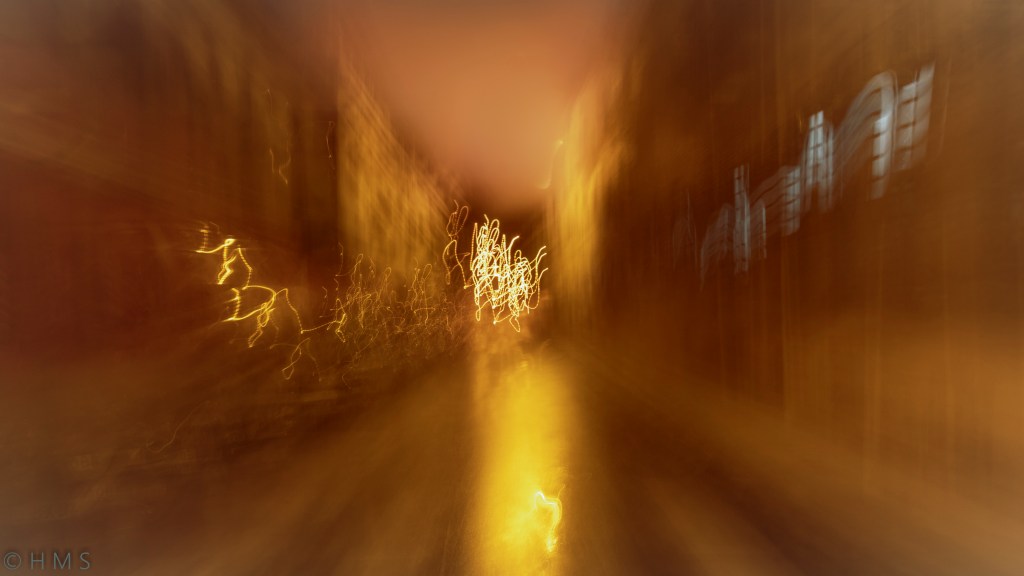
After the Five Masters of Pure ICM defined the language of movement — from Friel’s raw emotion to Malm’s geometry, from Chinnery’s pedagogy to Sirén’s Nordic silence and Gray’s luminous architecture — these years witnessed the birth of a wider constellation. From 2010 to 2025, a new generation of artists consolidated the language they had inherited, expanding it into different geographies, colors, and sensibilities. What began as a solitary search for expression through motion became a shared vocabulary: a global dialogue of light, rhythm, and perception. This circle of five photographers does not follow the five masters; they echo them, transforming the foundations into personal dialects. Each one brought something essential — color as emotion, silence as rhythm, abstraction as structure. Together, they turned the ICM movement from a niche experiment into a fully mature artistic language.
Today, their works trace a map of diversity within unity — five voices from different lands, speaking one same visual tongue: the movement itself.
2. Abstract ICM Artists
2.1. Charlotte Bellamy (Netherlands / UK)
2.1.1 Reason for Inclusion — Expanding the Global Language of ICM
Charlotte Bellamy earns her place within the extended first generation of ICM for introducing warmth, intimacy, and emotional transparency to a field that had often been dominated by cool minimalism and British austerity. From her base in the Netherlands, she expanded the visual vocabulary of the movement through her lyrical sensibility and pedagogical presence, building one of the most active ICM communities in continental Europe. Her work and teaching dissolved the barrier between technique and emotion, revealing that movement could serve not only as a formal gesture but also as a direct translation of human feeling. In doing so, she brought the ICM closer to the ordinary viewer, giving it a voice of softness and belonging within an art form once perceived as cerebral or distant.
2.1.2 Evolution and Visual Language
Her early period (2012–2015) already displayed her signature softness — pastel fields and long vertical motions that blur the line between forest and atmosphere. One of her emblematic works from this stage, Woodland Whispers, embodies her idea of motion as empathy, where muted greens and creams merge into a dreamlike stillness. In her later work The Language of Trees, created around 2019, Bellamy reached full maturity: the camera movement becomes slower, more intentional, and the tonal harmony more orchestral. Here she moved from recording scenes to interpreting them, her brushstroke-like lines conveying both memory and rhythm. Across these two moments, Bellamy turned the act of movement into a kind of listening — an attentiveness to the inner resonance of nature rather than its external form.
2.1.3 Curatorial Reflection
Charlotte Bellamy’s importance lies not in radical experimentation but in her redefinition of what ICM could feel like. She introduced emotional accessibility, authenticity, and poetic intimacy into a genre that risked visual detachment. Her contribution is pedagogical and philosophical: to teach through warmth, and to prove that gentleness can be as powerful as abstraction. If Friel gave ICM its emotional chaos and Chinnery its structure, Bellamy offered its heart — an art of empathy, reflection, and quiet connection.
2.2 Roxanne Overton (United States)
2.2.1 Reason for Inclusion — The American Colorist of Motion
Roxanne Overton is included among the ten voices of the extended first generation for her pioneering role in translating the European lyricism of ICM into an American idiom of light and speed. Beginning in 2013, she became one of the first photographers in the U.S. to adopt the practice as a consistent artistic language, teaching it widely and codifying its principles through her writings and workshops. Where British and Nordic ICM emphasized mist and stillness, Overton embraced motion and urban vitality—treating color as rhythm and movement as melody. Through her book Moving Images: The Art of Intentional Camera Movement, she not only clarified the process but legitimized it as an expressive discipline within American fine art photography.
2.2.2 Evolution and Visual Language
Her early series Urban Radiance (2014) and Tilted Metropolis (2016) define her mature language: both explore the reflective geometry of cities through diagonal sweeps—her signature “tilt motion.” In Urban Radiance, vertical lines of glass and metal dissolve into golden light, expressing the pulse of contemporary architecture; in Tilted Metropolis, she refines that energy into structure, turning chaos into composition. Later works such as Fields of Gold (2018) brought her chromatic sensibility into nature, proving that the same tilted gestures could translate wind, water, and sunlight into lyrical abstraction. Across these periods, her camera’s diagonal drift becomes a metaphor for resilience: movement not as blur, but as ascent.
2.2.3 Curatorial Reflection
Roxanne Overton’s contribution lies in merging pedagogy and play. She was the first American to give ICM both vocabulary and optimism, teaching others how to make motion deliberate and joyful. Her urban tilts symbolize a distinctly modern freedom—structured yet alive—and her colorist vision softened the gap between experimentation and accessibility. If the European masters turned ICM into poetry, Overton made it jazz: spontaneous, rhythmic, and open to everyone.
2.3. Olga Karlovac (Croatia)
2.3.1. Reason for Inclusion — The Poet of Shadows
Olga Karlovac is included among the ten voices of the extended first generation for bringing an entirely new emotional register to the ICM movement: darkness, solitude, and cinematic tension. At a time when color abstraction dominated the discourse, she reintroduced black and white as a medium of psychological depth, proving that motion could whisper instead of shout. Beginning around 2012, Karlovac developed a style rooted in memory and displacement — the blurred figure walking through rain, the faceless passerby crossing the fog. Her photographs evoke the fractured rhythm of post-war cities, transforming the act of movement into an act of disappearance. In doing so, she became the emotional counterpoint to the colorist optimism of her contemporaries, redefining ICM as a vehicle for existential storytelling.
2.3.2. Evolution and Visual Language
Her breakthrough work Escape (2015–2018) stands as one of the most recognizable monochrome series in contemporary abstract photography. In images such as Steps into the Mist and Silent Street, human silhouettes dissolve into streaks of light, suspended between material and memory. Later, in her project Before Winter, she deepened this introspection — replacing the human form with architecture and reflection, letting light itself become the character. These two bodies of work mark her evolution from personal diary to universal metaphor. Karlovac’s compositions often use a slow horizontal or diagonal sweep, rarely exceeding one second, yielding motion that feels internal rather than mechanical. The result is neither documentary nor purely abstract: it is psychological landscape rendered through blur.
2.3.3. Curatorial Reflection
Karlovac’s contribution is singular: she turned ICM into noir. Where others sought beauty in color, she found truth in ambiguity. Her visual world belongs to the same lineage as Tarkovsky or Titarenko — melancholic, poetic, human. She elevated the technique beyond aesthetics, using blur as philosophy: a refusal to define, a meditation on presence and loss. In the canon of ICM, Karlovac represents the shadow of movement, the proof that abstraction can ache.
2.4. Mario Van Hal (Netherlands)
2.4.1 Reason for Inclusion — Expanding the Chromatic Frontier of ICM
Mario van Hal stands as one of the quiet architects of Europe’s first ICM expansion beyond the British nucleus. Emerging in the early 2010s, his work bridged the technical discipline of northern European minimalism with the warmth of an expressive chromatic palette. While Friel and Chinnery emphasized gesture and emotional turbulence, van Hal pursued balance, serenity, and harmonic flow. His approach offered an alternative to chaos — a vision of controlled movement that celebrates color as architecture. He is included in this first generation not for radical innovation, but for creating a visual equilibrium that made ICM accessible and poetic to a wider audience, especially in continental Europe.
2.4.2 Evolution and Visual Language — From Emotional Flow to Structural Balance
His earliest works (2012–2014) explore motion as an act of blending, often through long, horizontal sweeps across forests, canals, and open fields that dissolve structure into atmosphere. By the mid-2010s, series such as “Autumn Wind Through Beech Trees” and “Silent Canal Reflections” reveal a mature mastery of color rhythm and direction, where every movement feels premeditated yet natural. The palette — warm yellows balanced by misty grays, or vibrant greens cut by a shaft of pale light — defines a distinctive Dutch chromatic order within ICM, rooted in precision and harmony. Van Hal transformed motion into a form of musical architecture, turning landscapes into scores of color and silence.
2.4.3 Curatorial Reflection — Between Silence and Harmony
Van Hal’s contribution is not defined by disruption but by refinement: he stabilized ICM’s emotional volatility into a contemplative art of balance. His images bridge the intuitive and the methodical, echoing both the atmospheric calm of the Dutch landscape and the disciplined clarity of its artistic heritage. In a lineage that runs from Vermeer’s tranquil light to Mondrian’s geometric serenity, Mario van Hal translates national visual temperament into a moving, living abstraction. His work endures as a testament that even within motion and blur, there can exist an exact, deliberate harmony — the stillness at the heart of movement.
2.5. Meghan Maloney (New Zealand)
2.5.1 Reason for Inclusion — The Oceanic Expansion of ICM’s Language
Meghan Maloney brought the ICM philosophy to the southern hemisphere with a distinctly antipodean sensibility. Her inclusion in this generation reflects how she translated the temperate light, open skies, and reflective waters of New Zealand into a visual vocabulary of calm luminosity. Where European ICM often seeks drama or symbolism, Maloney’s approach finds beauty in restraint — she treats motion not as chaos but as breathing, an act of gentle connection between land and atmosphere. Her work represents the natural global expansion of the movement, adapting the northern technique to the meditative clarity of the Pacific landscape.
2.5.2 Evolution and Visual Language — From Earthly Structure to Chromatic Air
Maloney’s early landscapes (2015–2017) already reveal her command of soft movement — long exposures between one and two seconds, where horizontal flows merge sea, land, and sky into tonal gradients. Later works, such as “Waikato Dawn” and “Ocean Veil”, refine this language, moving toward abstraction while preserving a natural sense of light. In these series, she discovers that motion can dissolve geography yet still preserve atmosphere, creating a paradoxical harmony between clarity and blur. The chromatic palette — silvers, aquamarines, and glowing whites — evokes both the oceanic air of New Zealand and the ethereal calm that defines her authorship.
2.5.3 Curatorial Reflection — The Quiet Bridge Between Eras
Within the global history of ICM, Meghan Maloney occupies a unique position as the first Southern Hemisphere voice and a bridge between generations. Her photography unites the structured discipline of the first generation with the poetic clarity of contemporary vision. There is no rebellion in her work, only serenity — a quiet evolution that proves the universality of the ICM ethos. She stands as a reminder that abstraction through motion does not belong to any geography or school: it is a universal gesture of perception. In her hands, ICM becomes a breath of light over the Pacific horizon.

Leave a comment