An urban allegory on alienation and the loss of human light
MOVEMENT I — THE GOLDEN DECAY. Urban Illusions and the Architecture of Emptiness
The Golden Decay is not a documentary of urban life but a metaphysical allegory of its exhaustion. Each photograph reveals a stage in the metamorphosis from brilliance to absence — from the monumental illusion of progress to the spectral dance of its remnants. The movement functions as an overture to the entire project Allegorical Abstractionism: Dehumanization, where light itself becomes both protagonist and witness of a civilization losing its human core.
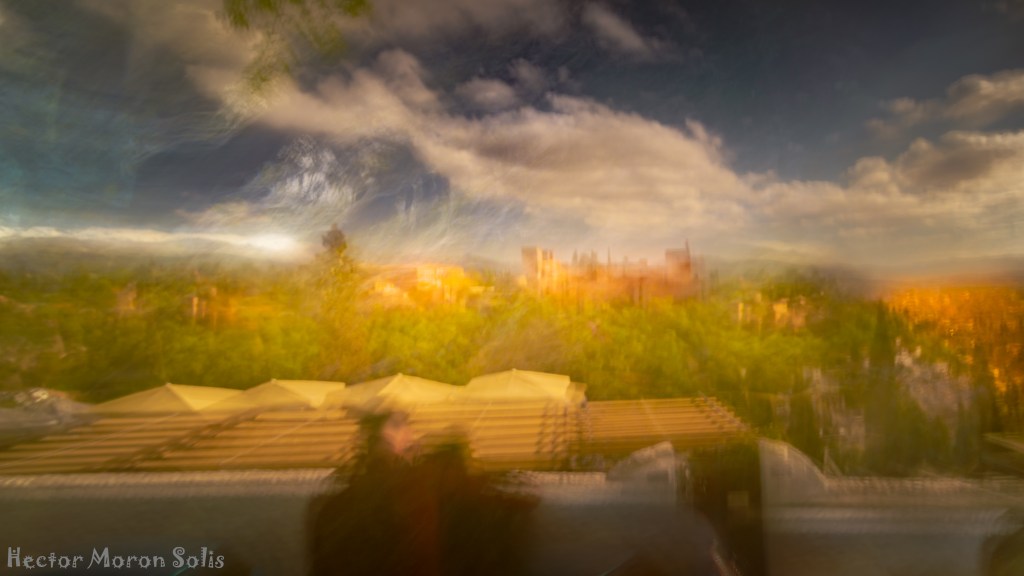
1. Decadent Golden City — The False Splendor
Role in the narrative:
Opening work and visual prologue of the entire project. It introduces the illusion of civilization at its zenith — radiant, confident, monumental.
The city appears eternal, as if built of light itself.
Symbolic meaning:
Gold becomes the metaphor of excess: beauty that conceals exhaustion. The glow of progress is no longer a sign of life, but the residue of its consumption. It represents the peak of humanity’s self-worship — the instant before decline.
Aesthetic character:
A composition of monumental balance and vertical radiance. The palette oscillates between amber and pale fire, evoking imperial architecture dissolving into abstraction. Everything shines; nothing breathes.
Curatorial interpretation:
This photograph opens the opera of dehumanization with deceptive magnificence. It establishes the tone of the entire movement: false light as the new divinity.
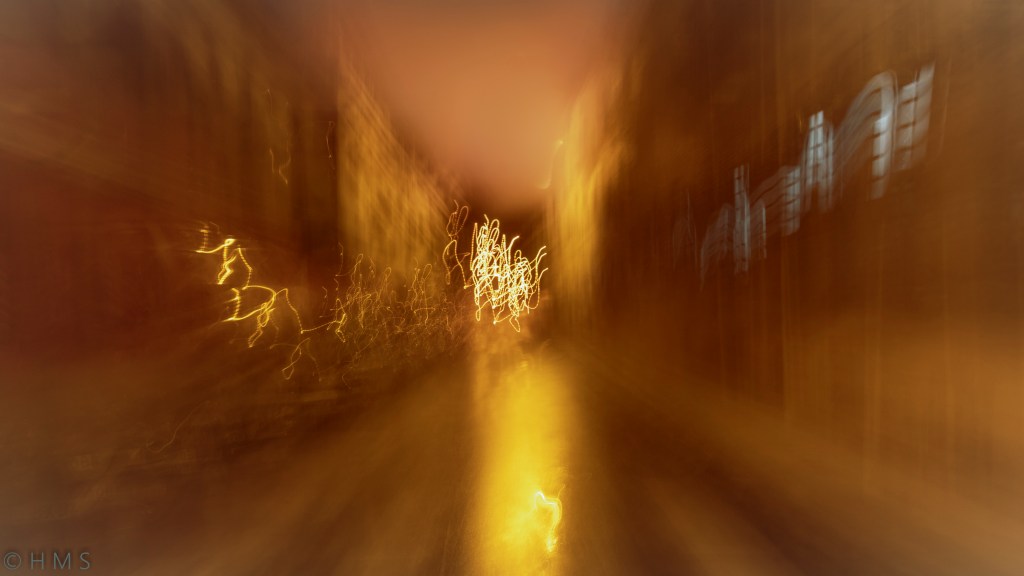
2. Child and Penguin — The Mask of Joy
Role in the narrative:
Second act within the movement — the moment when the human figure reappears, yet stripped of authenticity. It provides the emotional hinge between the grandeur of the city and its silent void.
Symbolic meaning:
The child, paired with a mechanical toy, embodies the parody of innocence. The scene captures a happiness that is already theatrical: a symbol of the emotional exhaustion behind consumer imagery. Humanity smiles while its inner life fades.
Aesthetic character:
Warm palette with pastel light and soft movement — an almost cinematic stillness The ICM gesture blurs the faces, turning emotion into texture.
The composition stages the human as part of the scenery, not its subject.
Curatorial interpretation:
This work exposes the paradox of the contemporary world: the persistence of emotion inside an artificial paradise. It is the photograph of a civilization that no longer feels, only represents.
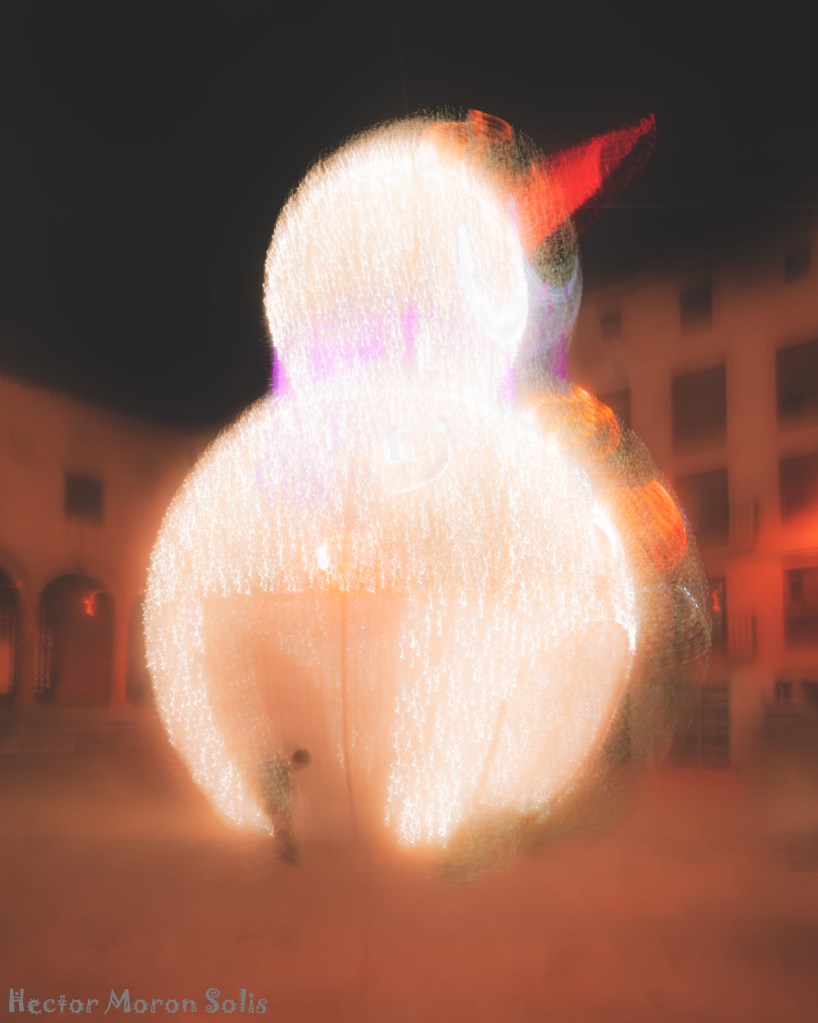
3. Urban Alignment — The Geometry of Control
Role in the narrative:
Structural pivot of the movement. After the emotional irony of the previous image, this one restores order — the city at its most sacred and inhuman. It is the architecture of obedience.
Symbolic meaning:
The urban landscape becomes an altar of geometry. Perspective, rhythm, and repetition replace spontaneity. No human presence remains; form itself has become the protagonist.
Aesthetic character:
Severe composition with vertical thrusts and symmetries suggesting ascension without transcendence. Color restrained to ochres and metallic light, emphasizing abstraction over realism. Stillness dominates: an icon of cold perfection.
Curatorial interpretation:
Urban Alignment represents the climax of human rationality — when control is complete and emptiness absolute. The photograph freezes the myth of progress into its purest geometry.
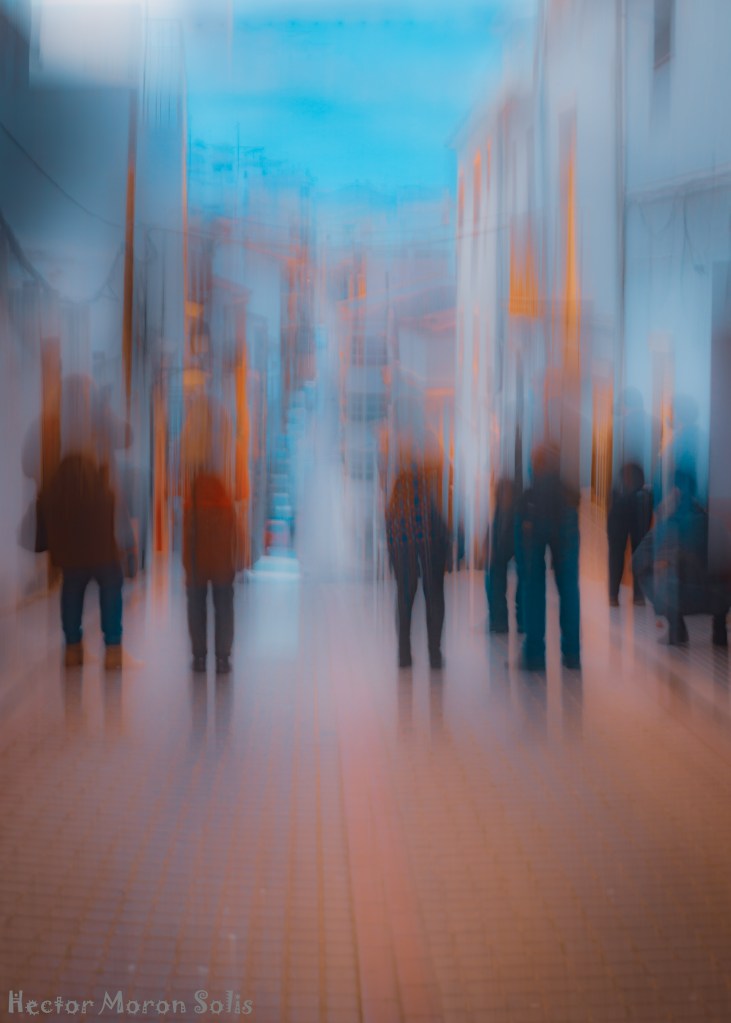
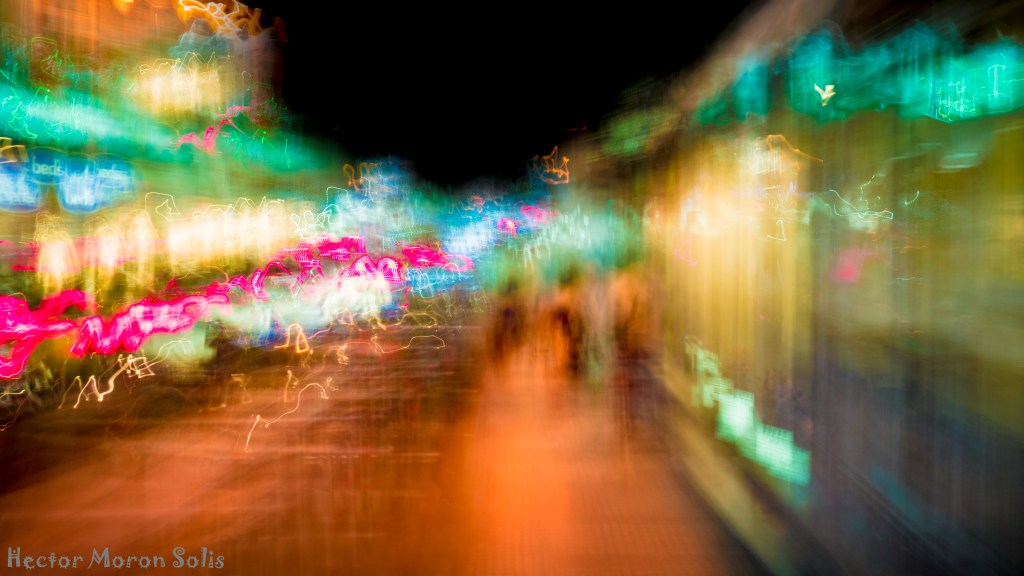
4. Specters Chase Lights — The Dissolution
Role in the narrative:
Final image and visual coda of The Golden Decay. The climax of saturation: movement and color explode before vanishing into darkness.
Here, the city consumes itself.
Symbolic meaning:
The lights advance toward their own extinction. They chase an artificial heaven, unaware that above them lies only void. It is the allegory of modern despair — illumination as catastrophe.
Aesthetic character:
High chromatic tension: neon greens, pinks, and yellows vibrating against a black void. The composition pulls the gaze into a corridor of pure energy, denying rest or resolution. Expressionist in force, lyrical in collapse.
Curatorial interpretation:
This photograph closes the first movement with tragic irony. The urban spectacle reaches its ultimate revelation: light without soul, motion without meaning. It is not the end of the city — it is the moment the city becomes its own ghost.
MOVEMENT II — THE CONFLICT. Nature Against Humanity: The Allegory of Resistance
The second movement breaks the golden stillness. What was once the empire of architecture becomes a battlefield of light. Nature reclaims its place — not softly, but through eruption, collision, and blinding radiance. The city’s geometry, perfect and lifeless, begins to fracture under an energy older than civilization itself. Trees, sun, and atmosphere cease to be background; they rise as protagonists. In The Conflict, light transforms into resistance. It strikes against walls, metal, and glass, dissolving the illusion of control that defined The Golden Decay. This act is neither destruction nor revenge, but balance: the world correcting its trajectory, the elemental reclaiming its truth.
1. Fenced Magic Valley — The Invisible Fracture
Role in the narrative:
Opening of the movement. Conflict presented as subtle tension: humanity’s attempt to confine the natural world. The drama is almost invisible — a conceptual whisper.
Symbolic meaning:
The fence is the metaphor of arrogance: the idea that nature can be divided, possessed, or neutralized. To the inattentive viewer, it may seem idyllic; to the careful one, it is the beginning of the tragedy.
Aesthetic character:
Soft chromatic transition between greens, golds, and pale blues. The ICM gesture is gentle, dissolving the boundary rather than emphasizing it.
Harmony hides irony.
Curatorial interpretation:
The act begins with self-deception — beauty masking separation. It is the last instant of apparent peace before the natural order awakens.

2. The Sun Against the Human Walls — The Radiant Assault
Role in the narrative:
The confrontation takes form. Light, once decorative, becomes an instrument of rebellion. The sun crashes against stone, dissolving the boundaries that framed it.
Symbolic meaning:
The wall embodies civilization’s will to contain the elemental. The solar burst tears that illusion apart: illumination as judgment. Here the divine no longer blesses — it interrogates.
Aesthetic character:
Explosive diagonals of gold and white dominate the frame. The ICM gesture functions like impact: rapid, directional, irreversible. Texture replaces detail; radiance becomes architecture.
Curatorial interpretation:
This image marks the transition from irony to confrontation. What was once structure now vibrates, almost liquefied by energy. The photograph suggests that light, deprived of purpose, seeks moral equilibrium — a natural justice correcting centuries of imbalance. It is not apocalypse, but revelation: a physics of ethics, rendered in flame.

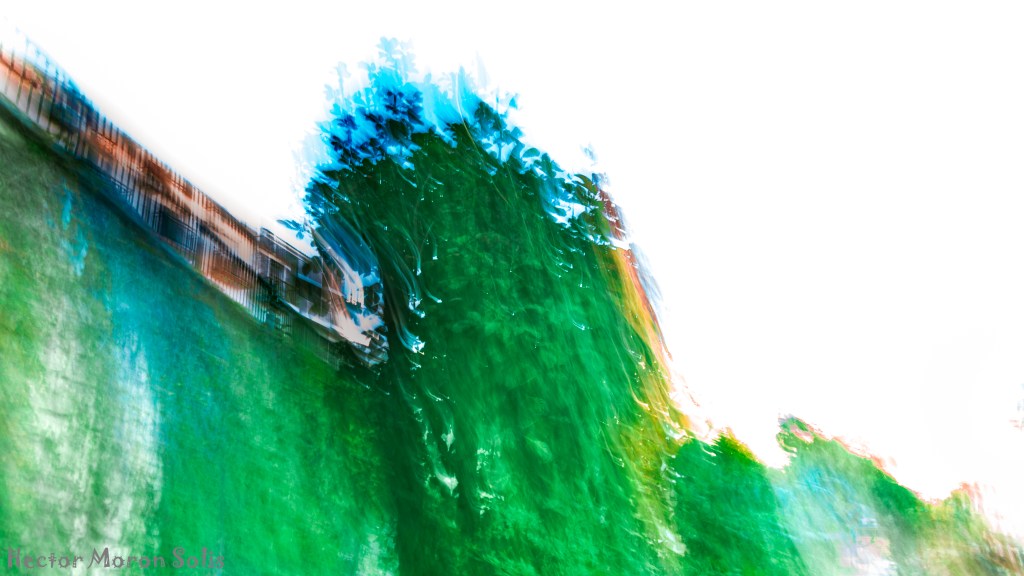
3. Nature Against Humanity — The Reclaiming Force
Narrative role:
Climax of the act. The organic world occupies the frame completely, transforming conflict into renewal.
Symbolic meaning:
Branches and air overthrow the built order; matter regains its sacred rhythm. Human geometry dissolves into fluid motion — architecture turned to memory.
Aesthetic character:
Dynamic diagonals, fiery greens and ochres. The ICM sweep suggests both storm and rebirth, the ecstasy of resistance.
Curatorial interpretation:
Here the moral center of the project emerges. Nature does not avenge; it rebalances. This photograph is the allegorical heart of The Conflict: life correcting excess through movement.
4. Bell Tower Between Heaven and Hell — The Collapse of Faith
Narrative role:
Closing image and bridge to Movement III — The Earth Remains. The last monument of transcendence faces dissolution in light.
Symbolic meaning:
The tower, built to link man and heaven, stands suspended between them — consumed by its own radiance. It is the symbol of spiritual entropy: belief without connection.
Aesthetic character:
Vertical mass engulfed in golden turbulence; the ICM gesture reads as implosion, sacred architecture devoured by illumination.
Curatorial interpretation:
The act ends with metaphysical stillness. After rebellion comes revelation: the realization that no human structure can mediate the elemental.
Light, victorious, becomes silence — the threshold of renewal.

MOVEMENT III — THE EARTH REMAINS. Return to the Elemental
After the collapse of light and faith, silence returns. The human trace has vanished; what remains is origin — fire, sea, air, the living substance of the world. This movement is not destruction but restoration: the purification of the earth once the noise of civilization has faded. Here, Allegorical Abstractionism reaches its purest form: abstraction without architecture, symbolism without words. The images are no longer witnesses to conflict, but manifestations of the eternal cycle — creation, combustion, and renewal.
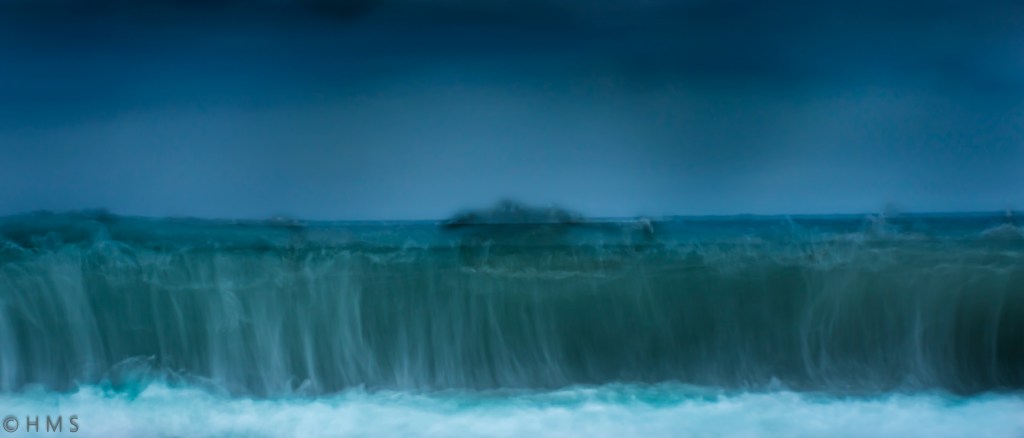
1. The purge — Tsunami
Narrative role:
This is the opening act of the final cycle, the moment when the world reasserts itself. The sea, ancient and ungovernable, rises not in vengeance but in restoration. The human era collapses under the immense weight of balance — not cruelty, but necessity.
Symbolic meaning:
Tsunami represents the planet’s instinct for equilibrium. The wave is both erasure and creation: it destroys to cleanse, it drowns to renew.
What seems catastrophic from the human eye is sacred from the earth’s perspective — a gesture of cosmic respiration, the planet expelling excess and beginning again.
Aesthetic character:
The photograph is monumental in movement and scale. Its palette is cold yet incandescent, with blues shifting toward silver and white light.
The ICM gesture amplifies the sensation of unstoppable force — a sweeping diagonal, as if the ocean itself were painting the frame. No horizon survives, no human proportion remains: only energy in motion.
Curatorial interpretation:
The sea no longer reflects the sky; it replaces it. The wave is not destruction — it is the handwriting of renewal. In Tsunami, the earth speaks for the first time in millennia, and what it says is simple: I endure.
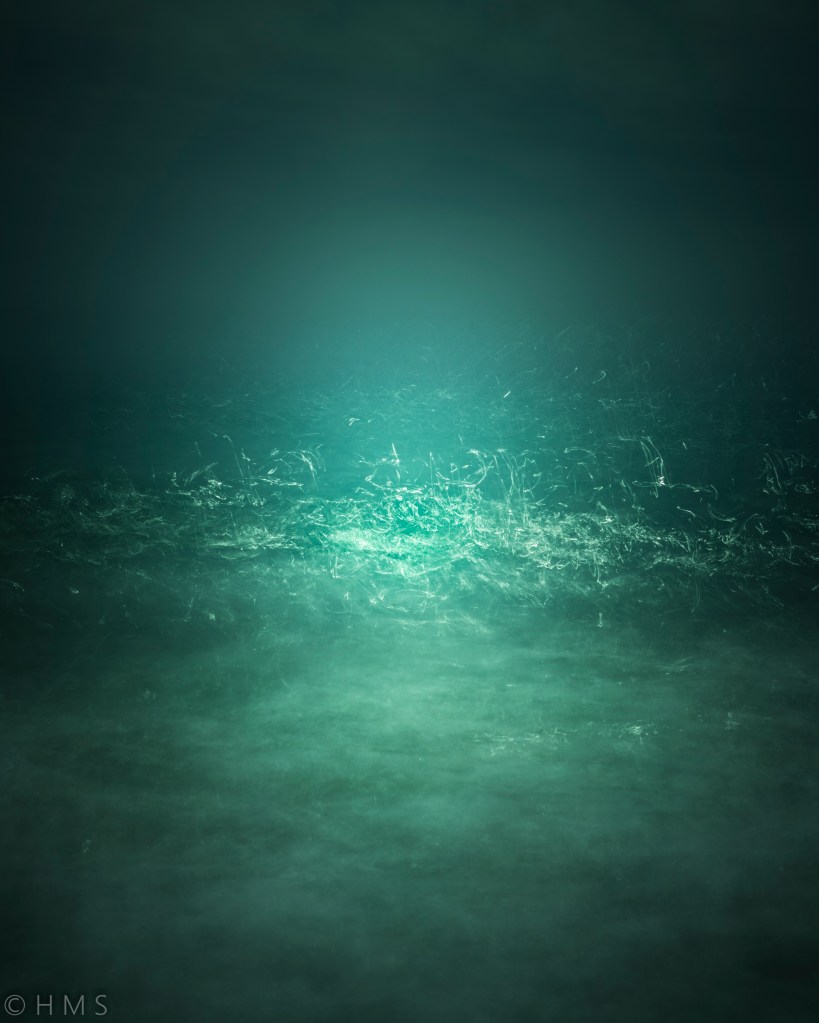
2. The breath — Ethereal Sea
Narrative role:
After the storm of Tsunami, the planet exhales. The sea that once rose in fury now lies tranquil, spread like a mirror of atmosphere. All human traces have been erased; what remains is rhythm — the respiration of the world.
Symbolic meaning:
Here, water embodies both memory and peace. The violence of the previous act gives way to equilibrium: the earth has recovered its pulse. This is the first true silence after the human age — not emptiness, but pure continuity. The ocean is no longer a frontier; it is consciousness itself.
Aesthetic character:
Soft, translucent layers of blue, white, and silver form a visual breath. The ICM gesture slows to a meditative flow; no direction, no violence, just expansion. Light and water dissolve into one another — an infinite calm.
Curatorial interpretation:
Ethereal Sea captures the instant when chaos becomes order, when energy becomes stillness. The earth, cleansed, inhales again. What we see is not water — it is equilibrium incarnate. The same force that destroyed now sustains. From here, the cycle turns inward. Having achieved external balance, the planet begins its inner transfiguration — light awakening within matter.
3. The rebirth — From Dawn to Night
Narrative role:
The rebirth is not human; it belongs to the world itself. From the calm of water emerges the shimmer of energy — a metamorphosis from liquid to flame, from silence to luminosity. This is the passage where the earth begins to dream in color again.
Symbolic meaning:
From Dawn to Night represents the transfiguration of the elements. The same light that once reflected on water now ignites within it. The cycle of the planet mirrors the cycle of a day: dawn and night as the inhale and exhale of creation. There is no protagonist here — only the continuum of being.
Aesthetic character:
Tonal gradations flow from blue to amber, from cold reflection to warm radiance. The ICM gesture curves like breathing fire — neither abstract nor figurative, but elemental. The frame holds the world’s pulse: fluid, luminous, eternal.
Curatorial interpretation:
In From Dawn to Night, water turns to flame, and light to consciousness. The transformation is not physical, but moral: the energy that once destroyed now gives birth. This is the soul of the cycle — the point where the planet begins to remember itself. The world no longer moves; it glows. The cycle prepares for its final revelation — fire as the memory of all matter.
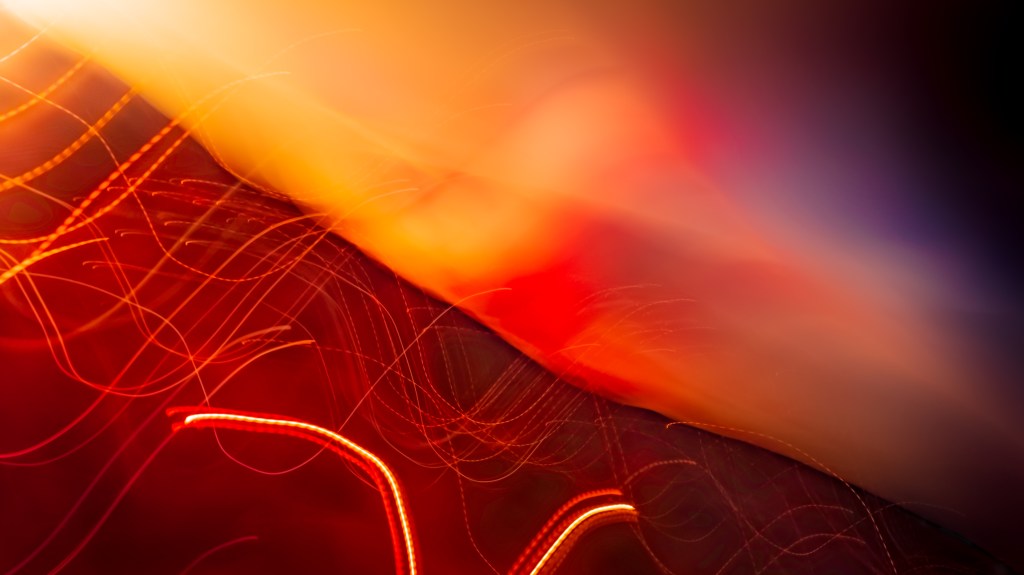
4. The elemental — Flame Abstraction
Narrative role:
Final act of Allegorical Abstractionism: Dehumanization. Here, all forms dissolve into pure energy. After the flood, after the calm, after the rebirth — only essence remains.
Symbolic meaning:
Fire, the most ancient of the elements, now stands as the symbol of permanence. It consumes nothing; it simply is. In Flame Abstraction, the world ceases to describe itself and begins to exist without narrative. It is the return of the cosmos to its original state — matter as light, light as being.
Aesthetic character:
The image vibrates in red, gold, and white — the chromatic memory of creation. The gesture is fast yet weightless, an ICM blaze that suspends motion inside stillness. Form dissolves into radiance, the photograph becoming pure vibration.
Curatorial interpretation:
Fire no longer burns — it breathes. In its glow, the earth remembers everything: the water that birthed it, the air that shaped it, the silence that healed it. Flame Abstraction is not an ending, but the pulse that keeps the cycle eternal. The world has completed its metamorphosis — from form to light, from chaos to balance. Humanity is gone, but the elements remain, renewed and conscious. The project closes not with silence, but with illumination: The earth remains, and in its fire, life begins again.
EPILOGUE — The Light That Outlived Us
The story of this planet was never ours.
We mistook reflection for creation, and control for meaning.
When the world erased our image, it did not die — it remembered.Allegorical Abstractionism: Dehumanization is not a requiem for humanity,
but a hymn to the rhythm that preceded it.The sea, the tree, the fire — none of them need witnesses.
They endure without memory, without morality, without mercy.
And yet, in their endurance, lies a purity we forgot:
existence without domination.To dehumanize is not to negate life,
but to return it to its origin —
light moving through matter, without judgment, without name.

Leave a comment