Urban Solitude Under a Technified Sun explores contemporary isolation inside engineered city spaces. Human presence appears only as residue—a couple, a walker, a child—while roads, façades, signage, and traffic systems dominate, suggesting a world where structures outlive the individual. Each image begins as an optically captured photograph of a real scene, then is transformed in-camera through deliberate long-exposure motion. This process allows reality to dissolve into allegory: light becomes pressure, geometry becomes confinement, and movement becomes a form of visual writing. The series belongs to my broader practice, Allegorical Abstractionism, where photography is used not to describe reality but to translate it into metaphor—a dialogue between the visible and the invisible in the age of technology.
Part 1 — Urban Biome (Human Coexistence with Nature)
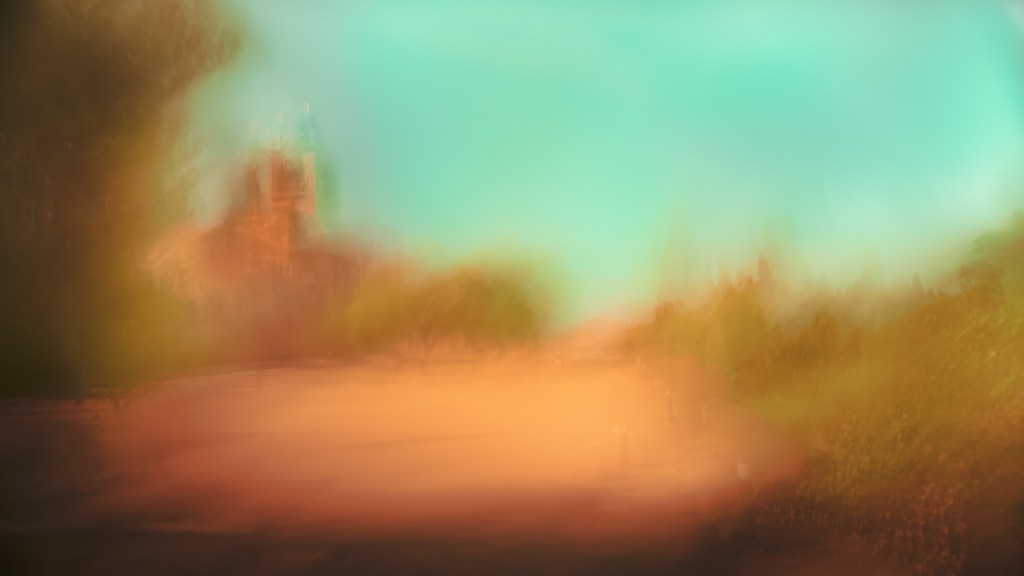
Atmosphere over Architecture — Architecture loses sovereignty, absorbed by atmosphere and vegetation. What once signified permanence becomes porous: the city dissolves into its own climate.
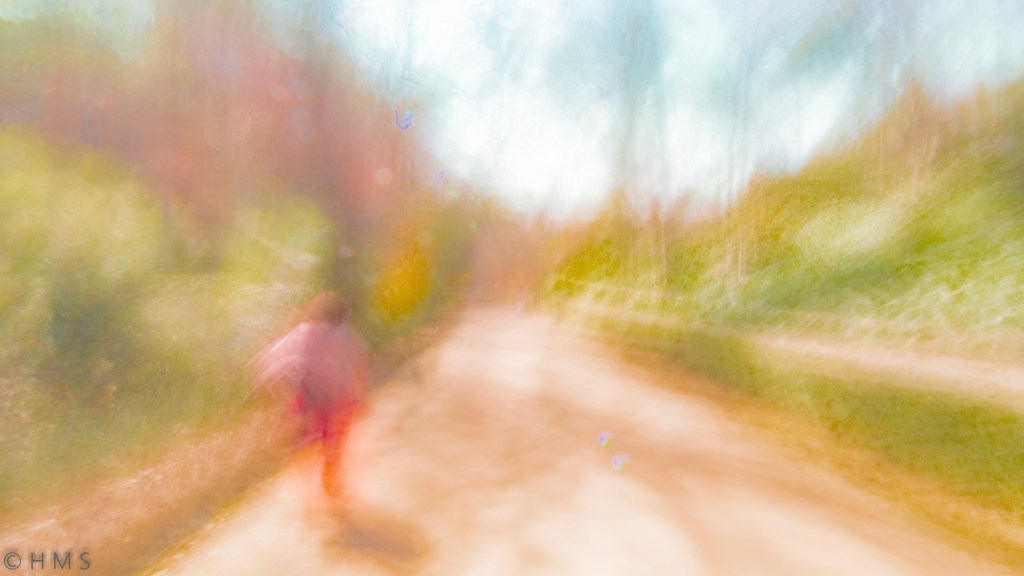
Hiker in the Surroundings — The individual tries to escape the system, yet the urban “noise” persists as a chromatic veil. Even nature is filtered through internalized infrastructure.
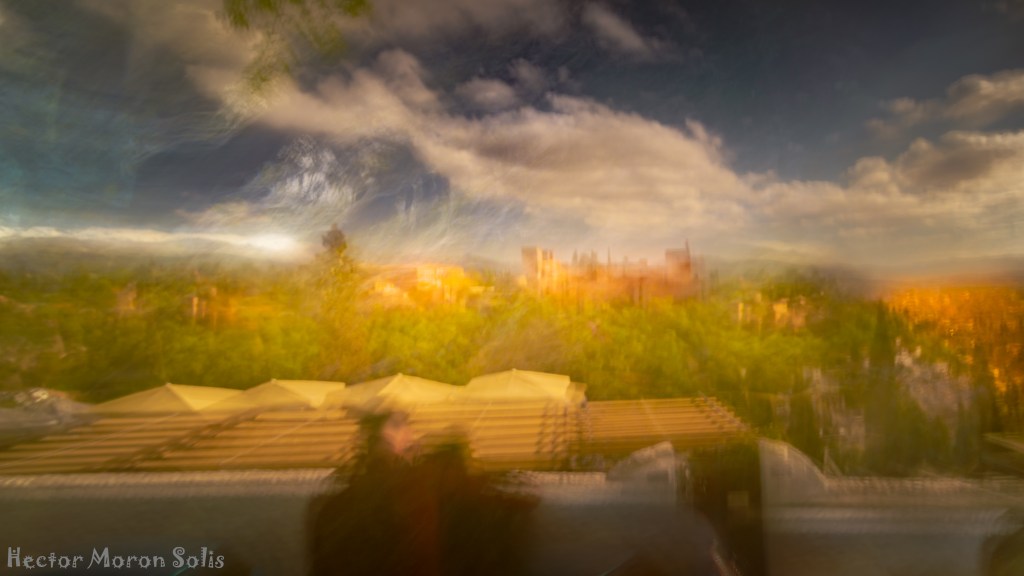
Two Lovers Watching the Alhambra — History endures, but turns fluid. The lovers become silhouettes witnessing a cultural monument not as owners of the past, but as fragile witnesses of its fading radiance.
Part 2 — Alignment (Infrastructure and the Birth of Solitude)
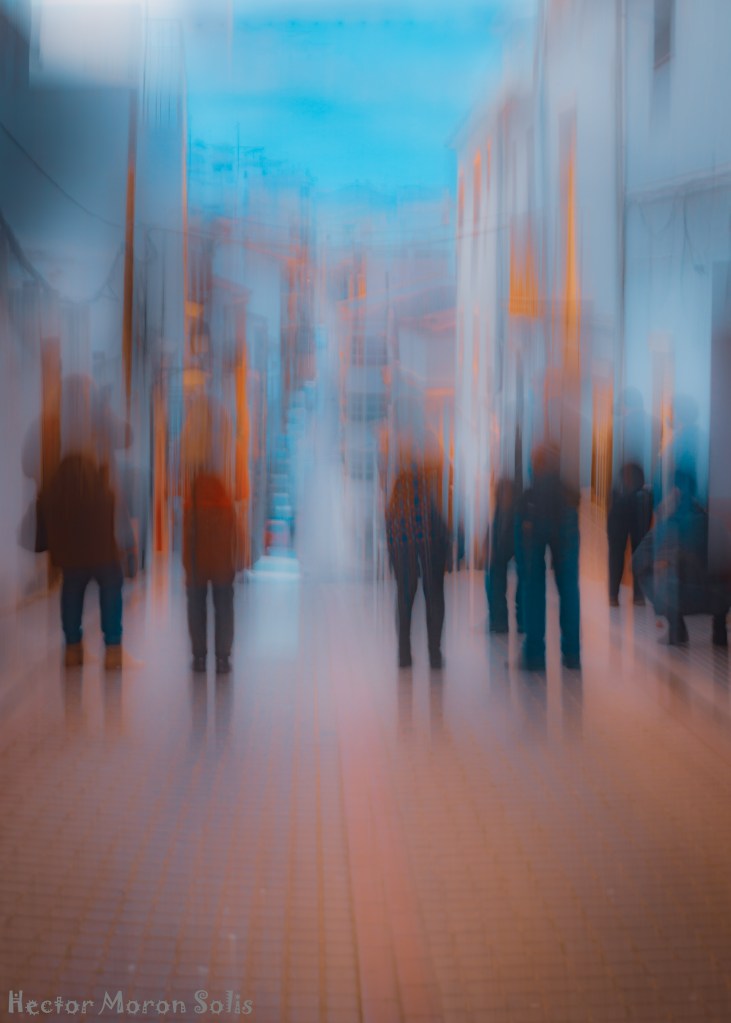
Urban Alignment — The street becomes a corridor of anonymous bodies. Alignment replaces encounter: people are reorganized by the city’s axis rather than connected by community.
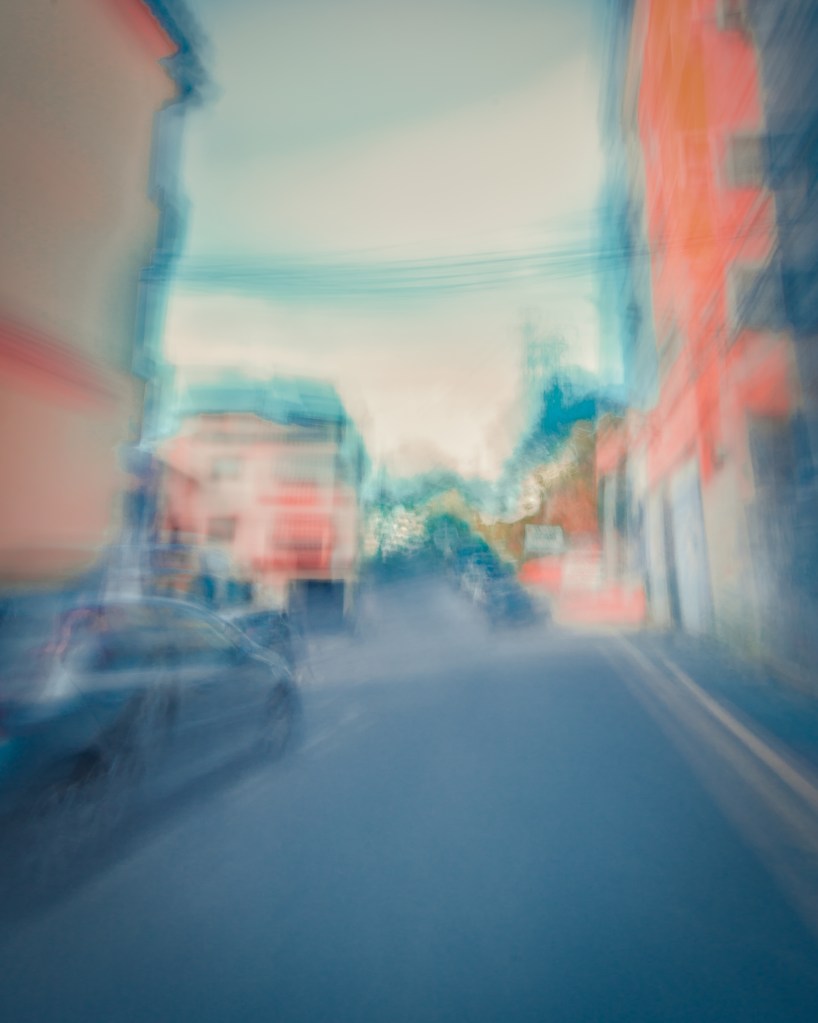
Just Cars — The street is fully claimed by machines. Mobility, rhythm, and desire belong to vehicles; human life is reduced to absence.
Part 3 — Technified Sun (Light as System: Promise → Decay → Verdict)
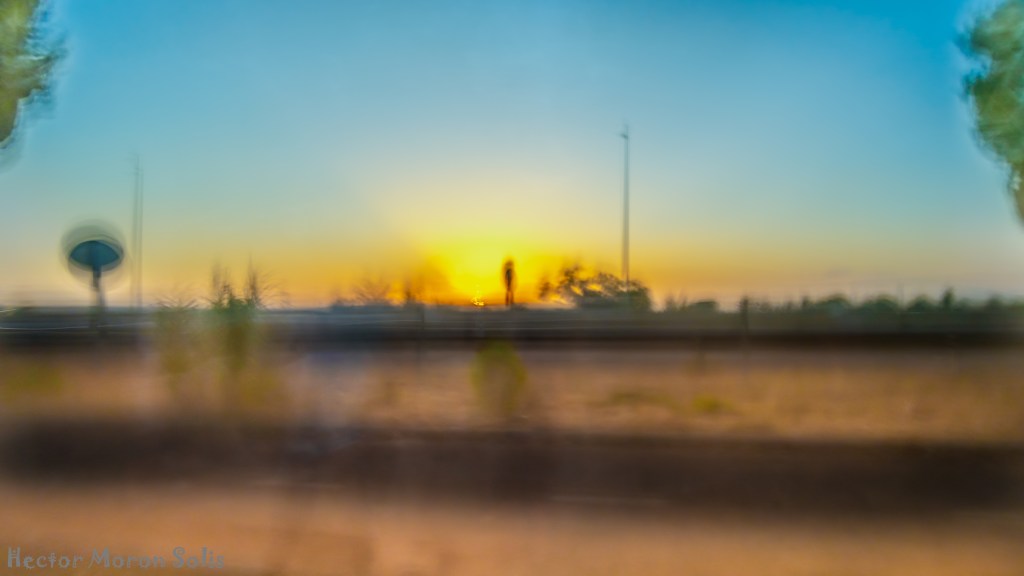
Alone on the Highway under the Sun — Infrastructure no longer connects; it isolates. A solitary figure walks through emptiness, with the horizon as the only remaining pulse.
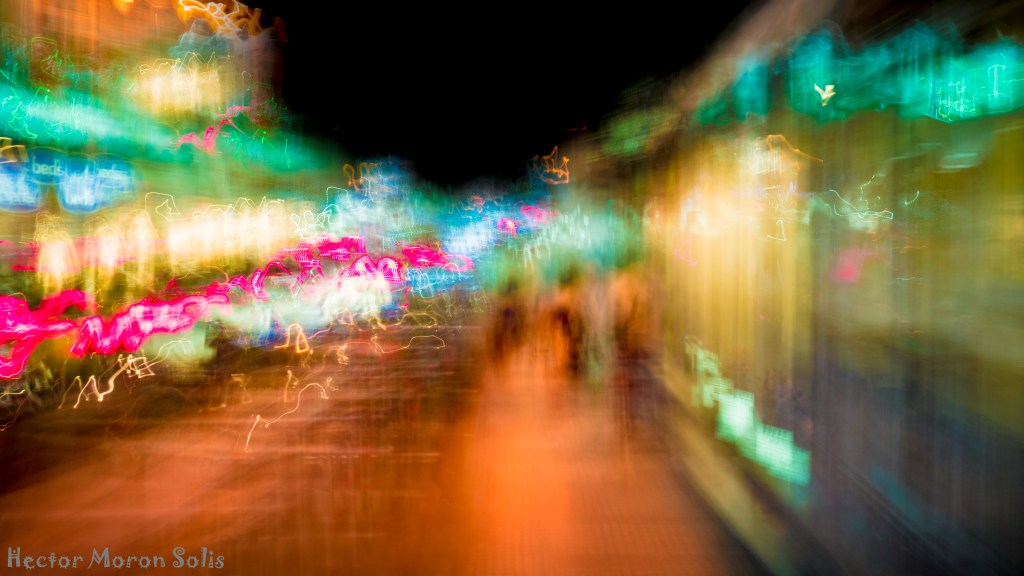
Specters Chasing Lights — People turn into ghosts pursuing decorative illumination. Behind the glow there is no meaning—only darkness.
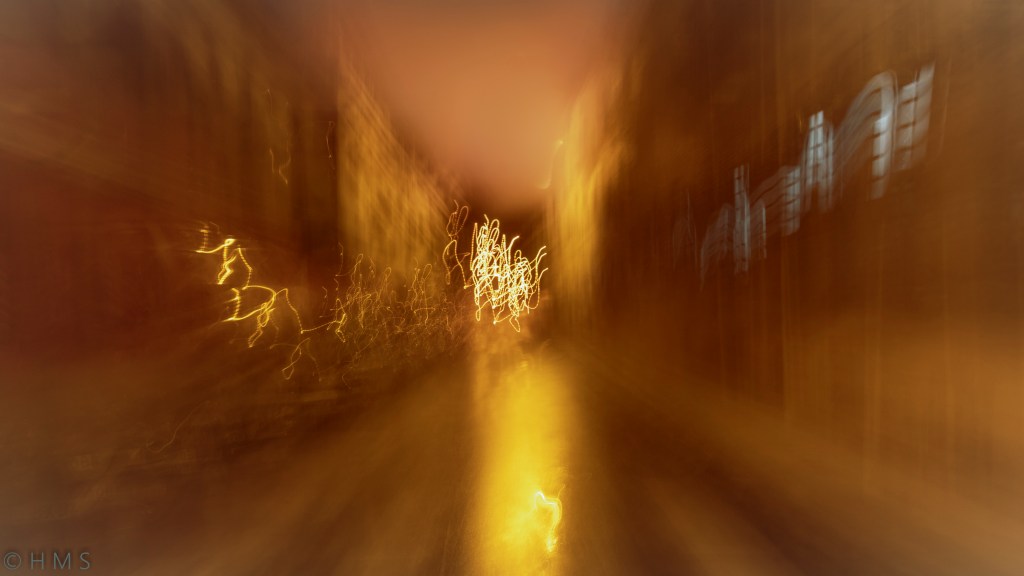
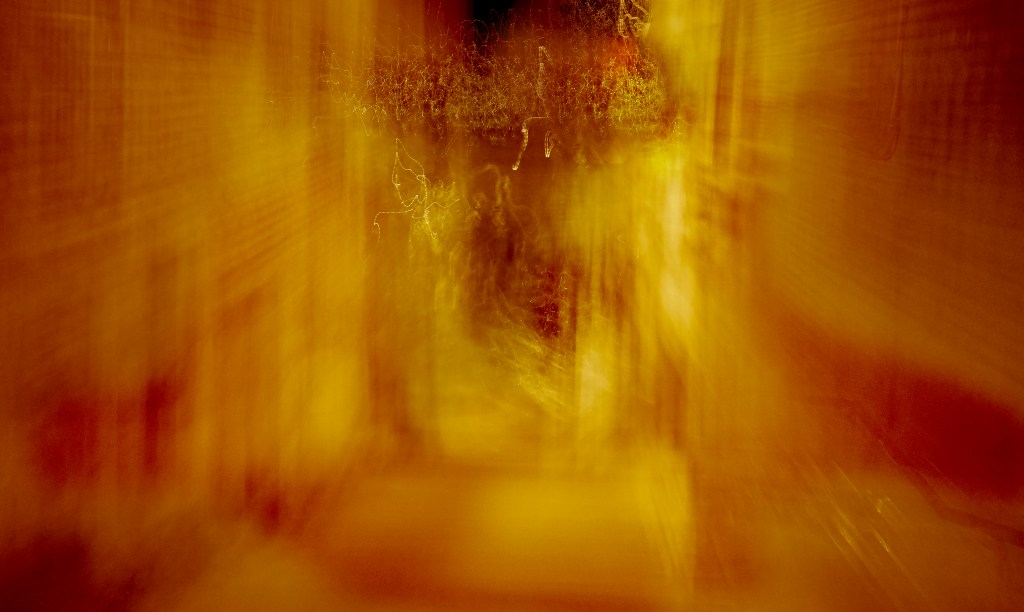
Decadent Golden City — Gold suggests prosperity, yet motion turns it into ruin. The city collapses under its own brilliance: progress becomes glittering decay.
Sun Against the Human Walls — The sun, symbol of the divine and of origin, crashes against the wall. Light, instead of liberating, is confined. The sun, as a symbol of natural divinity, melts away human structures. Human structures are seen as black and lifeless before an omnipotent sun.

Red Collapsed — The system ignites. The technified city burns into a crimson end-state, as if the sun’s fury finally breaks the human grid.
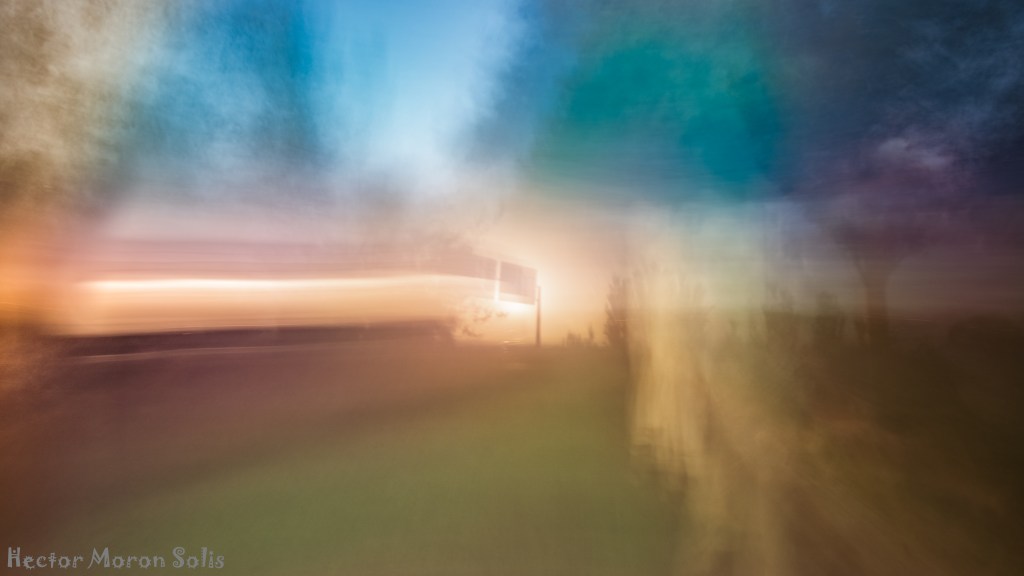
Pole on the Highway — The technified sun is born from infrastructure: a luminous pole replaces the celestial body and turns the highway into a system-temple.
Part 4: Civic Symbiosis — After the domination of the system (light, alignment, decay), its “useful” face appears: the infrastructure that cares for and organizes survival.
Hospital City — The city becomes an apparatus of care: clinical light, regulated space, engineered calm. Human life persists inside the system, protected—yet slightly anesthetized by its own infrastructure.

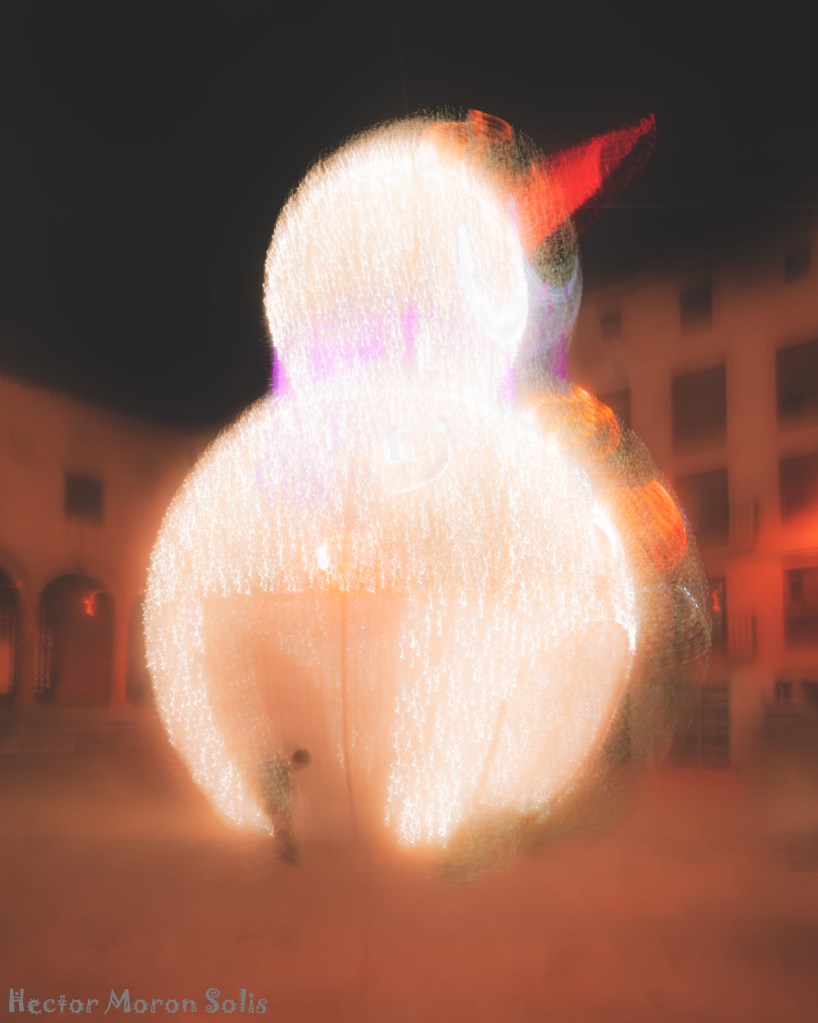
A Child and a Penguin — Childhood meets the city’s surrogate icons: affection, learning, and security are mediated by manufactured symbols. Here, the urban structure does nurture—while quietly replacing the organic with the programmable.

Leave a comment