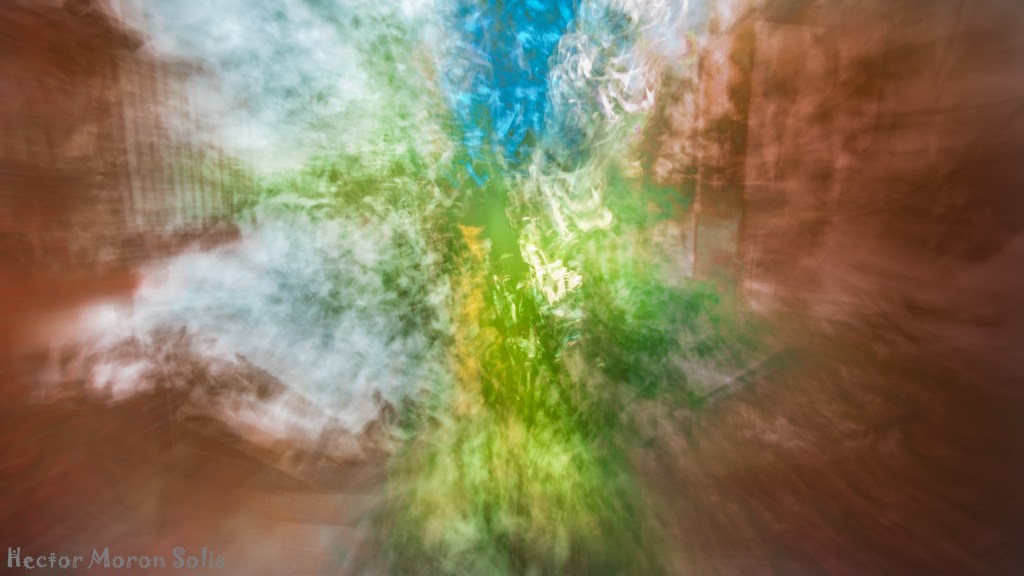
In Eden Tree II, the tree stands transformed — monumental, radiant, and confident. It dominates the foreground, rising higher and broader than before, its branches unfurling like wings made of light. Around it, clouds drift and dissolve, as if the tree had climbed beyond the earth and entered the heavens. The atmosphere is ethereal, filled with pale golds and silvery whites, suggesting a world that has transcended gravity.
The trunk shines with a polished glow, its contours almost sculptural. Every leaf, though blurred by movement, seems to shimmer with self-awareness. The camera’s slow vertical sweep reinforces this impression of ascension: a gesture not of struggle, but of exhibition. The tree no longer resists darkness — it basks in admiration. Its luminous aura expands outward, consuming space, as if the image itself were becoming intoxicated by its own beauty.
This splendor, however, conceals a paradox. What appears divine is also vain. The scene represents a state of imbalance — light detached from labor, success without humility. The Eden Tree has reached the sky, but it has lost the path that once grounded it. The soil beneath is barely visible; the sense of root, of connection, fades into vapor. Here, the spiritual ascent has turned into aesthetic vanity — a brilliance that blinds rather than enlightens.
Visually, every element contributes to this reading. The clouds act like mirrors, reflecting the tree’s own glow back at itself. The trunk bends slightly, as if swollen by its own magnitude. The color palette, dominated by warm golds and creams, evokes divinity but also excess — a beauty so refined it begins to suffocate. The blur no longer symbolizes movement toward meaning, but the loss of orientation that comes from perfection without purpose.
Eden Tree II is the portrait of triumph at its tipping point: when the sacred becomes spectacle. It reminds us that beauty without effort turns to vanity, and that the brightest light can lead us away from truth if it no longer illuminates the ground we stand on.
En Eden Tree II, el árbol aparece transformado: monumental, radiante y seguro de sí mismo. Domina el primer plano, elevándose más alto y ancho que antes, con ramas que se abren como alas de luz. A su alrededor flotan nubes que se disuelven lentamente, como si el árbol hubiera ascendido más allá de la tierra y alcanzado el cielo. La atmósfera es etérea, teñida de dorados pálidos y blancos plateados, un espacio que parece liberado de toda gravedad.
El tronco brilla con un resplandor pulido, casi escultórico. Cada hoja, aunque difuminada por el movimiento, parece consciente de su propia luminosidad. El barrido vertical y lento de la cámara refuerza esa sensación de ascenso: no un gesto de esfuerzo, sino de exhibición. El árbol ya no resiste la oscuridad: se complace en su propia luz. Su aura luminosa se expande, llenando el encuadre, como si la propia imagen se dejara seducir por su esplendor.
Pero esa magnificencia esconde una paradoja. Lo que parece divino es también vano. La escena representa un estado de desequilibrio: la luz separada del trabajo, el éxito sin humildad. El Árbol del Edén ha llegado al cielo, pero ha perdido el camino que lo unía a la tierra. El suelo apenas se percibe; las raíces, símbolo del origen y del esfuerzo, se desvanecen entre vapores. Aquí, la ascensión espiritual se ha convertido en vanidad estética: un brillo que deslumbra, pero no ilumina.
Cada elemento visual refuerza esta lectura. Las nubes funcionan como espejos que devuelven la luz del propio árbol, creando un bucle de autoadmiración. El tronco, ligeramente curvado, parece hinchado por su propio poder. La paleta cromática, dominada por dorados y cremas, evoca la divinidad, pero también el exceso: una belleza tan perfecta que roza la asfixia. El desenfoque ya no representa movimiento hacia el sentido, sino pérdida de orientación: la confusión del que cree haber alcanzado la cima.
Eden Tree II es el retrato del triunfo en su punto de inflexión, el momento en que lo sagrado se convierte en espectáculo. Nos recuerda que la belleza sin esfuerzo degenera en vanidad, y que la luz más intensa puede alejarnos de la verdad si deja de iluminar el suelo que nos sostiene.

Leave a comment